CN
Aihua Instruments
Aihua Instruments
CN
Environmental Noise: A Growing Concern and How to Measure It
Release time:2026.06.12 Views:9

Environmental noise refers to unwanted or harmful sound that exists in our surroundings—coming from traffic, industrial operations, construction sites, airports, and community activities. Unlike occupational noise, which is tied to a specific job or workplace, environmental noise affects entire communities, residential areas, and public spaces, often around the clock.

This makes it a recognized environmental pollution issue in its own right. It doesn't just affect the people directly involved in an activity; it spreads outward, impacting neighbors, passersby, and even local ecosystems. As urban areas grow denser and infrastructure expands, environmental noise has become a topic that city planners, regulators, and businesses increasingly need to address.

Common Sources and Impacts of Environmental Noise

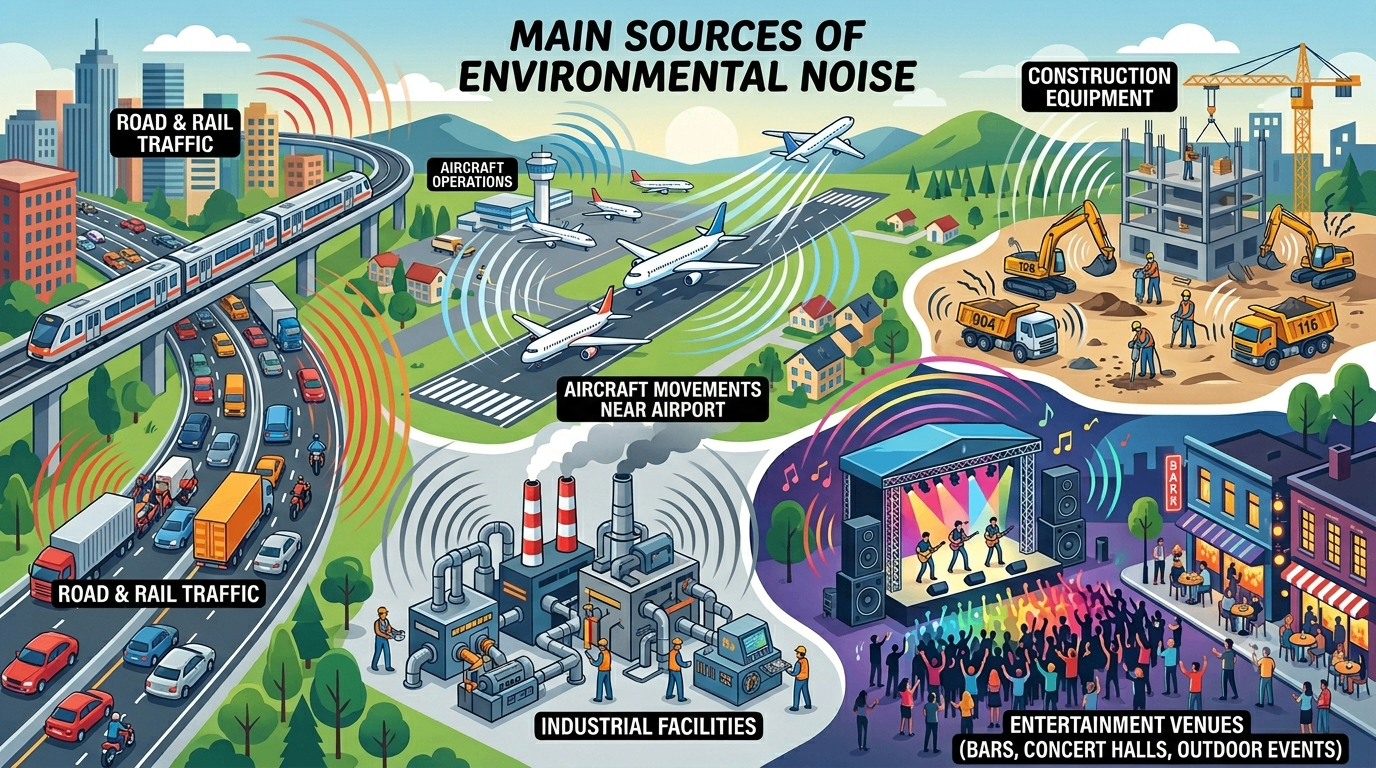
The most common sources of environmental noise include road and rail traffic, aircraft operations near airports, industrial facilities, construction equipment, and entertainment venues such as bars, concert halls, or outdoor events. Even seemingly minor sources—generators, HVAC systems, or delivery vehicles—can add up in dense urban environments.

The impacts go beyond simple annoyance. Long-term exposure to elevated environmental noise has been linked to sleep disturbance, increased stress levels, and elevated cardiovascular risk. For communities near major roads or industrial zones, chronic noise exposure can affect quality of life and property values. Noise also affects wildlife, disrupting communication, feeding, and breeding patterns for birds and other animals sensitive to acoustic disturbance.

Because these effects are cumulative and often underestimated, environmental noise is increasingly treated as a measurable, manageable factor—much like air or water quality—rather than something to simply tolerate.


common sources of environmental noise


How Is Environmental Noise Measured?

Measuring environmental noise involves more than just checking "how loud" something sounds. Several standardized metrics are used depending on the context. dB(A) is the basic A-weighted decibel reading that approximates how the human ear perceives sound. Leq represents the equivalent continuous sound level over a measurement period, smoothing out fluctuations into a single representative value. For community noise assessments, indicators like Lden (day-evening-night level) and Lnight are often used, since they account for the fact that the same noise level is more disruptive at night than during the day.

A smartphone app might give a rough estimate, but it lacks the calibration, frequency response, and consistency needed for meaningful comparisons or compliance purposes. Accurate environmental noise assessment requires a properly calibrated instrument designed for this kind of measurement.

Why a Sound Level Meter Is Essential for Environmental Noise Assessment

A sound level meter is the standard tool for environmental noise assessment. It's used for community noise surveys, checking whether construction activity complies with local noise limits, monitoring industrial boundary noise, and supporting noise mapping projects.

When selecting a sound level meter for this kind of work, a few factors matter most. Accuracy class is important—Class 1 instruments offer higher precision and are typically required for regulatory or legal measurements, while Class 2 is often sufficient for general surveys. The frequency range and weighting options (A-weighting, C-weighting) should match the type of noise being assessed. Data logging capability allows long-term unattended monitoring, which is especially useful for tracking noise over a full day or night cycle. A windscreen is also essential for outdoor measurements, as wind noise can otherwise distort readings significantly.

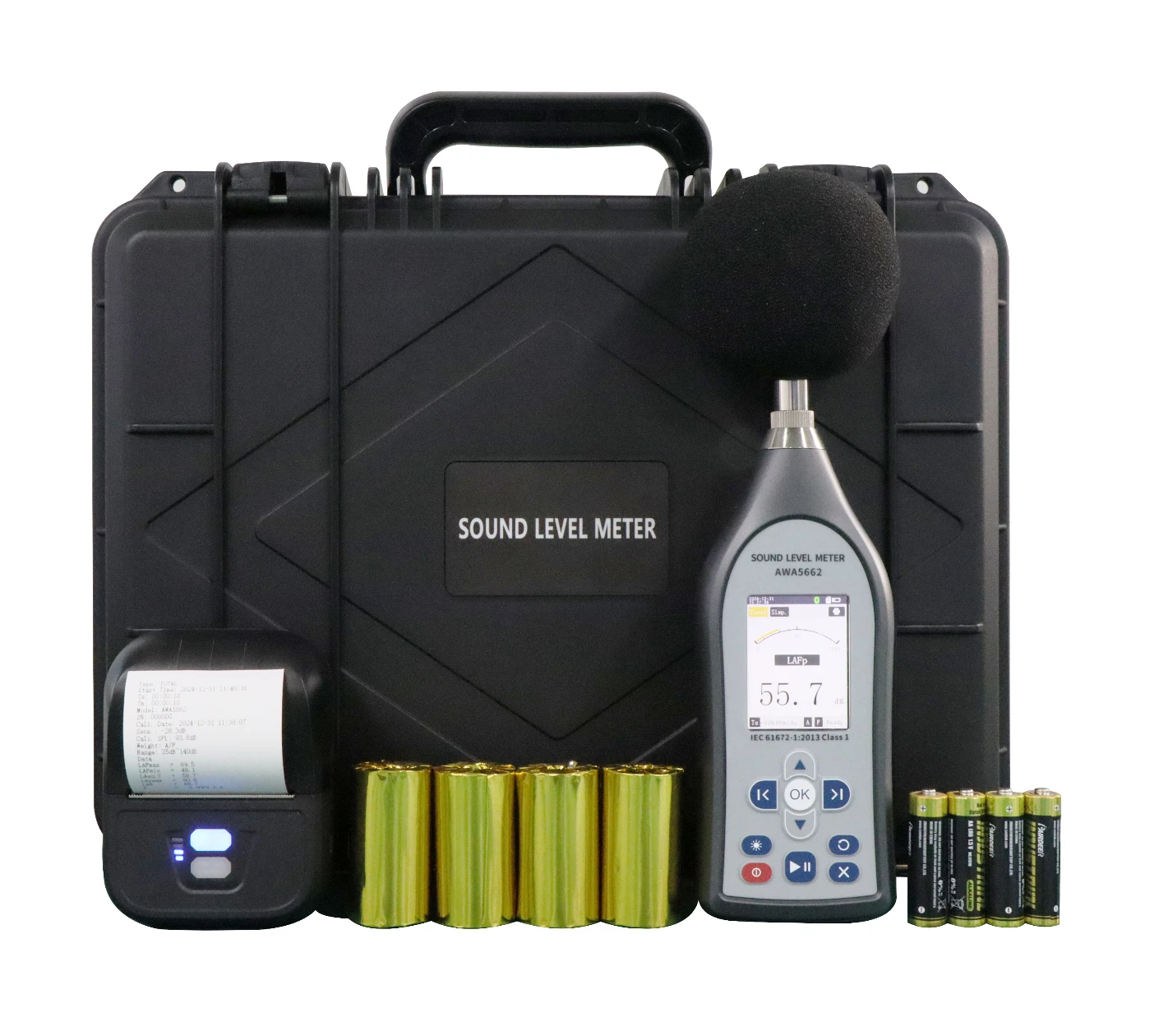
For users looking for a reliable option, this Class 1 sound level meter is well suited for accurate environmental and community noise assessments, offering the precision needed for compliance-related measurements.

AWA5662 Class 1 Sound Level Meter
Acoustic instruments

AWA5662 Class 1 Sound Level Meter

It is designed for industrial noise, vehicle noise or motorcycle exhaust noise measurement.

📊 Sound level meter (SLM)
🎚️ Comply for Standard IEC 61672: 2013
📈 25 dBA to 140 dBA
🔬 2.4-inch color screen           display


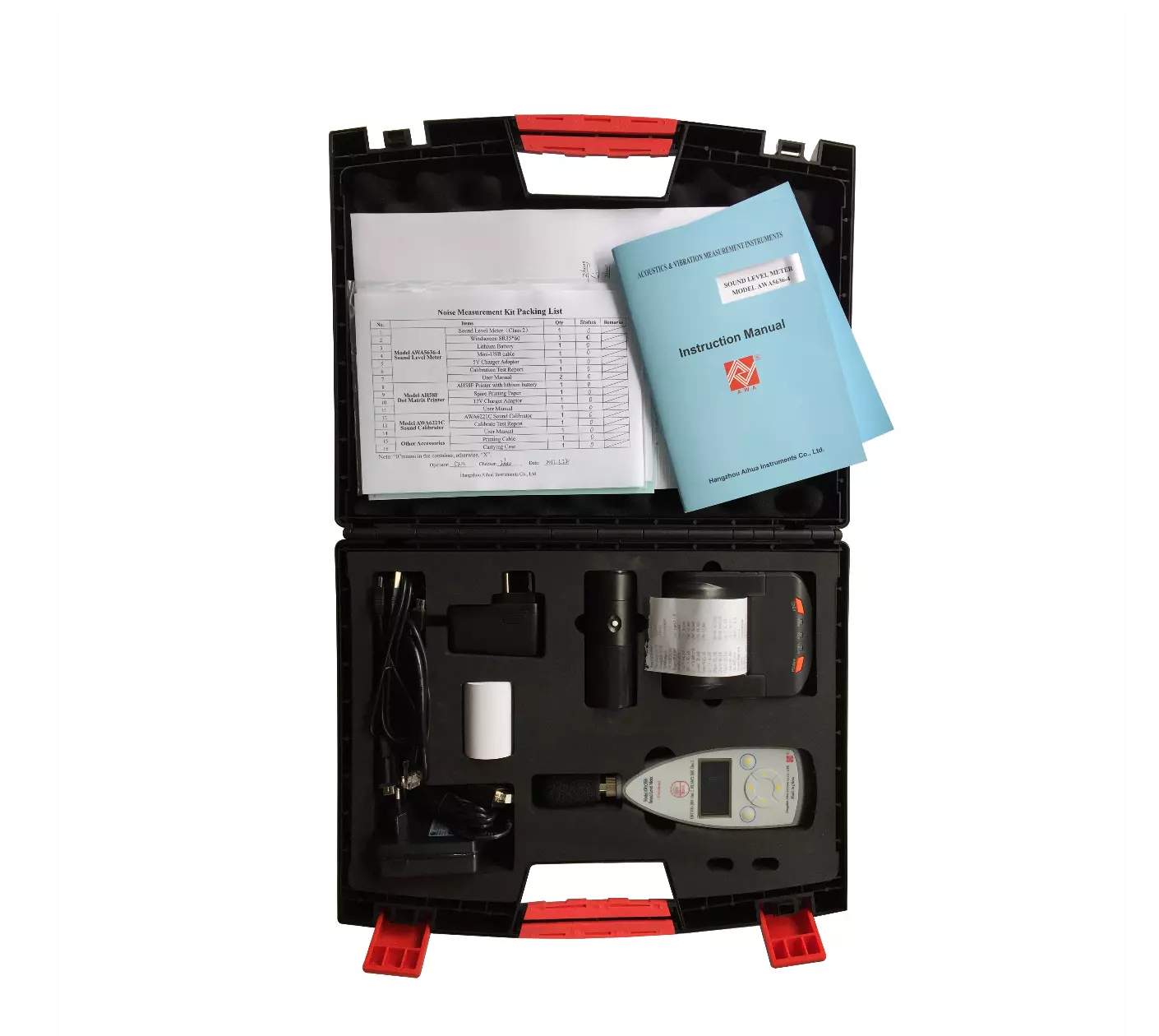
For broader general-purpose monitoring, this sound level meter provides a practical option for routine surveys and spot checks across different environments.


AWA6228+
Acoustic instruments

AWA6228+ Digital Multifunction Sound Level Meter

AWA6228 Series · Next-generation DSP instrument

A next-generation noise measurement instrument developed using digital signal processing technology — multifunction, user-friendly, integrating four tools in one device.

📊 Sound level meter (SLM)
🎚️ 1/1 & 1/3 octave analyzer
📈 Noise dosimeter
🔬 Digital signal processing


FAQ


Q

Is noise pollution an environmental issue?

Yes. Environmental noise from traffic, industry, and construction affects communities, wildlife, and overall quality of life, making it a recognized form of environmental pollution alongside air and water pollution.

Q

What are the main sources of environmental noise?

Road and rail traffic, aircraft, industrial facilities, construction equipment, and entertainment venues are among the most common sources.

Q

How is environmental noise measured?

Using metrics such as dB(A), Leq, and community-specific indicators like Lden and Lnight, measured with a calibrated sound level meter.

Q

What equipment is used to measure environmental noise?

A sound level meter is the standard tool, with Class 1 instruments used for formal compliance measurements and Class 2
 instruments suitable for general surveys.


Choosing the Right Tool for Your Noise Assessment Needs

If you're dealing with community complaints, planning a construction project, or need to demonstrate compliance with local noise regulations, having the right sound level meter is the first step toward getting reliable data. The right instrument depends on whether you need legal-grade accuracy for formal reporting or a more general tool for everyday checks.

 Get a quote today

Browse the options above to find a sound level meter that matches your monitoring needs, or reach out for guidance on selecting the right model and accessories—such as calibrators or windscreens—for your specific environmental noise assessment.


Copyright ©2026 Hangzhou Aihua Instruments Co., Ltd. All Rights Reserved ICP record number:浙ICP备11012277号-1