CN
Aihua Instruments
Aihua Instruments
CN
Sound Level Measurement: Methods, Units & Best Practices
Release time:2026.05.12 Views:8

Whether you are monitoring industrial noise, certifying vehicle emissions, or assessing workplace safety, accurate sound level measurement is the foundation of every reliable noise management program. This guide covers everything you need to know — from basic concepts to choosing the right instrument for your application.

What Should You Look for in a Sound Level Measurement Instrument?

Sound level measurement is the process of quantifying the intensity of sound in a given environment, typically expressed in decibels (dB). Accurate noise measurement is essential for protecting worker health, ensuring regulatory compliance, and managing environmental noise in residential and industrial areas.

Without reliable noise measurement data, organizations risk non-compliance with occupational health regulations, environmental noise standards, and building acoustic requirements — exposing themselves to legal liability and reputational damage.

Essential Sound Level Measurement Parameters You Need to Know

What Is Leq in Sound Measurement?

Leq (equivalent continuous sound level) is one of the most important parameters in sound level measurement. It represents the average sound energy over a given time period, giving a single value that reflects overall noise exposure. Leq is widely used in environmental noise regulations and occupational health standards.

Lmax, Lmin, and Lpeak — What Do They Mean?

· Lmax — the maximum sound level recorded during the measurement period, useful for identifying noise peaks

· Lmin — the minimum sound level, helping to characterize the background noise environment

· Lpeak — the instantaneous peak sound pressure level, critical for assessing impulse noise and protecting against hearing damage in high-noise environments

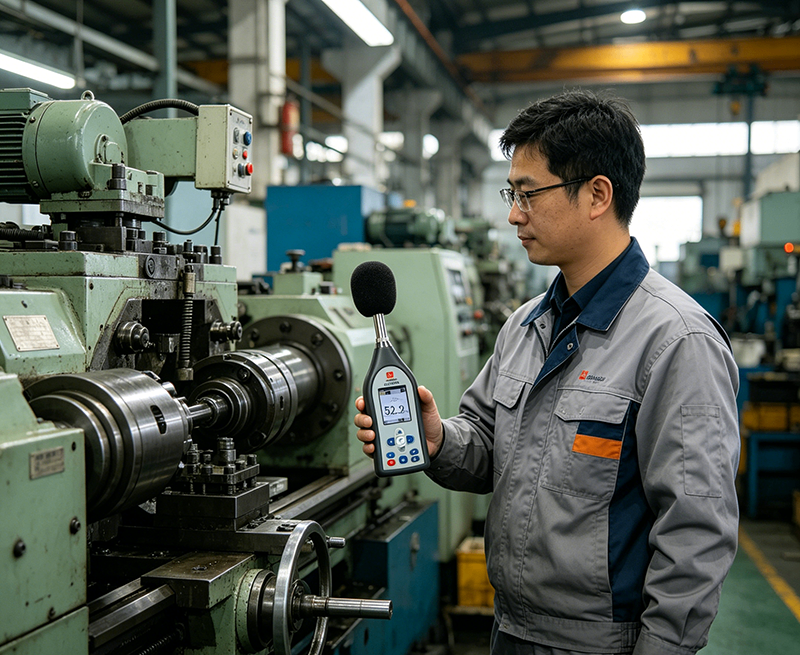
Sound Level Measurement.png

What Should You Look for in a Sound Level Measurement Instrument?

IEC 61672 Class 1 vs Class 2 — What Is the Difference?

The international standard IEC 61672 defines the performance requirements for sound level meters used in professional noise measurement. It specifies two accuracy classes:

· Class 1 — the highest accuracy level, required for official compliance testing, legal noise measurements, and precision acoustic research

· Class 2 — suitable for general-purpose noise surveys and environmental monitoring where slightly lower accuracy is acceptable

For applications such as vehicle noise certification, industrial boundary noise assessment, and regulatory compliance testing, a Class 1 sound level meter is typically required.

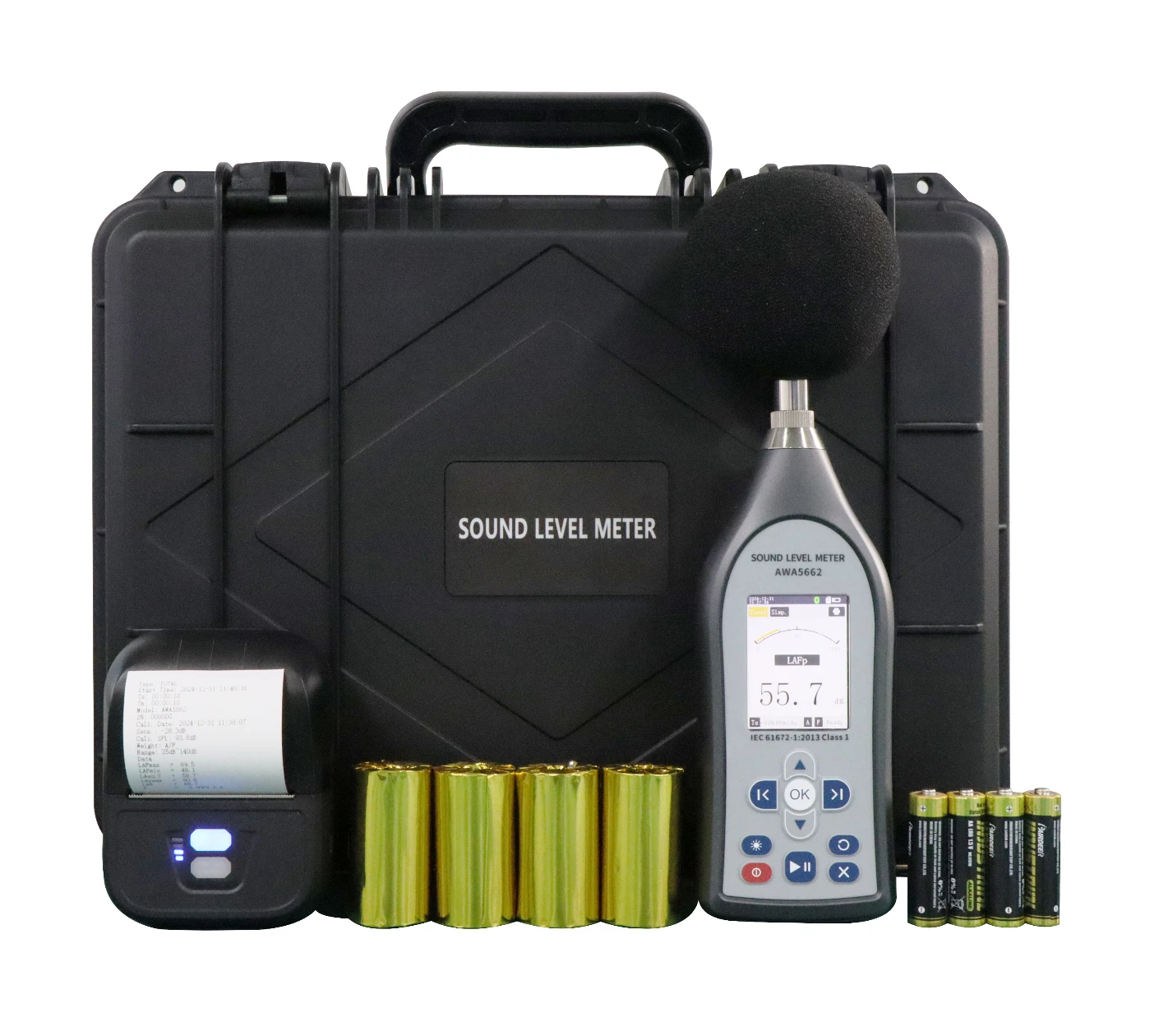
AWA5662 Class 1 Sound Level Meter — Professional Sound Level Measurement Made Simple

For professionals who demand accuracy, reliability, and ease of use in the field, the AWA5662 Class 1 Sound Level Meter from Aihua Instruments delivers a complete noise-measurement solution in a single, compact instrument.

Key Features of the AWA5662

· IEC 61672:2013 Class 1 compliance — meets the highest accuracy requirements for official and regulatory sound level measurement

· 115 dB ultra-large dynamic range — eliminates the need to switch measurement ranges, saving time and reducing the risk of missed data in unpredictable noise environments

· 2.4-inch color screen display — allows simultaneous monitoring of multiple measurement indicators, making it easy to read and interpret noise measurement results on site

· 4G internal storage — reliably saves measurement data in the field, with expandable TF card storage supporting up to 64 GB for long-term monitoring projects

· Comprehensive measurement parameters — simultaneously measures Leq, T, Lmax, Lmin, and Lpeak, giving you the complete dataset needed for noise analysis and regulatory reporting

AWA5662 Class 1 Sound Level Meter

AWA5662 Class 1 Sound Level Meter

Professional Class 1 sound level meter compliant with IEC 61672:2013,  featuring 115 dB dynamic range, 4G internal storage, and simultaneous measurement of Leq, Lmax, Lmin, and Lpeak.

     View Details →    

What Should You Look for in a Sound Level Measurement Instrument?

Class 1 or Class 2 — Which Do You Need?

If your sound level measurement results will be used for official compliance testing, legal proceedings, or regulatory reporting, a Class 1 sound level meter is essential. For general noise surveys and preliminary assessments, a Class 2 instrument may be sufficient.

Key Features to Consider

When selecting a sound level meter for professional noise measurement, look for:

· Wide dynamic range — avoids the need for range switching in variable noise environments

· Adequate data storage — ensures no measurement data is lost during long-term monitoring

· Clear display — allows multiple parameters to be monitored simultaneously in the field

Where Is Sound Level Measurement Used in the Real World?

Sound level measurement is applied across a wide range of industries and environments:

· Industrial noise surveys — assessing machinery and equipment noise in factories and production facilities

· Environmental noise monitoring — measuring traffic, construction, and community noise for regulatory compliance

· Vehicle noise certification — verifying that vehicles meet noise emission limits before market approval

· Workplace health and safety — protecting workers from noise-induced hearing damage in high-noise environments

· Building acoustics assessment — evaluating sound insulation and reverberation time in buildings and public spaces

Conclusion — Accurate Sound Level Measurement Starts with the Right Equipment

Reliable sound level measurement requires not just a capable instrument but one properly specified for your application. Whether you need to certify vehicle noise emissions, monitor industrial noise levels, or assess workplace exposure, choosing a Class 1 sound level meter that meets IEC 61672 ensures your measurements are accurate, traceable, and legally defensible.

The AWA5662 Class 1 Sound Level Meter from Aihua Instruments combines precision measurement performance with practical field features — giving noise measurement professionals the confidence to work efficiently and accurately in any environment.


Copyright ©2026 Hangzhou Aihua Instruments Co., Ltd. All Rights Reserved ICP record number:浙ICP备11012277号-1