Sound is everywhere — but not all of it is harmless. Prolonged exposure to noise above 85 dBA is enough to cause permanent hearing damage, yet most people have no idea how loud their daily environment actually is. Whether you manage a factory floor, work near heavy machinery, or simply want to protect your family at home, learning how to know sound level is the first step toward safer, more informed decisions.
This guide breaks down what sound level means, how the decibel scale works, and the best methods — including professional noise measurement equipment — to get readings you can actually trust.
Sound level refers to how much acoustic energy a sound exerts on the air around it. We measure it in decibels (dB) — a unit named after Alexander Graham Bell. Modern sound level meters detect these pressure waves and display a calibrated reading in real time.
Unlike a ruler, the decibel scale is logarithmic, not linear. Every 10 dB increase means the sound is roughly twice as loud to the human ear, but ten times more intense in physical energy. You will commonly encounter three weightings:
dBA (A-weighted) — filtered to match how the human ear perceives sound; the standard for occupational health and environmental law.
dBC (C-weighted) — captures low-frequency energy; useful for machinery bass or impulse noise assessment.
dBZ (unweighted) — raw sound pressure for physics and engineering contexts.
There are three main ways to measure sound level. Choosing the right method — and the right noise measurement equipment — makes all the difference between a rough guess and a defensible, certified result.
A sound level meter uses a precision condenser microphone to detect sound pressure waves and converts them into a calibrated dB reading. Modern meters display multiple simultaneous parameters: Leq (average level), Lmax / Lmin, and Lpeak (instantaneous peak — critical for impulse noise). Class 1 devices meet the tightest international tolerances and are required for environmental noise certification and legal noise surveys. Class 2 is suitable for general occupational surveys.
A noise dosimeter is a wearable device clipped to a worker's lapel that logs their personal noise dose throughout an entire shift. Where a sound level meter gives you a snapshot of a fixed location, a noise dosimeter captures the full exposure picture of a mobile worker — the standard tool for OSHA and IEC 61252 occupational compliance in manufacturing, construction, and aviation ground crews.
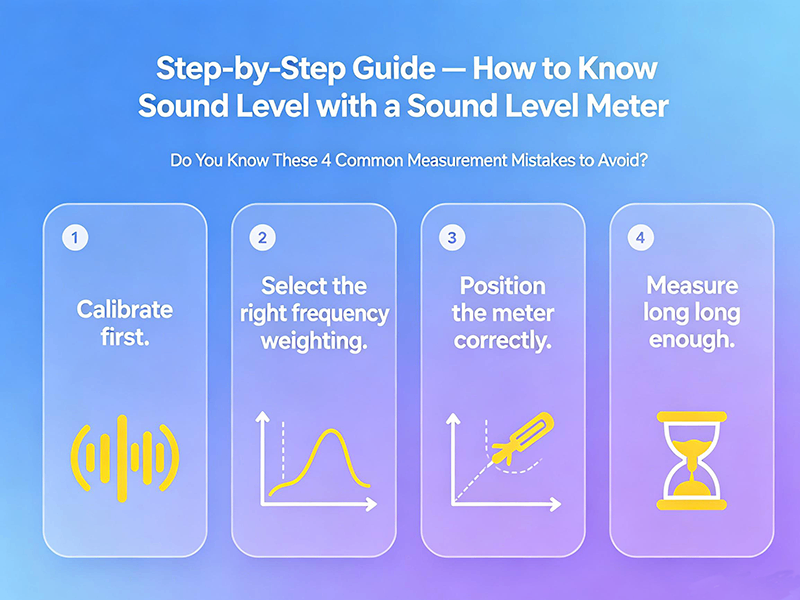
Do You Know These 4 Common Measurement Mistakes to Avoid?
Calibrate first. Always verify your meter with a Class 1 sound calibrator before starting. Even the best instrument drifts without regular calibration checks.
Select the right frequency weighting. Use dBA for general noise surveys and occupational assessments. Use dBC for low-frequency machinery or impulse noise. Use dBZ for unweighted physical measurements.
Position the meter correctly. Hold the microphone at ear height (1.2–1.5 m), aimed at the noise source. Keep it away from walls and reflective surfaces. Never cover the windscreen.
Measure long enough. Run the measurement for at least 30–60 seconds to smooth out brief spikes. Report the Leq (average), not a single peak reading. Document distance, date, time, and weighting used.

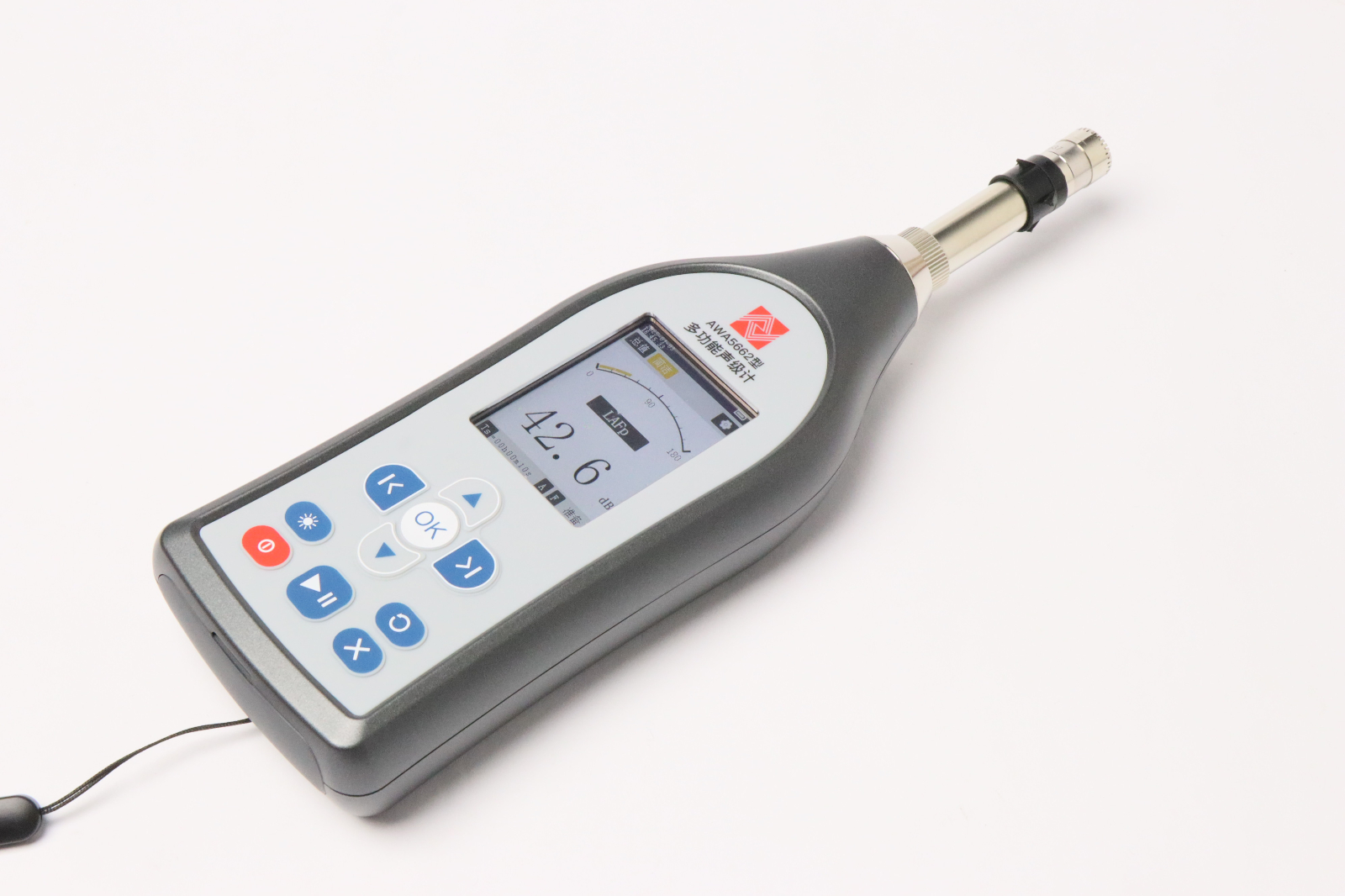
For professionals who need to know sound level with the confidence of certified accuracy, the AWA5662 Class 1 Sound Level Meter from Hangzhou Aihua Instruments solves the challenges that field engineers and safety officers face every day — from range-switching frustrations to battery anxiety on long survey days.
IEC 61672 Class 1 certified — meets international standards required for environmental noise certification, legal noise surveys, and formal workplace noise assessments. Your data is defensible in any regulatory context.
115 dB ultra-wide dynamic range (25–140 dBA) — no range-switching needed. Capture near-silent rooms and jet-engine-level industrial noise in a single measurement, without stopping to reconfigure.
Parallel A, C, Z weighting simultaneously — run one test and get dBA, dBC, and dBZ with F, S, and I time weightings all at once—no re-testing when reporting requirements change.
Complete measurement suite — Leq, Lmax, Lmin, Lpeak, LxE, and more. Every parameter needed for comprehensive noise profiles and impulse noise analysis is captured in one run.
4G internal storage + 64 GB TF card — data logging at 20 ms intervals captures every transient. Audio recording in MP3/WAV lets you replay the actual noise event for deeper analysis.
18-hour battery life — enough for the longest shift or multi-site survey day on standard AA batteries. No proprietary packs, no mid-job charging anxiety.
Field-ready build — 2.4-inch color display, 0.1 dB resolution, wireless thermal printing, operating range −20°C to 50°C. Built for industrial and outdoor environments.

Environmental noise engineers conducting community or boundary assessments that require certified, legally defensible results.
Workplace health & safety officers carrying out occupational noise surveys under OSHA or national equivalents where Class 1 accuracy is mandated.
Automotive and transport testers measure vehicle pass-by noise or motorcycle exhaust levels to regulatory standards.
Industrial facility managers who need reliable noise measurement equipment for ongoing compliance monitoring without specialist operators.
Learn more: AWA5662 Class 1 Sound Level Meter
Understanding your readings means knowing what the numbers actually imply for health and safety. OSHA sets the permissible exposure limit at 85 dBA for 8 hours. For every 3 dB rise above that, the safe exposure time halves.
| Sound Level | Typical Source | Safety Status |
|---|---|---|
| Under 40 dBA | Library, quiet bedroom | Safe — no limit |
| 40–70 dBA | Conversation, quiet office | Safe for prolonged exposure |
| 70–85 dBA | heavy traffic, vacuum cleaner | Caution — fatigue over time |
| 85–100 dBA | Power tools, motorcycle | Danger — 8 h limit at 85 dBA |
| 100–110 dBA | Chainsaw, concert | High risk — limit to minutes |
| 110+ dBA | Jet engine, fireworks | Immediate hearing damage risk |
Knowing how to know sound level comes down to three things: understanding what decibels actually mean, choosing the right method for your situation, and using professional noise measurement equipment that gives you certified, repeatable results. A smartphone app can raise an alarm. A professional sound level meter gives you the evidence to act on it.
If your work, environment, or community demands accuracy, the AWA5662 Class 1 Sound Level Meter from Aihua Instruments is built for exactly that challenge. Explore the AWA5662 at hzaihua.com →