According to the CDC, 22 million workers are exposed to hazardous noise every year. Yet for many businesses, workplace noise management remains an afterthought — until a worker files a hearing loss claim or OSHA comes knocking. Beyond the legal risks, unmanaged noise drains productivity, disrupts communication, and quietly damages your team's long-term health. This guide walks you through a practical, step-by-step approach to how to manage workplace noise levels — from identifying the problem to measuring, controlling, and monitoring it continuously.
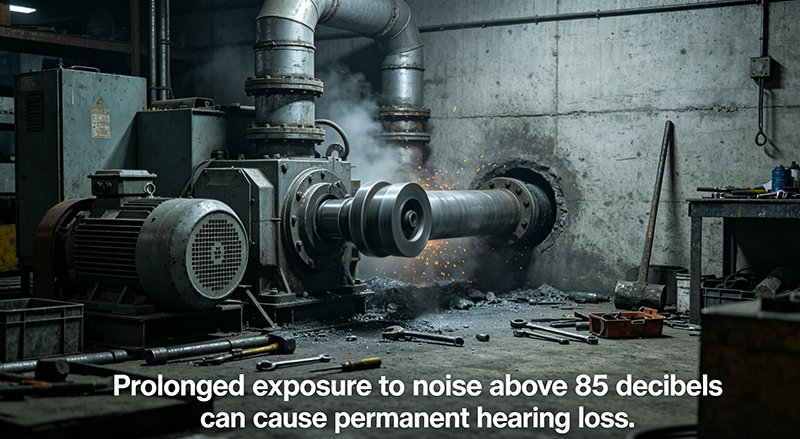
Prolonged exposure to noise above 85 decibels — roughly equivalent to heavy traffic — can cause noise-induced hearing loss (NIHL), a permanent and irreversible condition. Beyond hearing damage, high occupational noise levels are linked to increased stress hormones, fatigue, cardiovascular strain, and a measurable rise in workplace accidents caused by missed verbal warnings and impaired focus.
Under OSHA 29 CFR 1910.95, employers are legally required to implement a Hearing Conservation Program whenever workers are exposed to an 8-hour time-weighted average (TWA) of 85 dBA or higher. The Permissible Exposure Limit (PEL) is set at 90 dBA TWA. Failure to comply — or to conduct proper workplace noise monitoring — can result in significant OSHA citations, workers' compensation liability, and reputational damage.

Occupational noise exposure is not limited to factories and construction sites. Manufacturing machinery, transportation engines, restaurant kitchens, call centers, and even open-plan offices all present real risks. Mobile workers who move between areas throughout the day face a particularly unpredictable exposure profile — their actual dose cannot be estimated from a single spot measurement.
Start with a walk-through survey. Map the areas of your facility, identify noise-generating equipment, and note how long workers spend in each zone. Involve employees in the process — they know better than anyone where the noise is worst. Document everything: sources, locations, and shift-by-shift variation. This baseline becomes the foundation for every subsequent control decision.
Sound level meters measure noise intensity at a single point in time, making them useful for fixed-station assessments in stable environments. But for workers who move around — or whose exposure varies throughout the shift — OSHA requires personal noise dosimetry. A dosimeter is worn on the body throughout the workday and captures cumulative personal noise exposure, producing a defensible 8-hour TWA that holds up under regulatory scrutiny.
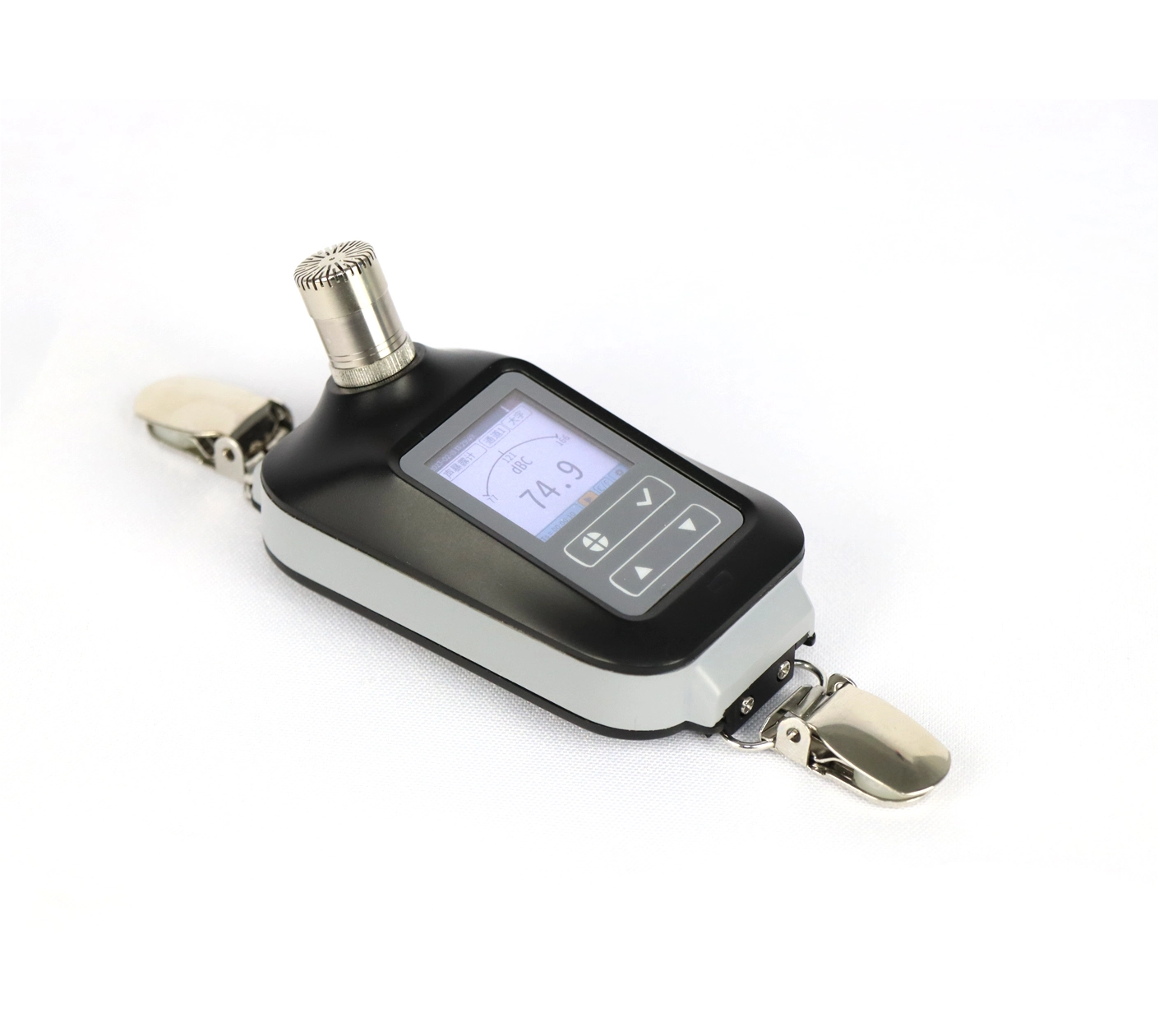
For safety managers who need reliable, OSHA-defensible data without slowing operations down, the AWA5920 noise dosimeter from hzaihua.com is built to solve exactly that problem.
At just 119g with a cable-free, modular design, the AWA5920 is compact enough that workers forget they're wearing it — meaning you get accurate, real-world personal noise exposure data rather than measurements influenced by worker behavior. Its dual-channel capability allows simultaneous monitoring of multiple parameters, giving safety teams a complete picture in a single session.
■ Attractive design, mini-sized, and weighs only 119g
■ Modular design, cable-free, and dual channels
■ Comply with IEC61672, IEC61252 and ANSI S1.25
■ Rechargeable lithium battery
Compliance is built in: the AWA5920 meets IEC61672, IEC61252, and ANSI S1.25 — the international and OSHA-recognized standards for personal noise dosimetry. Its IP65 rating makes it tough enough for industrial environments where dust, moisture, and rough handling are daily realities. A rechargeable lithium battery eliminates the problem of mid-shift battery failure, and the included PC software package makes downloading, reviewing, and reporting workplace noise monitoring data straightforward — no specialist required.
Whether your team works on a factory floor, a construction site, or a logistics hub, the AWA5920's variety of mounting methods means it can be deployed wherever the risk exists.
Workplace noise monitoring is not a one-time task. OSHA requires re-monitoring whenever changes in processes, equipment, staffing, or production layouts could affect employee exposure. The AWA5920's PC software package makes it easy to repeat surveys, compare results over time, and demonstrate a pattern of proactive compliance — the kind of documented record that protects your business in the event of an inspection or claim. Pair regular dosimetry with employee feedback to catch emerging noise issues before they become regulatory problems.
Managing workplace noise levels effectively comes down to a clear framework: Identify hazards → Measure accurately → Apply engineering controls → Implement administrative adjustments → Use PPE as a last resort → Monitor continuously.
Every step in that chain depends on having accurate, reliable measurement data at its core. The AWA5920 noise dosimeter from hzaihua.com gives safety professionals exactly that: lightweight, industrial-grade, fully compliant personal noise exposure monitoring that works as hard as your team does.
Don't wait for a hearing loss claim or an OSHA citation to take action. Measure it today — and know exactly where you stand.