CN
Aihua Instruments
Aihua Instruments
CN
A Complete Guide to Measurement Microphones: Types, Features, and Applications
Release time:2026.06.01 Views:27

In acoustic testing and sound analysis, the measurement microphone is the most critical component in the signal chain. Unlike studio or consumer microphones, a measurement microphone is engineered for precision, repeatability, and wide dynamic range — capable of capturing everything from near-inaudible whispers to industrial-scale explosions. This article provides a comprehensive overview of measurement microphone types, polarization methods, and specialized variants used across modern acoustic applications.

Measurement Microphone Sizes and Their Key Characteristics

Measurement microphones are manufactured in four standard outer diameter sizes: 1 inch, 1/2 inch, 1/4 inch, and 1/8 inch. As a general rule, a smaller microphone body delivers a wider frequency range, better directivity, and the ability to handle higher sound pressure levels — at the cost of reduced sensitivity. The 1/2-inch measurement microphone remains the most widely adopted format in the industry, offering an ideal balance of sensitivity and bandwidth, with a protective grid outer diameter of 13.2 mm. It is the preferred choice for the majority of precision sound level measurements and acoustic research applications.

Three Core Measurement Microphone Types by Acoustic Field

Selecting the correct measurement microphone for a given acoustic environment is essential to obtaining accurate results. The three principal types are defined by the sound field in which they are designed to operate.

Free-Field Measurement Microphone

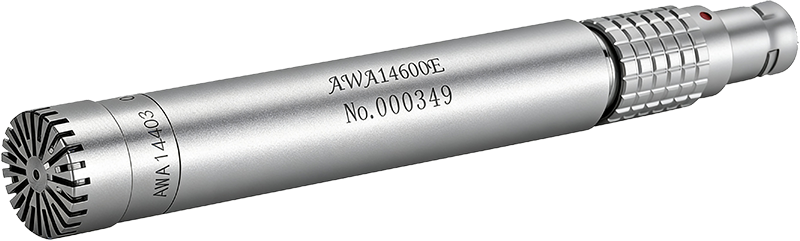
A free-field measurement microphone is optimized for use in anechoic or near-anechoic environments such as anechoic chambers. Its frequency response is flat when sound arrives at 0° incidence, making it ideal for applications where the direct sound path dominates. Typical use cases include loudspeaker characterization, exterior vehicle noise measurement, and directional analysis of acoustic sources.

Free-Field Measurement Microphone.png

Pressure-Field Measurement Microphone

The pressure-field measurement microphone is designed for placement at or near rigid boundaries — such as cavity walls, ducts, or the entrance of an ear canal — where standing waves create a pressure maximum at the surface. This microphone type accurately captures true acoustic pressure at that point without interference from the standing wave pattern. It is widely used in ear canal simulators (conforming to IEC 60318), internal equipment noise testing, and duct acoustics.

Diffuse-Field Measurement Microphone

Optimized for reverberant or diffuse sound fields — such as those found in reverberation chambers — the diffuse-field measurement microphone provides a flat average response across sound arriving from multiple angles simultaneously. This makes it the standard choice for building acoustics measurements, reverberation time analysis, environmental noise assessment, and material absorption coefficient testing.

Externally Polarized vs. Pre-Polarized Measurement Microphones

All condenser-based measurement microphones require a stable electric charge between the diaphragm and back plate. This charge is delivered by one of two polarization methods, each with distinct operational advantages.

Externally Polarized Measurement Microphones

Externally polarized measurement microphones require an external bias voltage — typically 200 V — to charge the capacitor formed between the diaphragm and back plate. This classical design offers superior long-term stability and is recommended for laboratory-grade acoustic measurements where maximum accuracy is required, as well as for measurements conducted in elevated temperature environments.

Pre-Polarized (Electret) Measurement Microphones

Pre-polarized measurement microphones use a layer of electret material deposited on the back plate, which permanently stores the required electrical charge without any external voltage. This eliminates the need for a dedicated polarization power supply, simplifying measurement systems significantly. Modern pre-polarized measurement microphones exhibit excellent moisture resistance and have achieved stability levels comparable to their externally polarized counterparts. They are the dominant choice in portable sound level meters and field measurement instruments.

Request Quote →

Specialized Measurement Microphones for Extreme Acoustic Conditions

Beyond standard configurations, several specialized measurement microphone variants are available to address acoustic environments at the extremes of sound pressure level and frequency range.

High Sound Pressure Measurement Microphones

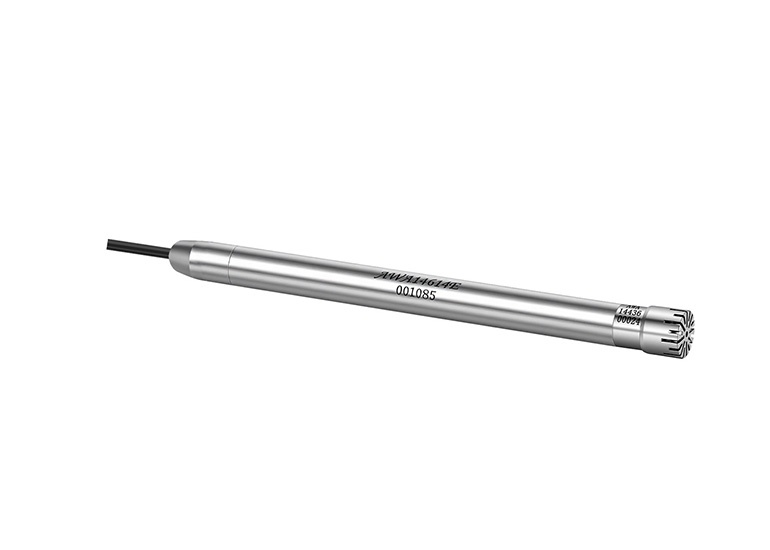
Standard measurement microphones typically cover the range from 16 dB to 145 dB SPL. High sound pressure measurement microphones extend this range significantly through reinforced housings, specialized diaphragm materials, and optimized internal structures that maintain linear response under extreme acoustic loading. Applications include industrial noise monitoring, blast and explosive event characterization, and jet engine testing. The AWA14436 measurement microphone from our product range exemplifies this category, combining a frequency response extending to 70 kHz with an upper measurement limit exceeding 175 dB SPL.

High Sound Pressure Measurement Microphones.jpg

Low-Noise Measurement Microphones

At the opposite end of the dynamic range, low-noise measurement microphones employ high-sensitivity diaphragm assemblies and ultra-low self-noise electronics to capture acoustic signals in very quiet environments. These microphones are essential for precision acoustic research, psychoacoustic studies, and audio engineering applications demanding the resolution of fine acoustic detail. Our AWA14411 measurement microphone achieves a self-noise floor of just 6.5 dB(A), providing a reliable foundation for low-level acoustic measurements.

Ultrasonic Measurement Microphones

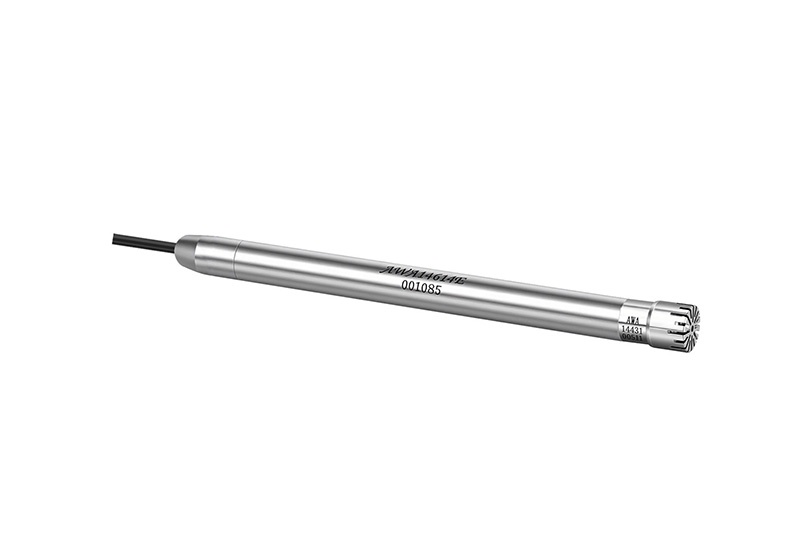
Ultrasonic measurement microphones extend frequency response well above the 20 kHz audible limit — in many cases reaching tens or even hundreds of kilohertz — while also covering the standard audible range. Key applications include industrial ultrasonic non-destructive testing, animal bioacoustics research (including bat and rodent vocalizations), and high-frequency leak detection. The AWA14431 ultrasonic measurement microphone offers an upper frequency limit of 80 kHz combined with a measurement ceiling exceeding 165 dB SPL, making it suitable for simultaneous ultrasonic and high-amplitude measurements.

AWA14431 ultrasonic measurement microphone.jpg

 Contact Our Team →

Infrasound Measurement Microphones

Infrasound measurement microphones are engineered for the detection of acoustic signals below 20 Hz, where conventional microphones lose sensitivity. These devices feature exceptional low-frequency response, wide dynamic range, and strong rejection of environmental interference — critical for capturing the long-wavelength, low-frequency oscillations associated with seismic activity, volcanic monitoring, nuclear test detection, atmospheric dynamics research, and structural vibration analysis. Our AWA14423C free-field measurement microphone unit has been specifically designed for infrasound measurement, with a lower frequency limit reaching 0.5 Hz.


Copyright ©2026 Hangzhou Aihua Instruments Co., Ltd. All Rights Reserved ICP record number:浙ICP备11012277号-1