



Why Use Vibration Analysis? YT3001A vs. YT3001B Vibration Meter Review
Unusual vibration is often an early indication of a developing mechanical problem. In rotating equipment, changes in vibration levels can be associated with imbalance, shaft misalignment, loose components or bearing deterioration. Identifying these changes early helps maintenance teams investigate potential faults before they lead to unexpected downtime.
So, why do we use vibration analysis in industrial maintenance? It provides measurable data on machine condition, supports fault diagnosis and helps engineers make informed maintenance decisions.
In this guide, we explain the main applications of vibration analysis, the fundamentals of vibration measurement, and the differences between the YT3001A and YT3001B handheld vibration meters from Aihua Instruments.
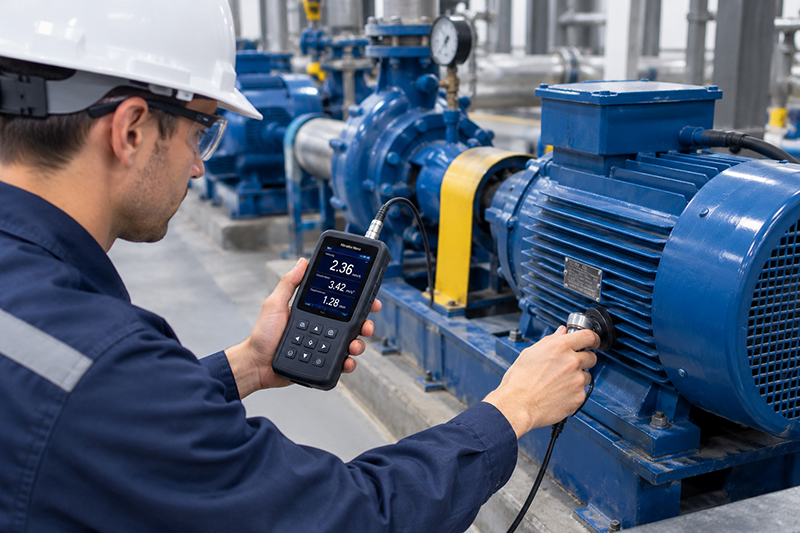
Why Is Vibration Analysis Important in Machinery Maintenance?
Vibration analysis is widely used in condition monitoring because it helps maintenance personnel identify changes in machine behavior while equipment is operating.
1. Detect Mechanical Problems at an Early Stage
Imbalance, misalignment, mechanical looseness and bearing deterioration can all affect a machine's vibration characteristics. Regular measurements help engineers identify abnormal readings and determine whether further inspection is necessary.
Early detection does not guarantee that every fault can be identified, but it gives maintenance teams more time to investigate and plan repairs.
2. Reduce Unplanned Downtime
Unexpected equipment failure can interrupt production, delay deliveries and increase maintenance costs. Monitoring vibration trends helps maintenance teams identify equipment that may require attention and schedule inspections or repairs during planned shutdowns.
3. Support Predictive Maintenance
A predictive maintenance program uses equipment condition data to inform maintenance decisions rather than relying solely on fixed service intervals.
By comparing vibration readings over time, engineers can identify developing changes, prioritize inspections and make better use of maintenance resources.
4. Improve Equipment Reliability
Excessive vibration can contribute to wear in bearings, couplings, fasteners and other mechanical components. Identifying the cause of abnormal vibration helps maintenance teams address underlying problems and reduce unnecessary stress on equipment.
What Faults Can Vibration Analysis Help Identify?
The vibration patterns associated with mechanical faults vary with machine design, operating speed, load and measurement location. The following examples illustrate common applications of machinery fault diagnosis.
|
Mechanical condition |
Typical indication |
Common applications |
|
Imbalance |
Excessive vibration associated with uneven mass distribution |
Fans, motors, pumps |
|
Misalignment |
Vibration associated with incorrectly aligned shafts or couplings |
Motor-pump assemblies, coupled machinery |
|
Mechanical looseness |
Abnormal movement caused by loose fasteners, mounts or components |
Machine bases, housings, support frames |
|
Bearing deterioration |
Changes in vibration that may indicate rolling-element or raceway damage |
Motors, pumps, gearboxes |
|
Gear damage |
Abnormal vibration associated with damaged or worn gear teeth |
Gearboxes, industrial drives |
A handheld vibration meter is useful for routine inspections and identifying abnormal vibration levels. However, a reading alone does not confirm the exact cause of a fault. Detailed diagnosis may require frequency-spectrum analysis, phase measurements or additional inspection methods.
YT3001A Handheld Vibration Meter for Routine Inspections
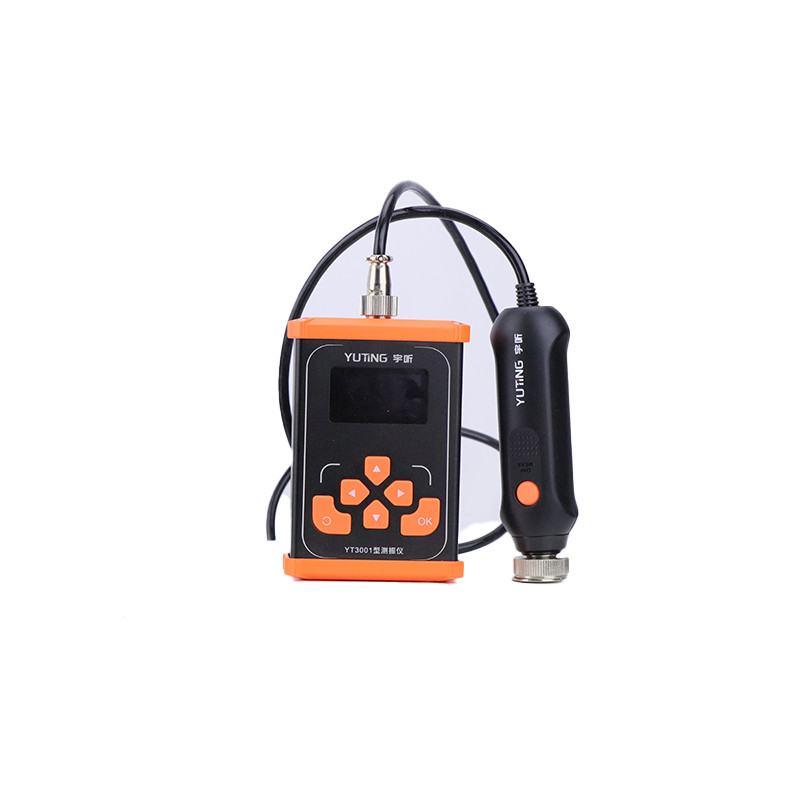
The YT3001A is designed for practical vibration measurements in industrial environments. Its multi-parameter measurement capability allows users to switch between acceleration, velocity and displacement, making it suitable for routine equipment inspections.
Key features include:
Three vibration parameters: Switch between acceleration, velocity and displacement using one instrument.
Multiple amplitude readings: Display RMS, Peak and Peak-to-Peak values simultaneously to support efficient inspections.
OLED display: View measurement results directly at the equipment.
Wide frequency response: Suitable for vibration measurements across its specified operating frequency range.
Read more
The YT3001A is worth considering for maintenance teams that need a straightforward handheld instrument for routine vibration checks, equipment condition surveys and comparative measurements.
YT3001B High-Sensitivity Vibration Meter
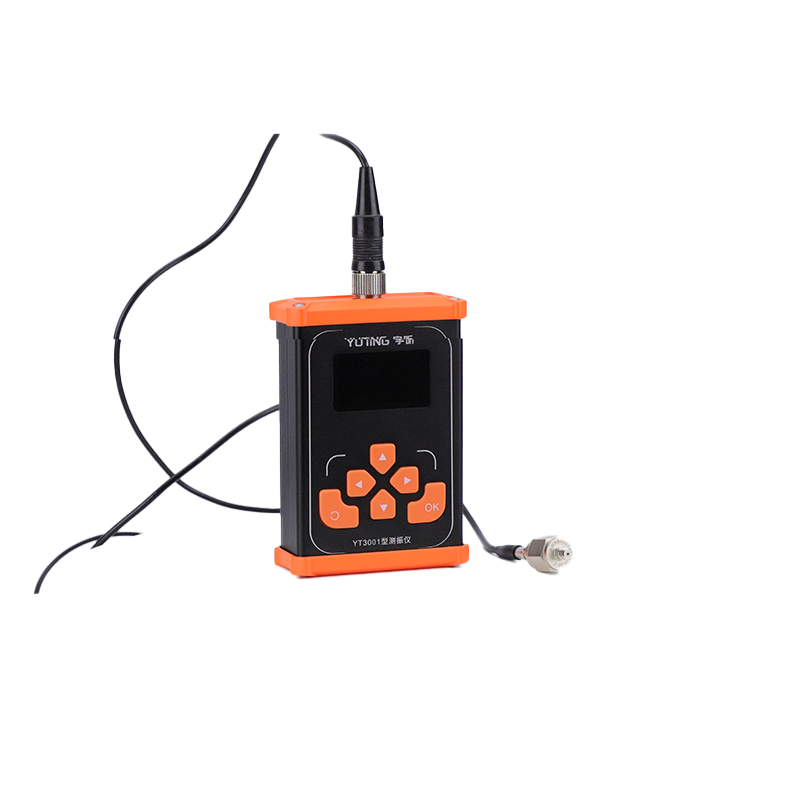
For applications requiring a broader measurement range and greater sensor sensitivity, the YT3001B offers an alternative to the YT3001A.
Its specified sensor sensitivity is 2.8 pC/(m·s²), and its frequency response extends up to 8 kHz. These characteristics may be useful when the measurement task involves relatively small vibration signals or higher-frequency components, provided the signal falls within the instrument's specified operating limits.
The YT3001B measures acceleration, velocity and displacement and supports simultaneous RMS, Peak and Peak-to-Peak readings.
Its specified measurement ranges are:
Acceleration: 0.001 to 2000 m/s²
Velocity: 0.1 to 20,000 mm/s
Displacement: 0.005 to 200 mm
Contact us
Before selecting an instrument, check that the required measurement range, frequency response, sensor characteristics and measurement accuracy are appropriate for the intended application.
Practical Example: Monitoring a Pump Station
Consider a maintenance team that checks the bearings of several pumps at regular intervals. During each inspection, technicians measure vibration at consistent locations and record the readings alongside operating conditions.
Over several inspections, one pump shows a sustained increase in vibration velocity. Rather than immediately assuming that the bearing has failed, the team checks the operating conditions, compares measurements at other locations and investigates possible causes such as misalignment, looseness or bearing deterioration.
If further inspection confirms a developing problem, maintenance can be scheduled before the condition causes an unexpected shutdown.
This is a practical example of how vibration monitoring supports condition-based maintenance. The value comes not from a single reading, but from consistent measurements, meaningful comparisons and appropriate follow-up.
Frequently Asked Questions
Q: Why do we use vibration analysis?
A: Vibration analysis helps identify abnormal machine behavior, investigate potential mechanical faults, monitor equipment condition and support maintenance planning.
Q: What does a handheld vibration meter measure?
A: Depending on its capabilities, a vibration meter measures acceleration, velocity and displacement. It may also display RMS, Peak and Peak-to-Peak values.
Q: Can a vibration meter identify bearing failure?
A: A vibration meter can help identify abnormal vibration associated with bearing deterioration. Confirming the cause may require frequency analysis and additional diagnostic checks.
Q: What is the difference between the YT3001A and YT3001B?
A: Both models support multi-parameter vibration measurement. The YT3001B has specified sensor sensitivity and measurement ranges that may make it more suitable for certain demanding applications. Compare the verified specifications of both models before purchasing.
Conclusion: Choose the Right Tool for Vibration Monitoring
Vibration analysis helps maintenance teams identify abnormal machine behavior, track changes in equipment condition and plan maintenance more effectively.
The YT3001A and YT3001B handheld vibration meters provide options for different measurement requirements. The right choice depends on the parameters, measurement ranges, frequency response and sensitivity required for your application.
Visit Aihua Instruments to learn more about our vibration measurement solutions. Contact our team to discuss your application and identify a suitable instrument for your equipment monitoring needs.
blog latest news

Any questions? We look forward to hearing from you.
 Tel: +86-19012832378