


Which Sound Level Meter Is the Best? A 2026 Buyer's Comparison
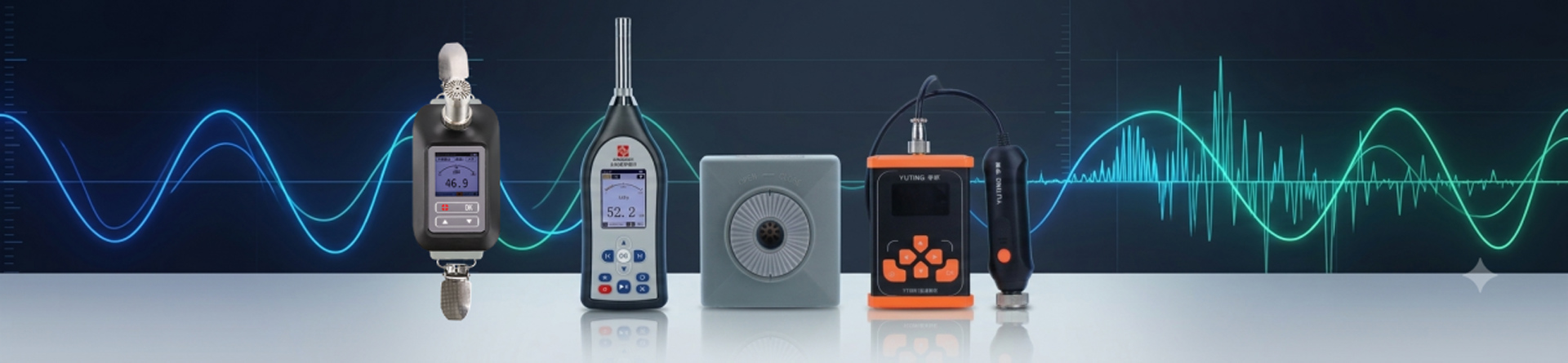
Ask ten acousticians which sound level meter is the best and you'll get ten different answers — because "best" depends entirely on what's making the noise. A meter tuned for factory-floor compliance checks solves a different problem than one built for hall acoustics or 24-hour environmental monitoring. Rather than crown a single universal winner, this guide compares two purpose-built industrial sound level meters — the AWA5662 and AWA6292 — against the criteria that actually matter on a production floor: accuracy class, dynamic range, and the specific noise problem each one is designed to solve.
What Actually Makes a Sound Level Meter "The Best"?
- Is it Class 1 accurate? Class 1 vs Class 2 changes what your readings can be used for — audits, litigation, and regulatory reporting need Class 1.
- Does it need octave-band analysis? Diagnosing which machine component is loud, not just how loud, requires 1/1 or 1/3 octave spectrum data.
- Does it fit your workflow? Dosimetry (TWA, LEX,8h) for occupational compliance is a different job than reverberation and STI for a hall.
AWA5662 vs AWA6292: Head-to-Head
|
Spec |
AWA5662 |
AWA6292 |
|
Accuracy class |
Class 1 |
Class 1 |
|
Standards |
IEC61672-1:2013, IEC61260-1:2014, IEC61252:2025 |
IEC61672-1:2013, IEC61260-1:2014, IEC61252:2025 |
|
Linear dynamic range |
115 dB, no manual switching |
123 dB (20–143 dB(A)) |
|
Display |
2.4" color display |
4.3" capacitive touchscreen |
|
Configurations |
Basic / Integral / Dose / Statistical |
Modular — add octave, FFT, reverberation, STI, sound exposure as needed |
|
Connectivity |
USB, PC data export |
4G, WiFi, Bluetooth, USB, LIMS integration |
|
Recording |
Built-in WAV/MP3 recording |
Real-time multi-parameter storage + encryption |
|
Weight |
~340 g, portable |
Larger, workstation-grade |
|
Best suited for |
Factory floor & occupational spot-checks |
Continuous monitoring, halls, environmental & airport noise |
Wider linear range means fewer missed peaks and no manual range-switching mid-measurement — critical when a press or compressor cycles unpredictably.
AWA5662 — Built for the Factory Floor Problem
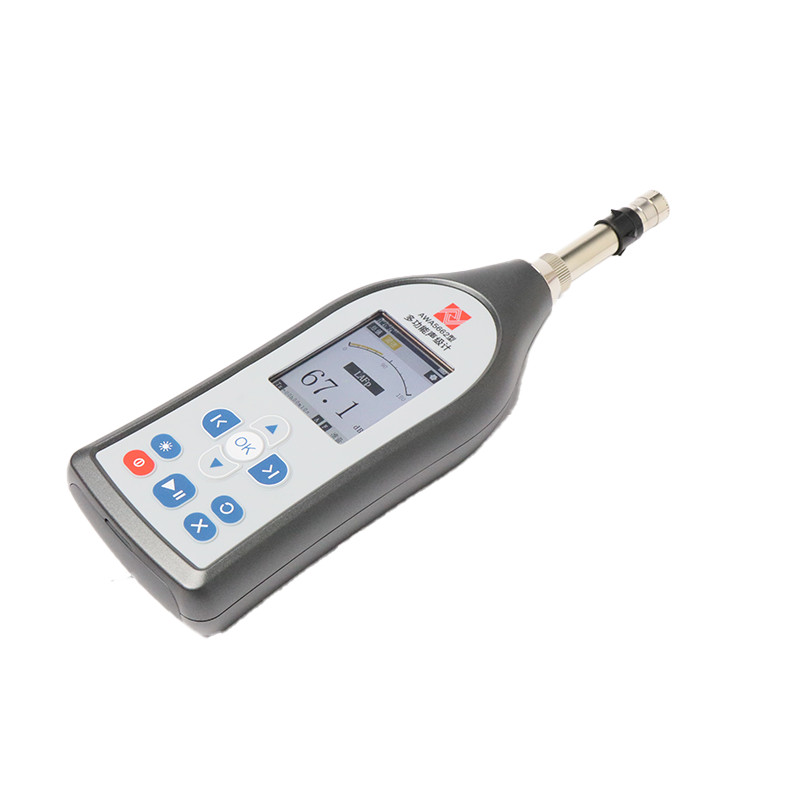
If your daily problem is "we need a Class 1 reading on a machine, right now, without recalibrating the range," the AWA5662 multifunctional sound level meter solves it directly. Its 115 dB linear range means one setting covers quiet office-adjacent zones and a stamping press without switching mid-shift. The four configurations (Basic, Integral, Dose, Statistical) let a safety team buy exactly the measurement capability their audit requires — Leq for a spot check, or full TWA/LEX,8h dosimetry for an occupational exposure survey — instead of paying for spectrum analysis they'll never open. At 340 g, it's built to live in a technician's kit, not a case that stays in the van.
AWA6292 — Built for the "One Device, Every Job" Problem
Teams running continuous environmental monitoring, airport noise contours, or hall acoustic commissioning face a different problem: too many single-purpose instruments and no unified data pipeline. The AWA6292 solves that with a modular architecture — noise evaluation, 1/1 and 1/3 octave analysis, reverberation, and STI on one chassis — and built-in 4G/WiFi/Bluetooth so encrypted readings sync straight into a LIMS without a technician manually transcribing numbers off a screen. The 4.3" touchscreen and 123 dB range are there because this device is expected to run unattended for hours, not just for a five-minute spot check.
Read more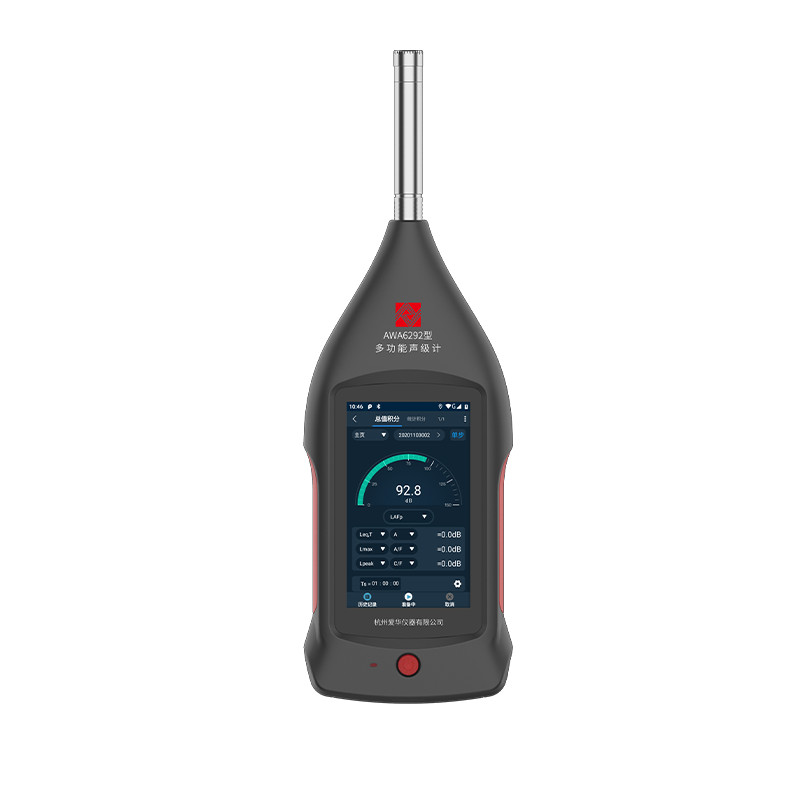
Why Class 1 Accuracy Isn't Optional
A reading is only as useful as the standard it can be defended against. IEC61672-1:2013 Class 1 compliance is what turns a measurement into evidence — for an OSHA-style audit, a permit condition, or a customer complaint. Both the AWA5662 and AWA6292 hold Class 1 certification under IEC61672-1:2013, IEC61260-1:2014 (octave filters), and IEC61252:2025 (personal exposure), so the choice between them isn't an accuracy trade-off — it's a workflow one. The real differentiator is dynamic range: a narrower range forces manual switching mid-measurement, which introduces exactly the kind of gap an auditor will ask about. Both devices remove that gap, just at different ceilings — 115 dB and 123 dB respectively.
Case Study: Cutting a Compliance Audit Down to One Shift
A safety manager at a metal-stamping facility needed a defensible occupational exposure record across a floor with unpredictable peak noise from press cycling — the kind of environment where a narrow-range meter forces constant manual switching and creates gaps an auditor will flag. Switching to a Class 1 meter with a 115 dB linear range meant one technician could walk the full floor in a single shift, capturing Leq, Lmax, and LEX,8h simultaneously without re-ranging between the quiet inspection bay and the press line. Built-in WAV recording gave the safety team an audio log to pair with any exposure reading that got questioned later.
Contact usFrequently Asked Questions
Q: What's the difference between a Class 1 and Class 2 sound level meter?
A: Class 1 meters have a tighter accuracy tolerance and are required for regulatory, legal, or audit-grade measurements. Class 2 is acceptable for general-purpose or preliminary checks. Both the AWA5662 and AWA6292 are Class 1 under IEC61672-1:2013.
Q: Can one meter handle both noise-dose surveys and spectrum analysis?
A: Yes — the AWA5662's Statistical and Integral configurations cover dosimetry, and its optional 1/1 and 1/3 octave module adds spectrum analysis. The AWA6292 goes further with a fully modular architecture that adds reverberation, STI, and FFT on the same device.
Q: Do I need 4G/WiFi connectivity, or is a standalone meter enough?
A: If you're running unattended, continuous, or multi-site monitoring that needs to feed a LIMS automatically, the AWA6292's built-in connectivity removes manual data transfer. For scheduled spot-checks and walk-through surveys, the AWA5662's USB export is typically sufficient.
Q: Which sound level meter is the best for a small maintenance team?
A: The AWA5662 is the more practical starting point — it's lighter, Class 1 accurate, and its configuration options mean a team only pays for the measurement type (Basic, Integral, Dose, or Statistical) their audits actually require.
So, Which Sound Level Meter Is the Best?
There isn't a single winner — there's a right instrument for the problem in front of you. Choose the AWA5662 if your priority is a portable, Class 1 meter that covers factory and occupational noise without manual range-switching. Choose the AWA6292 if you need one device to handle continuous monitoring, octave/FFT analysis, reverberation, and STI, with data flowing straight into your compliance systems. Both meet the same Class 1 standards — the decision comes down to whether your day is spot-checks or unattended monitoring.
blog latest news

Any questions? We look forward to hearing from you.
 Tel: +86 19012832378