


How to Calibrate a Sound Level Meter the Right Way
If your noise readings can't be trusted, neither can the decisions built on them. Whether you're checking factory noise levels, verifying workplace exposure limits, or logging environmental data, every reading is only as good as your last calibration. In this guide, we'll walk through what it actually means to calibrate a sound level meter, why it matters, and how to do it correctly using a Class 1 acoustic calibrator — plus which instruments make the process easiest.
What Does It Mean to Calibrate a Sound Level Meter?
Calibration means checking your meter's output against a known, traceable reference sound pressure level — usually 94 dB or 114 dB at 1 kHz — and correcting any drift. Microphones are sensitive components, and their sensitivity shifts slightly over time due to age, humidity, and temperature changes. A quick sound calibrator check before each session confirms your instrument is reading true, not just "close enough."
Why Calibrate Before Every Measurement?
Skipping calibration isn't just a technicality — it's a risk. Inaccurate readings can lead to non-compliant noise reports, disputed environmental claims, or missed occupational exposure limits. Standards such as IEC 61672 for sound level meters and IEC 60942 for calibrators exist precisely so that a reading taken in one facility can be trusted and compared anywhere else. Environmental factors like atmospheric pressure and temperature can shift microphone sensitivity between sessions, so a fresh calibration check protects both your data and your credibility.
Step-by-Step: How to Calibrate a Sound Level Meter
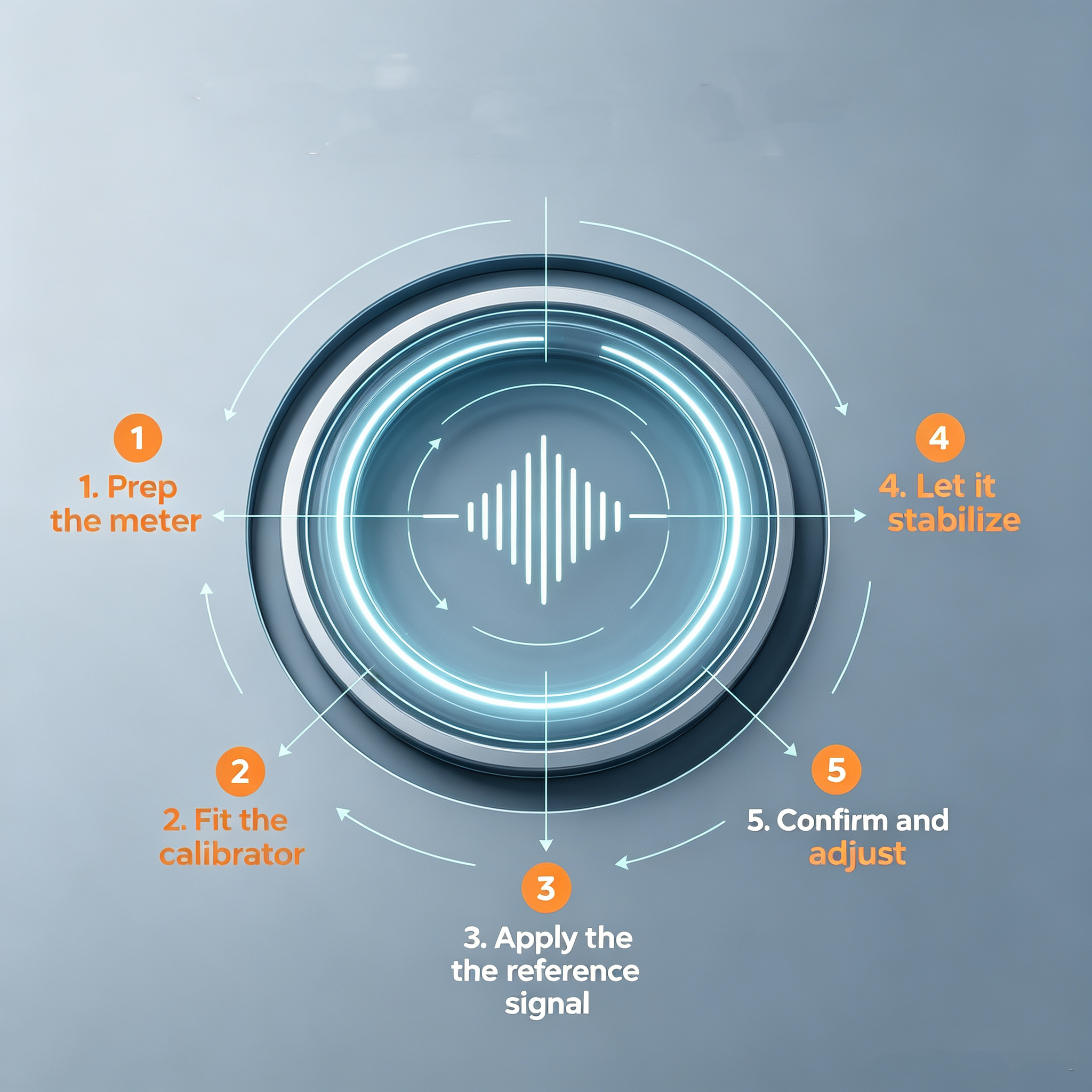
- Prep the meter– Power on the sound level meter and remove the windscreen to expose the microphone.
- Fit the calibrator– Insert the microphone into the acoustic calibrator until it forms a snug, airtight seal.
- Apply the reference signal– Switch on the calibrator to emit a stable 94 dB or 114 dB tone at 1 kHz.
- Let it stabilize– A quality calibrator settles in seconds, not minutes.
- Confirm and adjust– The meter compares its reading to the reference and auto-corrects any offset. Once confirmed, remove the calibrator and you're ready to measure.
This is where equipment quality matters. A calibrator that drifts with temperature or takes too long to stabilize slows down your workflow and introduces its own uncertainty — which is exactly the problem a good acoustic calibrator is meant to eliminate.
Choosing a Reliable Calibrator: What to Look For
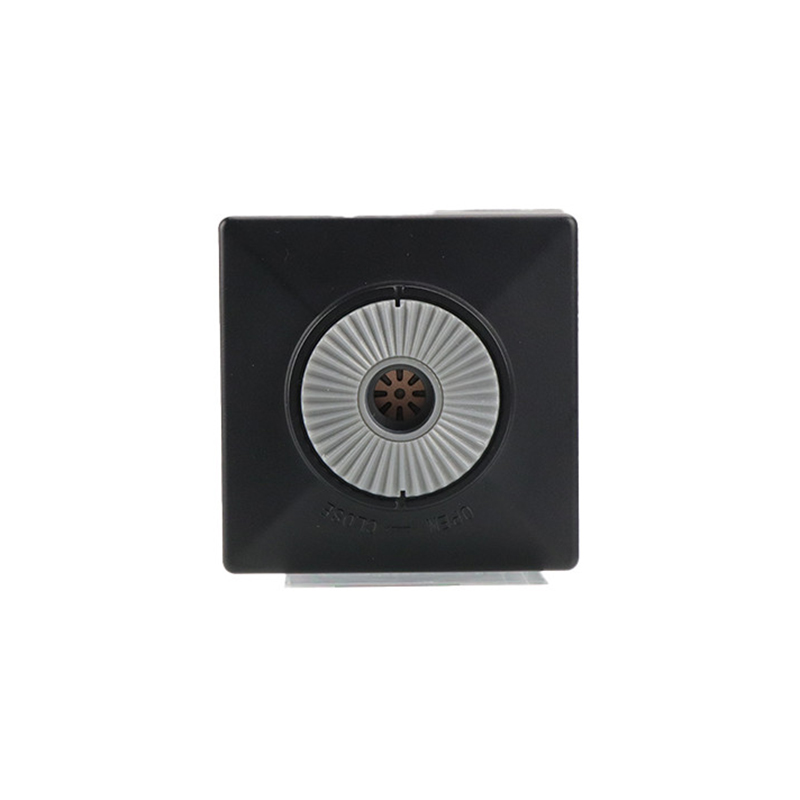
If you need calibration results you can defend in an audit or compliance report, look for a calibrator that solves three common frustrations: slow stabilization, environmental sensitivity, and inconsistent output over repeated use.
The AWA6021A/L Class 1 Acoustic Sound Calibrator was built around exactly these pain points. It meets IEC 60942:2017 Class 1 accuracy, so results hold up under scrutiny. Its acoustic negative feedback design keeps output stable without needing temperature or pressure correction — one less variable for you to track in the field. It stabilizes in under 15 seconds, so calibration doesn't eat into your measurement window, and it fits 1", 1/2", and 1/4" microphones, meaning one calibrator can cover a whole fleet of meters instead of forcing you to buy multiple units.
Matching Your Calibrator to the Right Sound Level Meter
A calibrator is only half the equation — the meter itself needs to match your application.
- For industrial and workplace noise monitoring, the AWA5662 Multifunctional Sound Level Metercovers factory machinery noise, occupational exposure (Leq, LEX,8h, TWA, DOSE), and statistical analysis, with a 115 dB linear range that removes the need for manual range switching mid-shift.
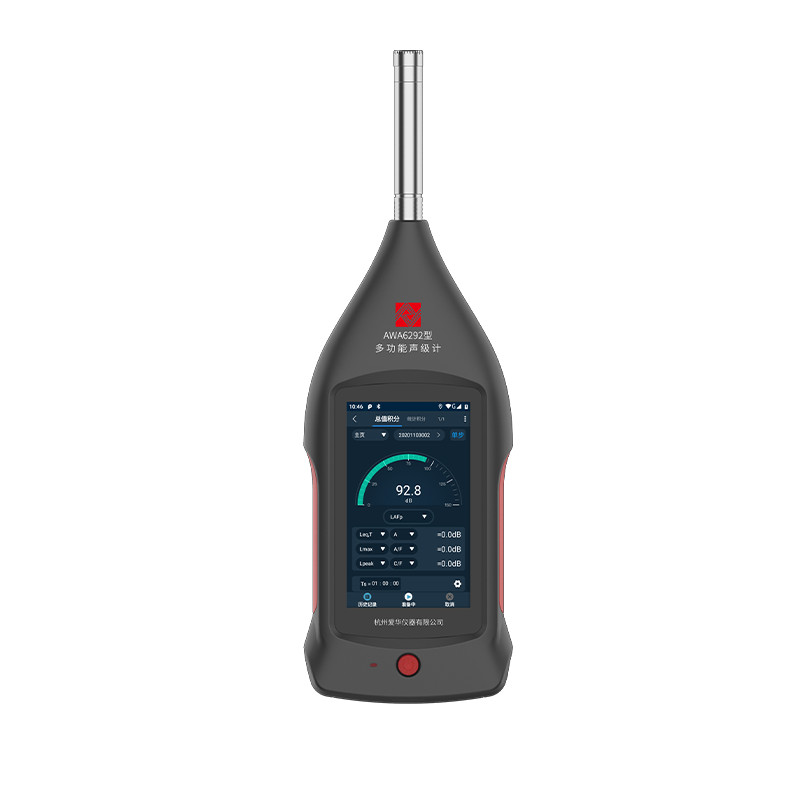
- For teams needing deeper acoustic diagnostics, the AWA6292 Multifunctional Sound Level Meteradds spectrum analysis, reverberation, and STI measurement in one device, plus built-in 4G/WiFi/Bluetooth so results sync straight into your LIMS system — cutting out manual data entry entirely.
Pairing either meter with the AWA6021A/L gives you a complete, standards-compliant measurement chain from calibration to final report.
How Often Should You Recalibrate?
Field calibration should happen before (and ideally after) every measurement session. Beyond that, an annual factory or ISO 17025-accredited calibration checks internal components that daily field checks can't catch — think of it as your instrument's yearly service.
Final Thoughts
Reliable noise data starts with a reliable calibration routine. Pair the AWA6021A/L calibrator with the AWA5662 or AWA6292 sound level meter for a setup built for accuracy, speed, and compliance — explore the full range at hzaihua.com.
blog latest news

Any questions? We look forward to hearing from you.
 Tel: +86-19012832378