


What Is Acceptable Vibration Level? Know Your Limits
There's no single figure that fits every situation — an acceptable vibration level depends entirely on what's vibrating and who's exposed to it. For workers using power tools, regulators have set concrete thresholds under ISO 5349-1: a daily exposure action value (EAV) of 2.5 m/s² A(8), and a daily exposure limit value (ELV) of 5.0 m/s² A(8). Stay under the EAV and risk is low; cross the ELV and it's a legal violation with real health consequences. These aren't arbitrary numbers — they come from decades of occupational health research correlating vibration dose with nerve and blood-vessel damage in the hands.
Why "Acceptable" Isn't One-Size-Fits-All
Machine-condition vibration (measured against ISO 10816) tells you when a motor or pump needs maintenance — it has nothing to do with human safety. Whole-body vibration, relevant to drivers and seated operators, uses a separate limit of 1.15 m/s². Hand-arm vibration — the kind transmitted through grinders, drills, and jackhammers directly into the hand — is regulated completely differently, which is exactly where ISO 5349-1 comes in. Mixing these standards up is one of the most common mistakes safety teams make: applying a machine-condition threshold to a human-exposure question (or vice versa) produces numbers that look reasonable but mean nothing in context.
What Happens If Exposure Isn't Acceptable? Understanding HAVS
Prolonged exposure above safe thresholds leads to Hand-Arm Vibration Syndrome (HAVS) — a cumulative, often irreversible condition. Early signs include tingling and numbness in the fingers; over time this can progress to Vibration White Finger (VWF), where blood vessels in the fingers spasm and turn white on exposure to cold, along with reduced grip strength and loss of fine motor control. Because HAVS develops gradually and has no effective treatment once established, the entire regulatory framework around acceptable vibration level is built around prevention — catching exposure before it crosses the action value, not treating symptoms after the fact.
Hand-Arm Vibration Limits, Explained
The two numbers that matter most: the exposure action value of 2.5 m/s² A(8) is the trigger point — once daily exposure hits this level, employers must start taking preventive action such as risk assessment, worker training, and health surveillance. The exposure limit value of 5.0 m/s² A(8) is the legal ceiling that must never be exceeded. Both are standardized to A(8), an 8-hour equivalent exposure that accounts for both vibration intensity and how long a worker's hands stay on the tool. A tool vibrating at a high magnitude for a short time can produce the same A(8) as a milder tool used all day — which is why duration matters just as much as intensity.
A Solution Built Around Your Job, Not Just the Standard
The AWA5937 is designed around the problems safety teams actually face on-site, not just the letter of the standard.
Never guess your exposure number. Triaxial digital sensing with correct frequency and time weighting reports VL, VLmax, VLmin, VLeq,T and apeak,T in real time — so you always know exactly where you stand against the EAV and ELV, without manual calculation or post-processing.
Find the root cause, not just the score. Built-in frequency spectrum analysis pinpoints which tool, task, or frequency band is driving exposure up, turning a compliance number into a fixable engineering or scheduling problem.
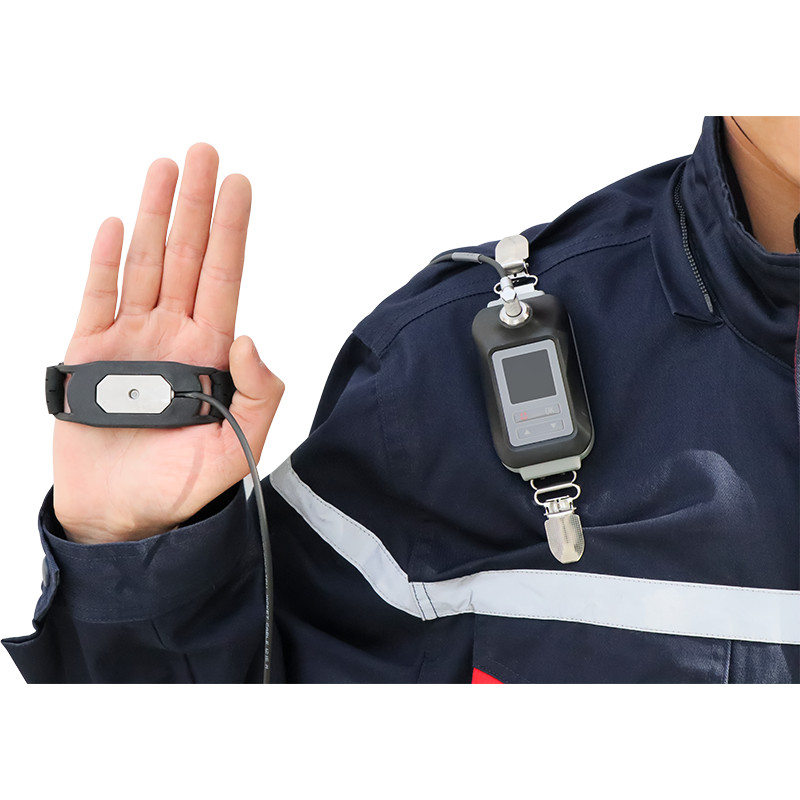
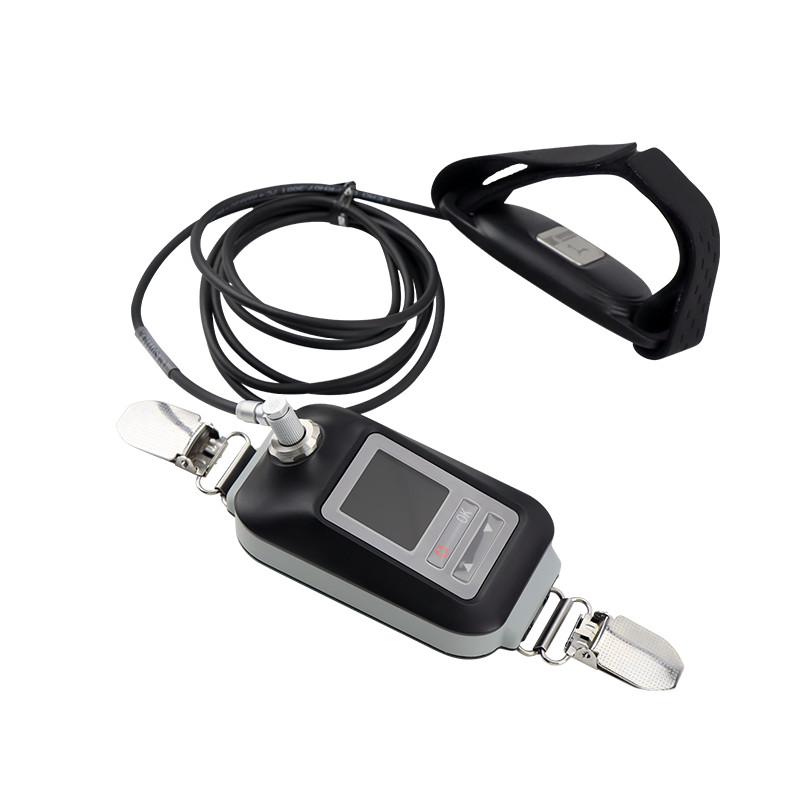
Read it clearly, even outdoors. A lightweight, integrated body with a 1.3-inch TFT color screen keeps data legible on the shop floor, in a warehouse, or out in the field — no squinting at a dim monochrome display.
Keeps working where conditions don't cooperate. A dustproof and waterproof design holds up in the harsh, wet, and dusty environments where hand-arm vibration risk is usually highest — exactly the settings where fragile instruments fail first.
Built on the standard your auditors expect. Full compliance with ISO 5349-1:2001 means readings are defensible in inspections, insurance reviews, and legal proceedings — not just internally useful numbers.
Who Needs to Track This?
- Manufacturing plantsrunning grinders, riveters, and impact tools that need ongoing exposure records to satisfy occupational health regulations.
- Occupational health teams using dosimeter data to justify job rotation, PPE decisions, and health surveillance programs.
- Universities and research labs teaching vibration science, biomechanics, or running controlled studies on tool design and human exposure.
- Equipment manufacturers validating vibration output during product development, before tools ever reach a job site.
Quick FAQ
Is there a "safe" vibration level with zero risk?
Not exactly — even below the EAV, individual sensitivity varies. The EAV is a threshold for population-level risk management, not a personal guarantee.
Does cold weather change the acceptable level?
The regulatory limits don't change, but cold conditions increase the likelihood of VWF symptoms appearing at a given exposure, so many safety programs add extra caution in winter.
Can one dosimeter cover multiple tools and workers?
Yes — a portable unit like the AWA5937 is designed to be moved between tools and job sites, making it practical for teams managing a varied tool fleet.
Know the Number, Protect Your Workers
The acceptable vibration level for hand-arm exposure comes down to two numbers: 2.5 m/s² and 5.0 m/s² under ISO 5349-1. Measuring accurately against them — not estimating, not guessing — is what separates a genuine safety program from a paper policy. Explore the AWA5937 hand-arm vibration dosimeter at hzaihua.com to measure with confidence and protect your team before exposure becomes a problem.
blog latest news


Any questions? We look forward to hearing from you.
 Tel: 190 1283 2378