


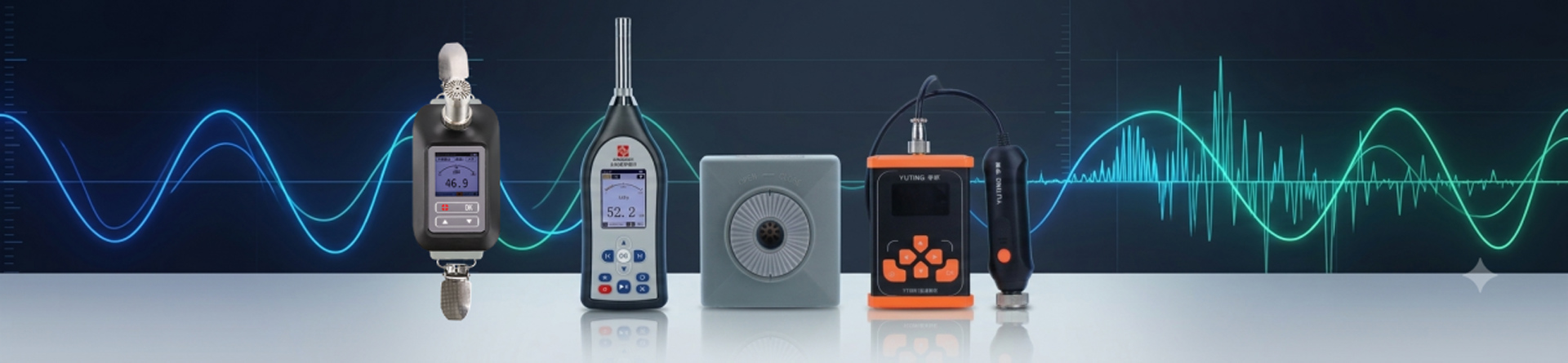
What Is a Pistonphone? The Simple Definition
A pistonphone is a device with a rigid piston that moves back and forth at a known frequency and amplitude inside a small closed cavity. That motion creates a precisely known sound pressure. Because the level is known, you can compare what your microphone reports with what it should report. You may also see it called a piston sound generator or pistonphone calibrator.
What does a pistonphone do?
It performs sound pressure calibration for microphones and acoustic measuring instruments. Sensitivity can drift after transport, temperature swings or long-term use, and a pistonphone catches that drift before it corrupts your data.
Who uses a pistonphone calibrator?
|
Who |
Problem |
How a pistonphone helps |
|
Environmental noise teams |
Readings challenged in reports or disputes |
A documented reference level before and after each survey |
|
Acoustic and metrology labs |
Need a traceable standard source |
Stable output for sound level meter calibration |
|
Instrument manufacturers |
Every unit must pass factory checks |
Fast, repeatable sensitivity checks on the line |
|
Occupational safety inspectors |
Exposure data must be defensible |
Confidence that the meter reads true on site |
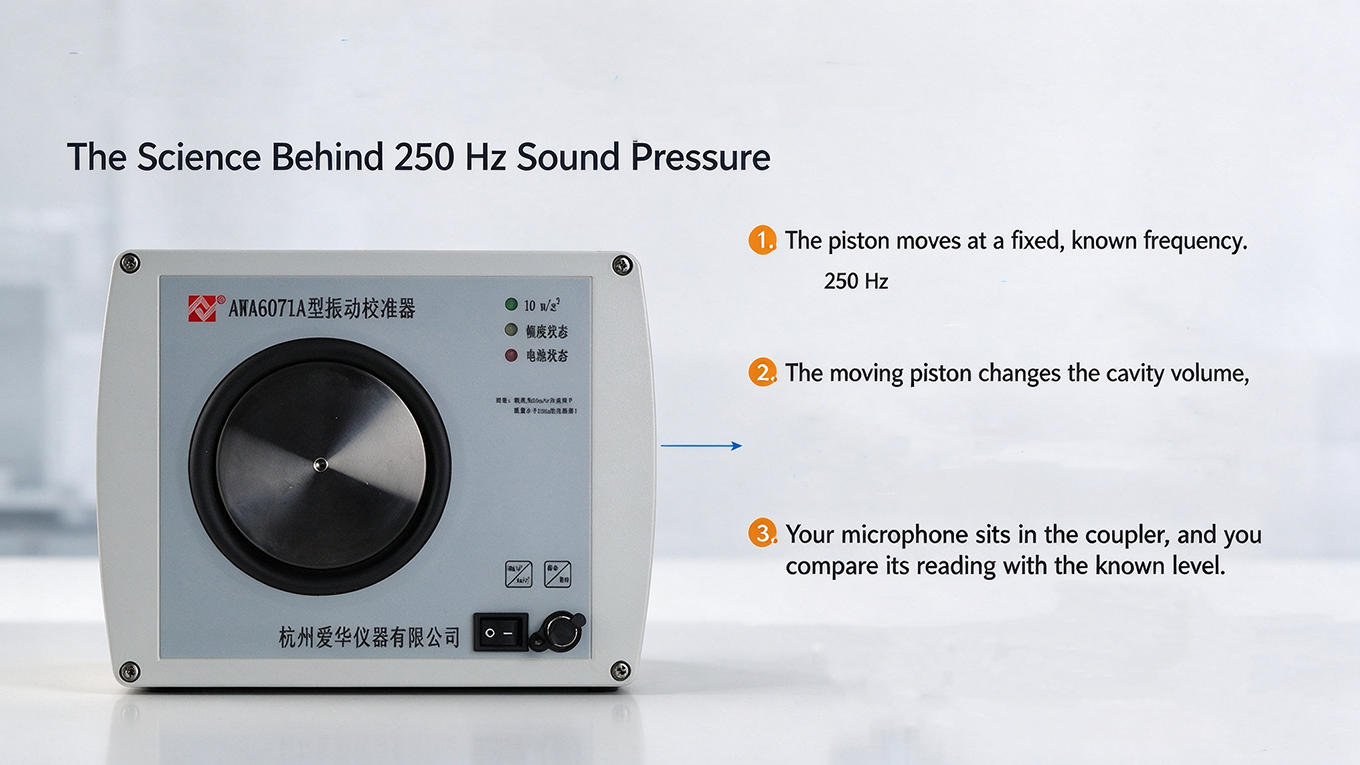
How Does a Pistonphone Work? The Science Behind 250 Hz Sound Pressure
The principle takes three steps:
- The piston moves at a fixed, known frequency.
- The moving piston changes the cavity volume, producing a stable sound pressure.
- Your microphone sits in the coupler, and you compare its reading with the known level.
Why 250 Hz?
The nominal 250 Hz frequency falls within the flat frequency response range of microphones. Pressure microphones and free-field microphones therefore see the same sound pressure level. The output is also very stable, which is what you want from a reference.
AWA6011 Pistonphone Review: Is It Worth It for Precision Calibration?
The AWA6011 is built for teams that need calibration results they can stand behind. Here is what each specification means for you:
|
Specification |
What it means for you |
|
250 Hz operating frequency |
Ideal for microphone sensitivity calibration |
|
124 dB ±0.1 dB |
A high, tightly controlled level that holds up even in noisy surroundings |
|
THD ≤ 2.0% |
A clean, reliable signal, so distortion doesn't skew your results |
|
Automatic air pressure compensation |
Fewer altitude-related errors and no manual pressure lookups |
|
IEC 60942:2017 Class LS/M |
A recognised standard for audits and quality systems |
Use cases: where the AWA6011 solves real problems
- Field surveys at altitude: A team measuring noise in mountain regions no longer needs to apply pressure corrections by hand, because the built-in sensor supplies the correction data.
- Laboratory calibration: A metrology lab gets a stable, compliant reference for routine microphone calibration and a clear record for its quality system.
- Production testing: A manufacturer checks every meter or microphone against the same 250 Hz reference and gets consistent results between shifts.
Is a Pistonphone Standards-Compliant? IEC 60942:2017 Class LS/M Explained
IEC 60942 sets the technical requirements for sound calibrators. The AWA6011 meets the IEC 60942:2017 Class LS/M requirements. That gives your clients, auditors and lab accreditation bodies a clear reason to trust your calibration records. Sound level meter checks, environmental and occupational noise testing, and factory quality control all benefit from that assurance.
Pistonphone vs. Sound Calibrator: Which One Should You Choose?
|
Feature |
Pistonphone |
Electronic acoustic calibrator |
|
Sound generation |
Mechanical piston |
Electroacoustic transducer |
|
Typical frequency |
250 Hz |
Often 1 kHz |
|
Level stability |
Very high |
Good, varies by model |
|
Air pressure dependence |
Yes, so it needs correction (built in on the AWA6011) |
Varies by design |
|
Best for |
Labs, reference work, high-accuracy field checks |
Quick routine checks |
Buying checklist
- Which standard and class do you need (for example, IEC 60942 Class LS/M)?
- What level and accuracy does your work require?
- Does the unit handle air pressure correction for you?
- Will it fit the microphones you use?
FAQ
Q: What is a pistonphone used for?
A: It is used for microphone calibration and for calibrating sound level meters and other acoustic measuring instruments.
Q: How often should I check my microphone?
A: Check it before and after each measurement session, and send the pistonphone itself for periodic laboratory calibration, following your quality system or local regulations.
A: Check it before and after each measurement session, and send the pistonphone itself for periodic laboratory calibration, following your quality system or local regulations.
Q: Do I need to correct for altitude with the AWA6011?
A: Air pressure changes the output of any piston generator. The AWA6011's built-in digital pressure sensor measures the ambient pressure and provides the correction data.
A: Air pressure changes the output of any piston generator. The AWA6011's built-in digital pressure sensor measures the ambient pressure and provides the correction data.
Q: Is 250 Hz suitable for every microphone?
It sits within the flat frequency response range of microphones, so it works for sound pressure and free-field microphones alike. Check the coupler and microphone size before you order.
Summary: Is the AWA6011 the Pistonphone You Need?
A pistonphone gives you a stable, known sound pressure so your measurements can be trusted. The AWA6011 delivers a 250 Hz, 124 dB ±0.1 dB reference with THD of 2.0% or less. It corrects for air pressure automatically and meets IEC 60942:2017 Class LS/M. It is a practical choice if you want fewer errors, faster checks and audit-ready results.
Ready to calibrate with confidence? Visit hzaihua.com to request a quote or order your AWA6011 today.
blog latest news

Any questions? We look forward to hearing from you.
 Tel: +86-19012832378