How to Check Partial Discharge: Best Methods & Tools
If you work with transformers, switchgear, cables, or motors, you already know that partial discharge (PD) is one of the earliest — and most ignored — warning signs of insulation failure. Catching it early can mean the difference between a scheduled repair and an unplanned outage. Here's how to check partial discharge properly, and which tools actually make the job easier.
What Is Partial Discharge and Why Should You Check It?
Partial discharge is a small electrical spark that only partially bridges the gap between two conductors, usually occurring in a void, crack, or contamination inside insulation. Each discharge is tiny — often just picocoulombs — but repeated PD activity erodes insulation over time and eventually causes complete breakdown.
Left unchecked, PD can lead to sudden transformer failure, cable faults, or switchgear fires. Regular insulation fault detection catches this damage while it's still cheap to fix.
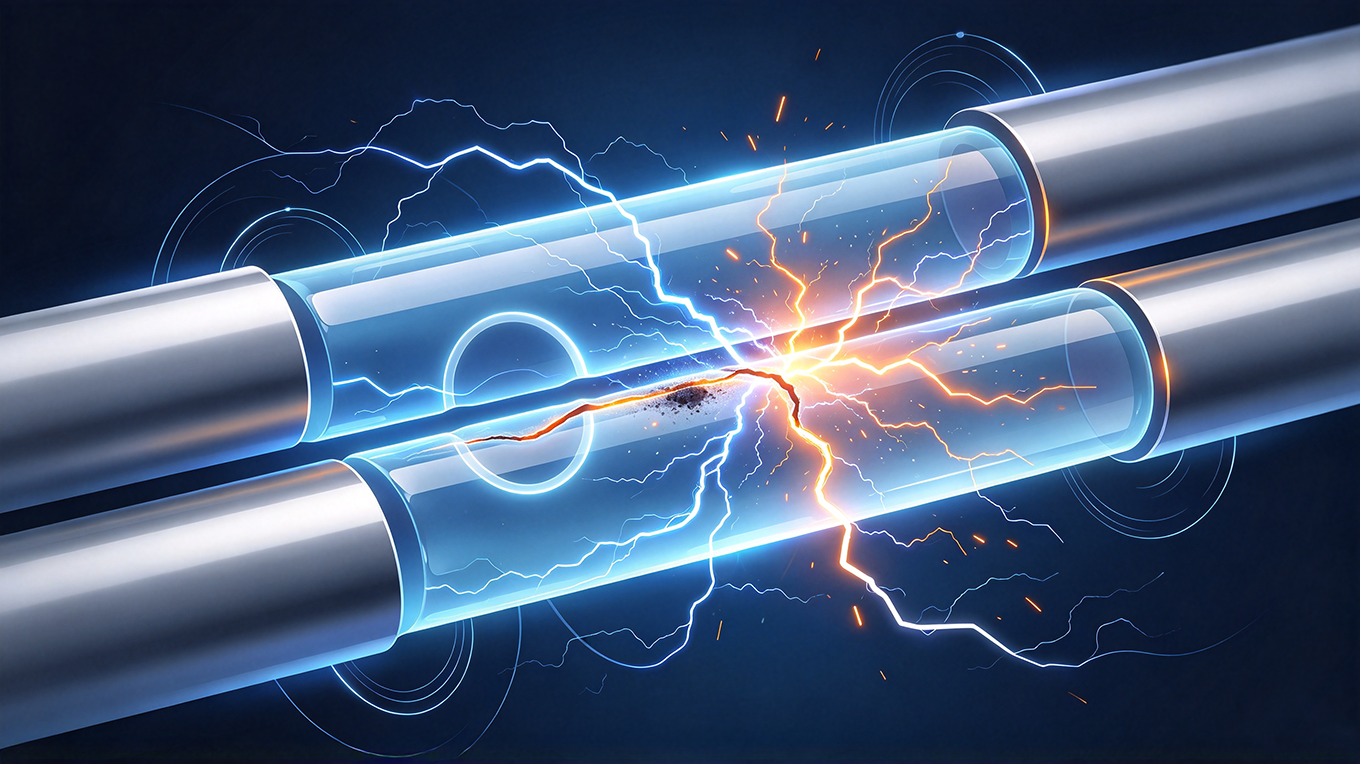
How to Check Partial Discharge — 3 Proven Detection Methods
|
Method |
How It Works |
Best For |
Limitation |
|
Transient Earth Voltage (TEV) |
Detects voltage pulses (0.1mV–1V) traveling along earthed metal enclosures |
Switchgear, metal-clad equipment |
Can't detect PD in non-metallic enclosures |
|
Ultrasonic Detection |
Listens for airborne acoustic emissions around 40kHz |
Open-air equipment, corona detection |
Struggles in loud industrial environments |
|
Electromagnetic (UHF/RFI) |
Antennas pick up radio-frequency signals generated by discharge |
Live high-voltage apparatus, GIS |
Requires skilled interpretation |
Most experienced technicians combine at least two of these methods for a reliable diagnosis, since no single test catches every fault type.
The Challenge with Traditional Partial Discharge Testing
Traditional PD detection tools have a real problem: factory floors are loud. Compressed air, motors, and machinery generate ultrasonic noise that masks genuine discharge signals. On top of that, reading a PRPD (Phase Resolved Partial Discharge) pattern correctly usually takes years of training — most teams don't have that expertise sitting on the shop floor.
A Smarter Way to Check Partial Discharge: Acoustic Imaging
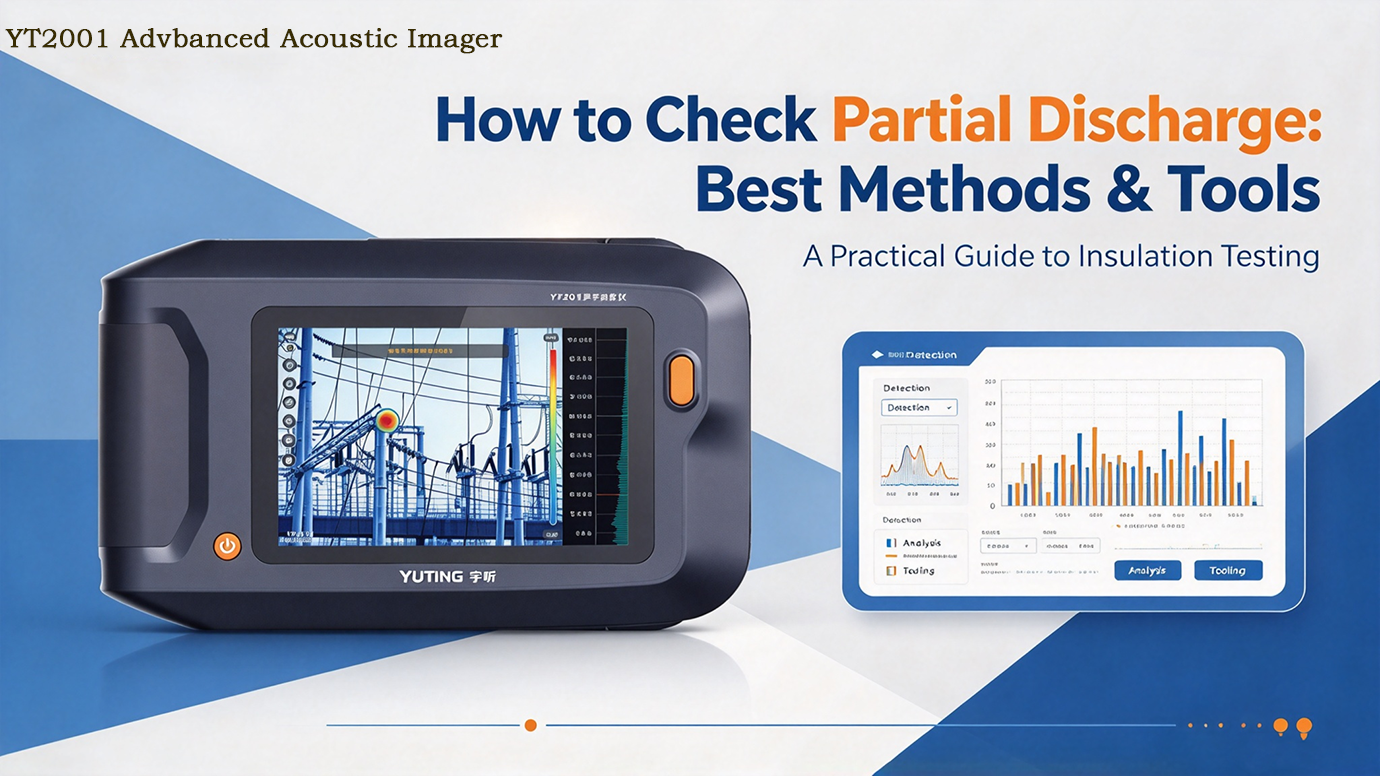
This is where the YT2001 Advanced Acoustic Imager solves the exact problems above. Instead of guessing where a discharge is coming from, it lets you see it.
- Real-time PRPD spectrum analysis— the imager automatically renders the phase-resolved pattern on screen, so you don't need a PD specialist to interpret raw waveforms.
- 136-channel MEMS microphone array— pinpoints the exact source of the discharge, even inside dense cabinets or crowded switchgear rooms.
- 25 FPS high-speed refresh— captures both steady and transient discharge events as they actually happen, so intermittent faults don't get missed.
- Adjustable frequency band filtering— actively suppresses motor and compressor noise, so you get a clean reading even on a busy factory floor.
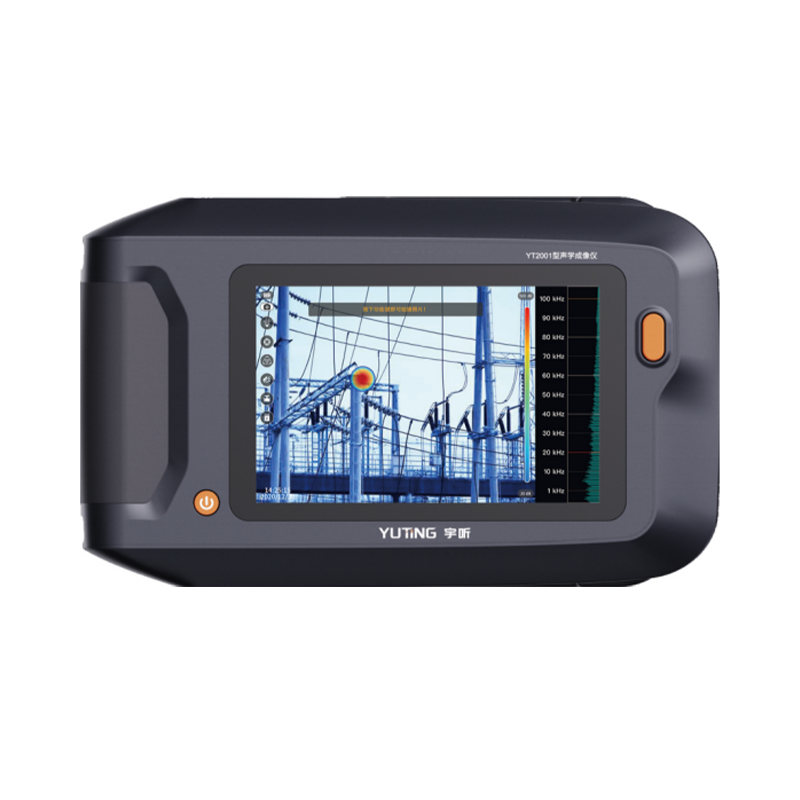
Why Engineers Trust the YT2001 for Partial Discharge Diagnostics
For teams that need to solve real problems, not just collect data, the YT2001 is built around three customer needs:
- You need answers fast, not training.The built-in sound source recognition mode displays results visually — no need to decode a Lissajous figure or study PRPD theory for months.
- You need to trust the reading in a noisy plant.The intelligent noise suppression means your team stops chasing false positives caused by ambient machine noise.
- You need one tool, not five.Beyond partial dischargediagnostics, the same device also does real-time gas leak quantification and general noise-source mapping — useful for a broader maintenance and safety program, not just electrical inspections.
Step-by-Step: How to Check Partial Discharge with the YT2001
- Scan the area— point the imager at the panel, cable joint, or transformer from a safe distance.
- Read the real-time PRPD pattern— the on-screen spectrum instantly flags abnormal discharge phase patterns.
- Localize, record, and report— the array pinpoints the exact source; save the image and data with one click for your maintenance report.
FAQ
Q: Can partial discharge be detected without shutting down equipment?
Yes. Acoustic and RF-based methods like the YT2001 are designed for live, in-service inspection with no outage required.
Q: How often should I check for partial discharge?
Most facilities run quarterly checks on critical assets, with continuous or more frequent monitoring recommended for aging equipment.
Q: Is acoustic imaging as accurate as traditional TEV testing?
It's complementary — acoustic imaging excels at localization and works well alongside TEV/UHF methods for a complete diagnosis.
Final Verdict
Knowing how to check partial discharge is only half the job — having a tool that gives you clear, fast, noise-resistant readings is what actually prevents failures. The YT2001 turns a specialist task into something any technician can do confidently.
Explore the full YT2001 specs and get a quote at hzaihua.com.