


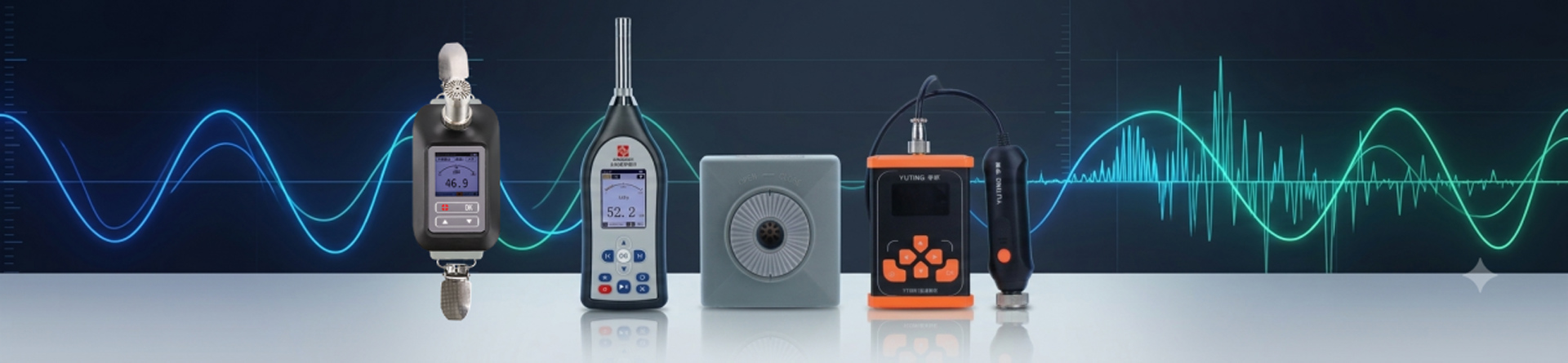
How Is Road Noise Measured? A Complete Guide
If you've ever sat in a car and thought "wow, it's loud in here," you've already made an informal road noise measurement — just not a scientific one. Engineers, urban planners, and acoustics professionals rely on precise instruments and standardized methods to turn that subjective impression into hard data. This guide breaks down exactly how road noise is measured, the standards behind it, and which tools give you lab-grade accuracy — whether you're testing a highway, a factory floor, or a workplace.
What Exactly Is Road Noise?
Road noise is the sound generated by the interaction between tires and pavement, combined with engine, exhaust, and wind noise. It's measured in decibels, specifically using A-weighting (dB(A)) — a scale calibrated to match how the human ear perceives loudness across different frequencies.
Tire noise dominates at higher speeds, while engine noise matters more at low speeds. Distinguishing between these sources is the first step in any credible noise assessment.
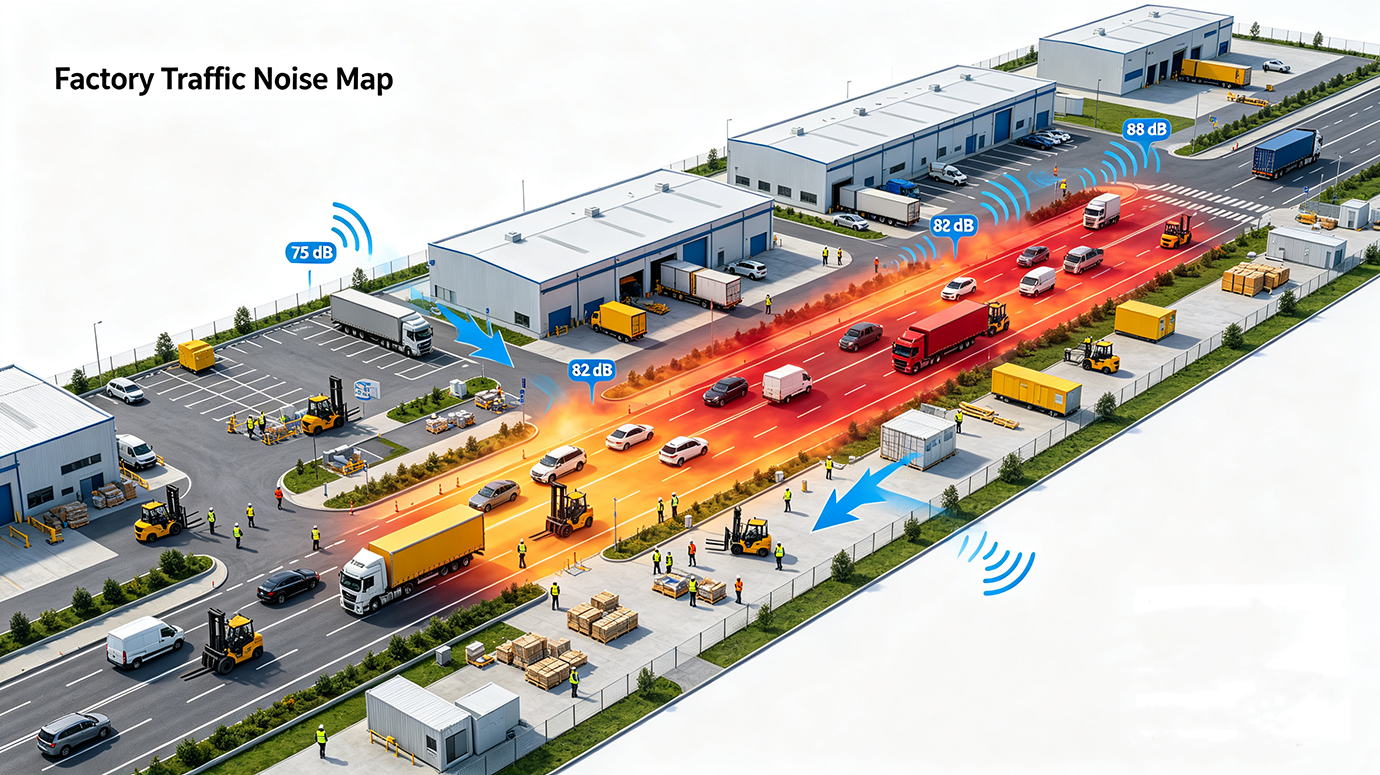
How Is Road Noise Measured? The Science & Standards Behind the Numbers
Official road noise measurement follows internationally recognized standards (ISO 1996-2, BS 7445-1) that define microphone placement, measurement duration, and how raw sound is converted into a meaningful value. Two methods dominate the field:
|
Method |
How It Works |
Best For |
|
CPX (Close-Proximity) |
Microphones mounted on a trailer, close to test tires, record noise as it's generated |
Comparing road surfaces and tire types under controlled conditions |
|
OBSI (On-Board Sound Intensity) |
Sound intensity probes near the tire capture noise at the source in real driving |
Pavement quality studies and highway noise mapping |
Why A-Weighting (dB(A)) and Leq Matter
A single peak reading tells you almost nothing — traffic noise fluctuates constantly. That's why professionals use Leq, the equivalent continuous sound level, which averages fluctuating noise into one representative number over a set time period (often 24 hours for environmental assessments). Combined with A-weighting, this gives a result that reflects real human hearing, not just raw sound pressure.
Solving Real Measurement Problems: The AWA5662 Sound Level Meter
If your challenge is measuring industrial noise, factory environmental noise, or workplace exposure — not just curiosity about road sound — you need an instrument that adapts to your specific situation rather than forcing you into one workflow. That's exactly the problem the AWA5662 Multifunctional Sound Level Meter is built to solve.
For plant managers who need compliance-ready data
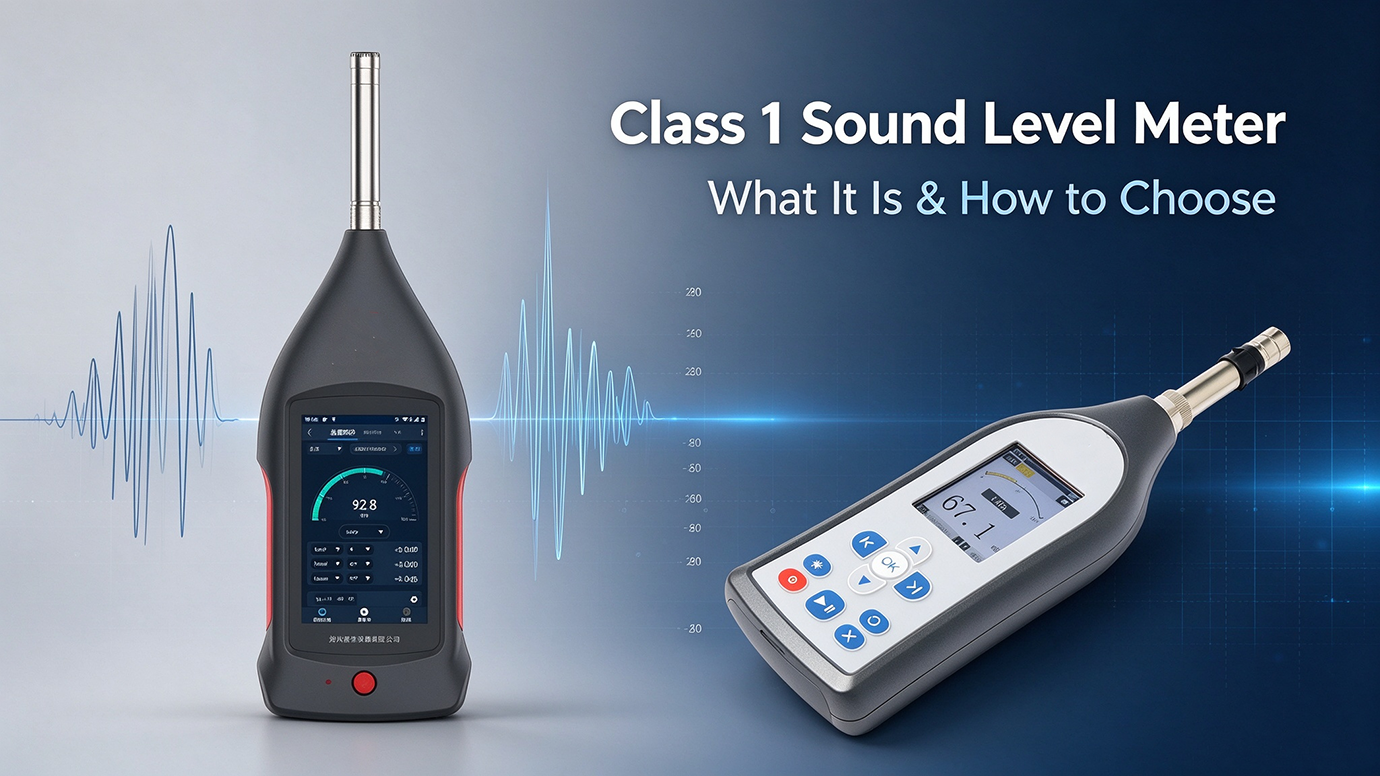
The AWA5662 complies with IEC61672-1:2013 Class 1, so your readings hold up for regulatory reporting and workplace safety audits — no second-guessing your equipment's accuracy.
For teams measuring unpredictable, fluctuating noise
Machinery hums steadily, but factory boundary noise and workplace exposure rarely do. The 115 dB ultra-wide linear range means you never have to stop and manually switch ranges mid-measurement — the meter keeps up with sudden spikes automatically.
For engineers who need more than a single number
With optional 1/1 and 1/3 octave real-time spectrum analysis, you can pinpoint which frequencies are driving a noise problem — critical for diagnosing machinery issues or designing effective noise control.
For anyone who needs proof, not just a reading
Built-in WAV/MP3 recording and data export mean every measurement is documented and ready for PC analysis, reporting, or long-term tracking.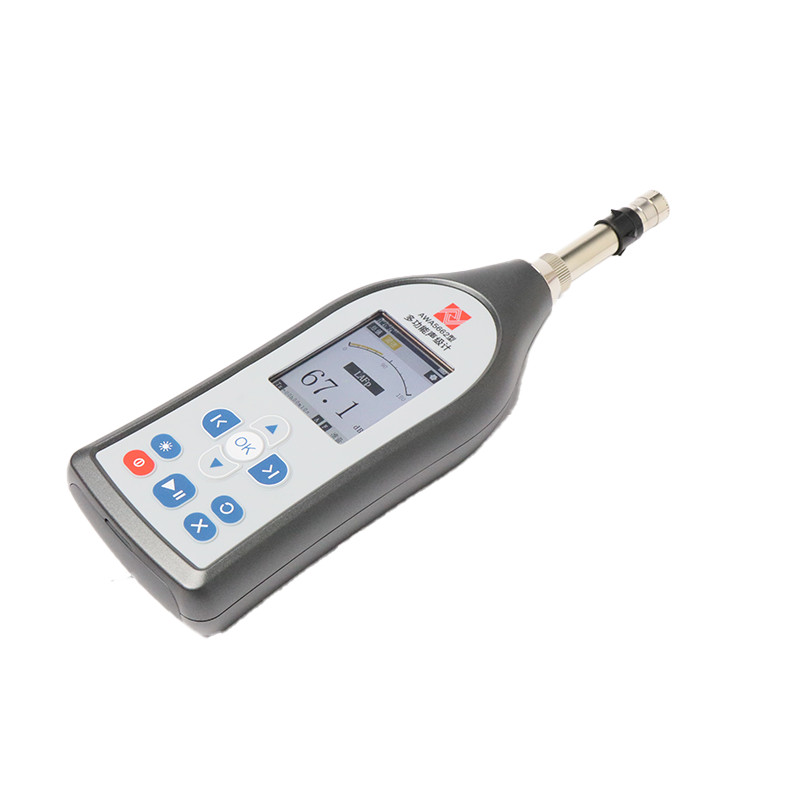
Four Configurations, One Instrument Family
|
Model |
Solves This Problem |
Key Capability |
|
AWA5662-0 (Basic) |
Steady machinery noise checks on a budget |
Instantaneous sound level readings |
|
AWA5662-1 (Integral) |
Fluctuating noise like factory boundary sound |
Equivalent (Leq) measurement + data storage |
|
AWA5662-2 (Sound Exposure/Dose) |
Occupational noise exposure tracking |
Dose, TWA, LEX,8h calculations |
|
AWA5662-3 (Statistical) |
Environmental noise studies, equipment R&D |
Full statistical analysis |
All configurations share the same 2.4-inch color display, compact 340g portable design, and support for multiple microphones — so you can scale from low-level ambient noise to high-level industrial sound without switching instruments.
Use Cases: Who Actually Needs This?
- Factory safety officersverifying workplace noise stays within occupational exposure limits (TWA, LEX,8h)
- Acoustic consultantsconducting environmental noise studies near plants or busy roads
- QC engineersdiagnosing which machine component is generating excess noise via octave-band spectrum analysis
- Facilities teamsdocumenting boundary noise complaints with time-stamped, exportable data
How to Measure Road or Industrial Noise Yourself: A Simple Approach
- Choose the right meter class— Class 1 for anything that needs to be defensible.
- Position the microphone correctly— standard distances (e.g., 1.2–1.5m height, away from reflecting surfaces) prevent skewed readings.
- Measure Leq, not just peak— average over time for a representative value.
- Record and export— raw numbers without documentation are hard to act on later.
Frequently Asked Questions
Q: What's the difference between dB and dB(A)?
dB is raw sound pressure; dB(A) is weighted to match human hearing sensitivity — it's the standard for noise assessments.
Q: Do I need a Class 1 meter for a small workshop?
If results are ever used for compliance or safety reporting, yes — Class 1 accuracy protects you from disputes over data validity.
Q: Can one meter handle both steady machinery noise and fluctuating environmental noise?
Yes — that's precisely why the AWA5662 offers four configurations tailored to different noise behaviors within one product family.
Summary
Road noise measurement — and industrial noise measurement more broadly — comes down to two things: the right method (dB(A), Leq, CPX/OBSI-style thinking) and the right instrument. For anyone who needs Class 1-accurate, standards-compliant results across machinery, factory, or workplace noise, the AWA5662 offers a configuration built for the job. Explore the full lineup at hzaihua.com.
Contact us
blog latest news

Any questions? We look forward to hearing from you.
 Tel: +86-19012832378