


How to Measure Noise and Vibration: Best Analyzer Guide 2026
If unwanted sound or mechanical shaking is affecting your workplace, equipment, or community, you need a reliable way to quantify it. Learning how to measure noise and vibration correctly isn't just a technical exercise — it's the first step toward regulatory compliance, employee safety, and equipment longevity. Whether you're an environmental consultant, a factory safety officer, or a research engineer, this guide walks you through the fundamentals and introduces a tool built specifically to make the job easier: the AWA6228A Noise and Vibration Analyzer.
Noise vs. Vibration: What's the Difference?
Noise is unwanted sound created by pressure waves traveling through air, measured in decibels (dB). Vibration, on the other hand, is the mechanical oscillation of an object, measured through acceleration, velocity, or displacement. They're closely related — a vibrating machine often produces noise — but they require different sensors and evaluation methods.
How Is Sound Measured? Decibels, Frequency & Sound Pressure Explained
Sound is captured using a microphone that converts pressure waves into an electrical signal, then expressed in dB across a frequency range measured in Hz.
How Is Vibration Measured? Acceleration, Velocity & Displacement
Vibration sensors (accelerometers) detect motion and convert it into readings for acceleration, velocity, or displacement — key indicators of machine health or human exposure risk.
What Equipment Do You Need to Measure Noise and Vibration Accurately?
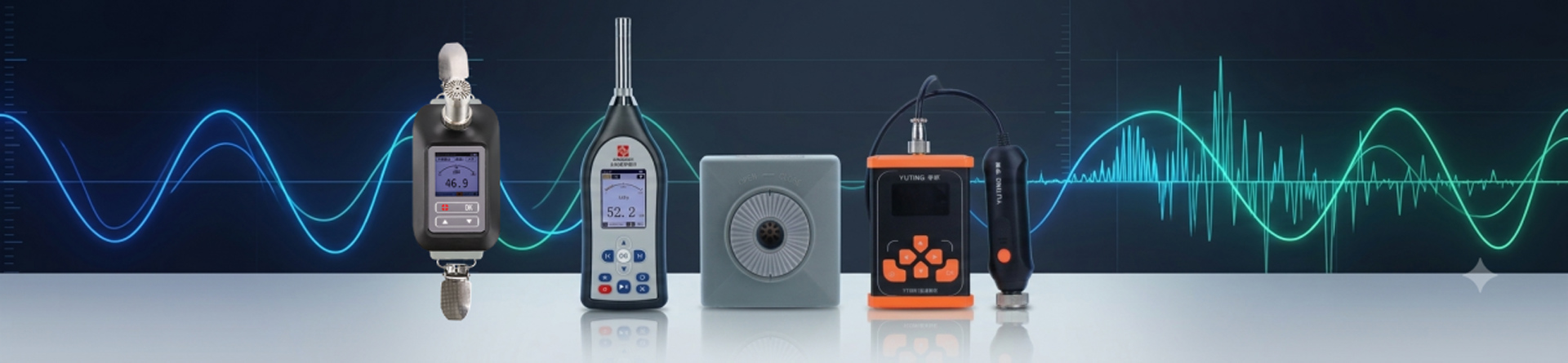
Not all instruments are created equal. A basic sound level meter only captures noise, while a dedicated vibration meter only handles mechanical motion. For professionals who need both, an integrated noise and vibration analyzer eliminates the cost and hassle of carrying multiple devices.
Why IEC61672-1, IEC61260-1 & IEC61252 Compliance Matters
If your measurements need to hold up in audits, legal disputes, or occupational health reports, your instrument must meet international standards. Look for Class 1 certification under IEC61672-1:2013, IEC61260-1:2014, and IEC61252:2025 — this is your assurance of measurement precision and legal defensibility.
How to Measure Noise and Vibration in 5 Simple
- Choose the right Class 1 analyzersuited to your application (environmental, industrial, occupational).
- Set up your measurement pointand calibrate the device before each session.
- Select the right analysis mode— total noise, FFT, OCT (1/1 & 1/3), statistics, or 24-hour monitoring — depending on what you need to evaluate.
- Record, log, and export your datafor reporting or trend analysis.
- Interpret resultsagainst local regulatory noise and vibration limits.
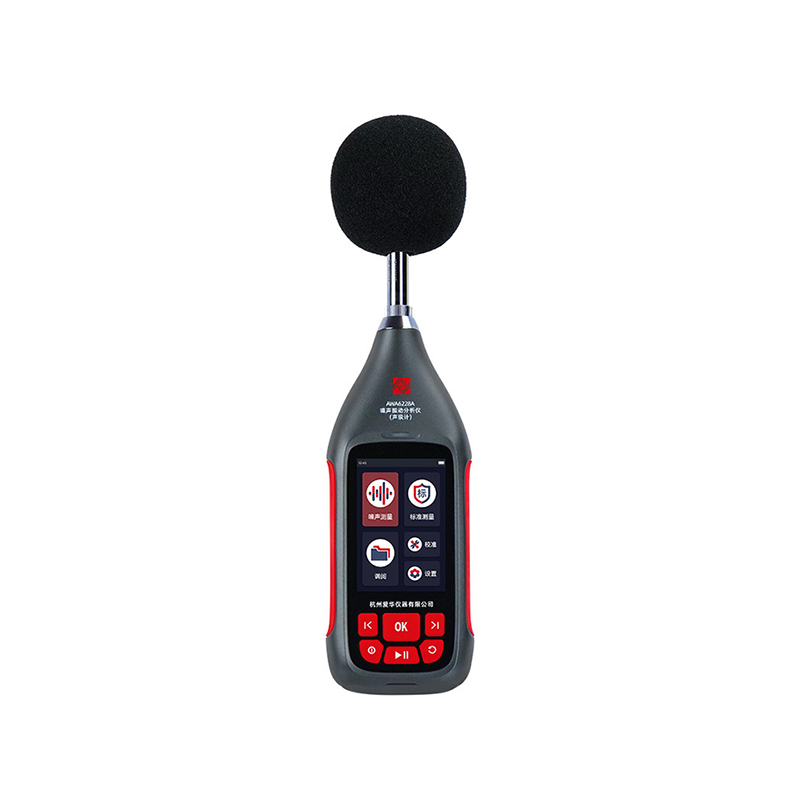
AWA6228A Noise and Vibration Analyzer: The Class 1 Solution That Does It All
Struggling with instruments that require constant range-switching, run out of storage mid-survey, or can't keep pace with modern data workflows? The AWA6228A was engineered to solve exactly these pain points.
- No more missed readings: Its 126 dB ultra-wide dynamic range captures everything from whisper-quiet environments to intense industrial noise — without manual range adjustments that risk data gaps.
- One device, every analysis you need: Instead of juggling multiple tools, get total noise, statistics, 24-hour monitoring, OCT (1/1 & 1/3), FFT, and sound exposure analysis in a single unit.
- Built for long field days: The 5-inch touchscreen with dual button/touch control keeps operation simple even in gloves or harsh conditions, while 64GB of expandable storage means long-term monitoring projects won't get cut short.
- Get results where you need them: With 4G, WiFi, Bluetooth, and USB, plus optional on-site printing, you can share data instantly with your team or client — no waiting until you're back at the office.
Where Can You Use a Noise and Vibration Analyzer Like the AWA6228A?
From environmental noise monitoring and traffic noise surveys to occupational health assessments and industrial equipment diagnostics, the AWA6228A adapts to the job at hand — making it a practical investment for consultants, safety teams, and research institutions alike.
Quick checklist: confirm the accuracy class, check the dynamic range, verify storage capacity, review connectivity options, and ensure standards compliance match your industry's requirements.
Ready to Measure Noise and Vibration Like a Pro?
Accurate measurement starts with the right tool. Explore the AWA6228A Noise and Vibration Analyzer at hzaihua.com and get precision you can trust, in the field or the lab.
Contact us
blog latest news

Any questions? We look forward to hearing from you.
 Tel: +8619012832378