


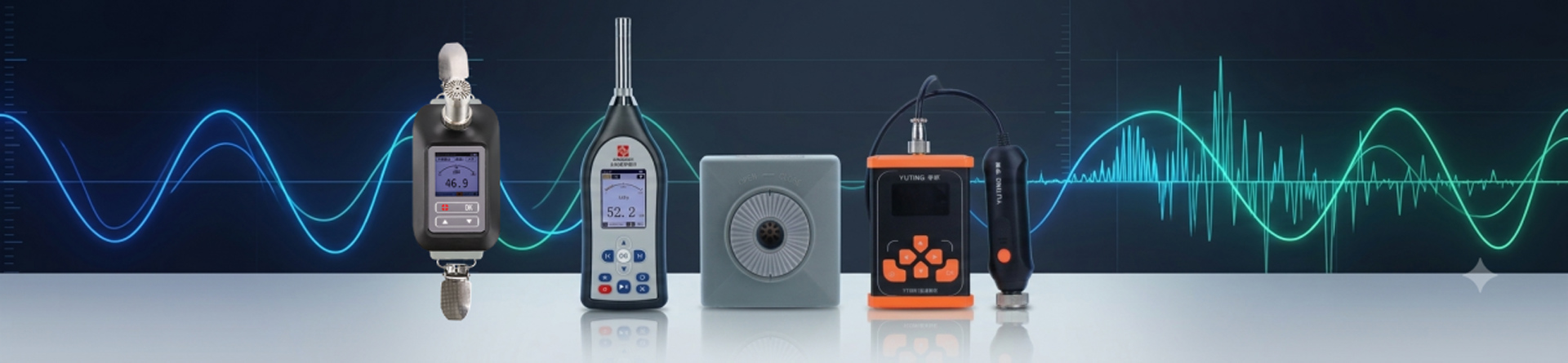
Best Device That Detects Vibrations for Industrial Use
A vibration detection device — from a basic accelerometer to an advanced vibration analyzer — captures mechanical motion and converts it into data engineers can act on, before a small issue becomes a costly breakdown.
Vibration is one of the earliest and most honest warning signs a machine gives before it fails. The challenge isn't detecting that something is vibrating — it's understanding why, and that's where the right device makes all the difference.
4 Common Devices That Detect Vibrations Explained
|
Device |
How It Works |
Best For |
|
Piezoelectric sensor |
Generates an electrical charge under mechanical stress |
Core component in most vibration sensors |
|
Accelerometer |
Measures acceleration/motion on one or more axes |
General-purpose motion & vibration sensing |
|
Seismograph |
Tracks large-scale ground/structural movement |
Buildings, geological monitoring |
|
FFT vibration analyzer |
Converts raw signal into frequency spectrum |
Industrial fault diagnosis & condition monitoring |
Each of these plays a different role. A piezoelectric sensor is the physical component doing the sensing; an accelerometer is the broader device category built around that sensing element; a seismograph applies similar physics at a much larger scale. But for maintenance teams working on machinery day to day, the device that actually delivers usable answers is the FFT vibration analyzer.
Meet the YT3002: The Best Vibration Detection Device for Industrial Diagnostics
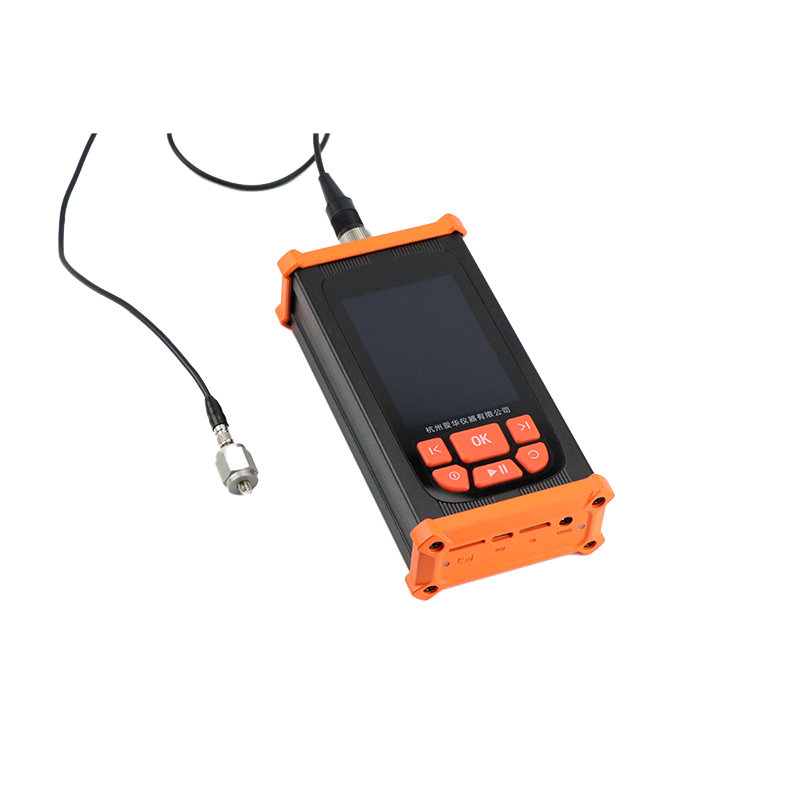
For teams that need more than basic sensing, the YT3002 Portable FFT Vibration Analyzer is built around one goal: fast, accurate answers in the field.
|
Feature |
What It Solves for You |
|
Real-time FFT spectrum analysis |
Instantly spot fault patterns in motors, pumps, fans — fix issues before downtime hits |
|
All-in-one measurement (RMS, peak, peak-to-peak, crest factor) |
One device instead of juggling multiple tools |
|
48 kHz data acquisition + WAV recording |
Detailed records for trend tracking and post-analysis |
|
Modular, software-expandable design |
Pay only for the features your application needs |
|
3.5" touchscreen + physical buttons |
Rugged, intuitive operation built for the plant floor |
Real-World Scenarios: How the YT3002 Solves Vibration Problems
Case Example 1 — Catching a Bearing Fault Before It Fails
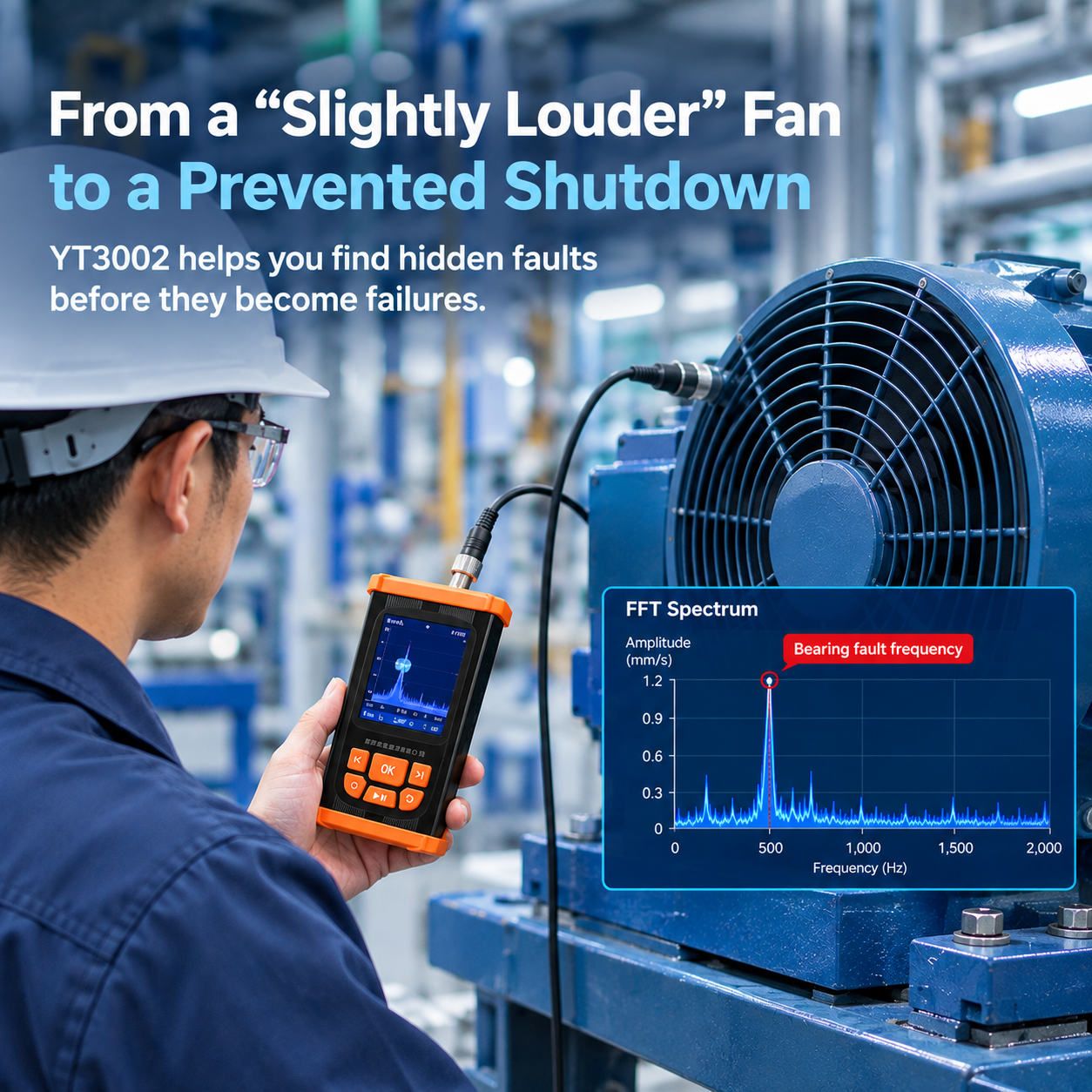
A maintenance technician notices a cooling fan running slightly louder than usual. Using the YT3002's FFT vibration analysis, the frequency spectrum shows a distinct peak matching the bearing's characteristic fault frequency — a signature invisible to the ear alone. The bearing is scheduled for replacement during planned downtime, avoiding an unplanned failure that could have halted the production line.
Case Example 2 — Diagnosing Pump Misalignment in the Field
A water pump at an industrial site shows elevated vibration readings during routine checks. Rather than shipping the pump to a lab, the technician uses the YT3002's portable vibration analyzer on-site, comparing peak and RMS values across acceleration and velocity. The pattern points to shaft misalignment rather than bearing wear — a much faster and cheaper fix, identified in minutes instead of days.
Who Needs a Vibration Detector Like the YT3002?
- Industrial plants — motors, pumps, fans, mechanical systems
- Transportation— vehicle and equipment diagnostics
- Metrology & research— labs, calibration, academic testing
Choosing a Vibration Detector: 3 Questions to Ask First
- Do you need simple alerts or full FFT diagnostics?→ Root-cause analysis requires spectrum analysis, not just a raw reading.
- Is portability a priority?→ Handheld designs like the YT3002 diagnose equipment on-site.
- Will it scale with future needs?→ A modular, expandable analyzer protects your investment.
FAQ: What Device Detects Vibrations?
Q: What device detects vibrations most accurately?
A FFT vibration analyzer is the most accurate choice, since it doesn't just detect motion like a basic vibration sensor — it breaks the signal into a full frequency spectrum to reveal the exact cause of the problem.
Q: What's the difference between a vibration sensor and an accelerometer?
An accelerometer is a broad category of motion-sensing device, while a vibration sensor is typically built around a piezoelectric accelerometer specifically tuned for detecting mechanical vibration and shock.
Q: Can a handheld device detect vibrations in industrial equipment?
Yes. Portable vibration analyzers like the YT3002 are designed for on-site diagnostics of motors, pumps, and fans, combining sensor-level detection with full FFT analysis in one handheld unit.
Q: How do I know if I need a vibration sensor or a full vibration analyzer?
If you only need to know whether a machine is vibrating abnormally, a basic vibration sensor may suffice. If you need to know why — bearing wear, imbalance, misalignment — you need a vibration analyzer with FFT spectrum capability.
Final Verdict: The Best Device to Detect Vibrations
So, what device detects vibrations best for industrial use? A dedicated FFT vibration analyzer like the YT3002 — combining sensor-level detection with real diagnostic power in one portable tool.
Ready to stop guessing and start diagnosing? Explore the YT3002 Vibration Analyzer at hzaihua.com and give your maintenance team the accuracy it deserves.
Contact usblog latest news

Any questions? We look forward to hearing from you.
 Tel: +86 190 1283 2378