


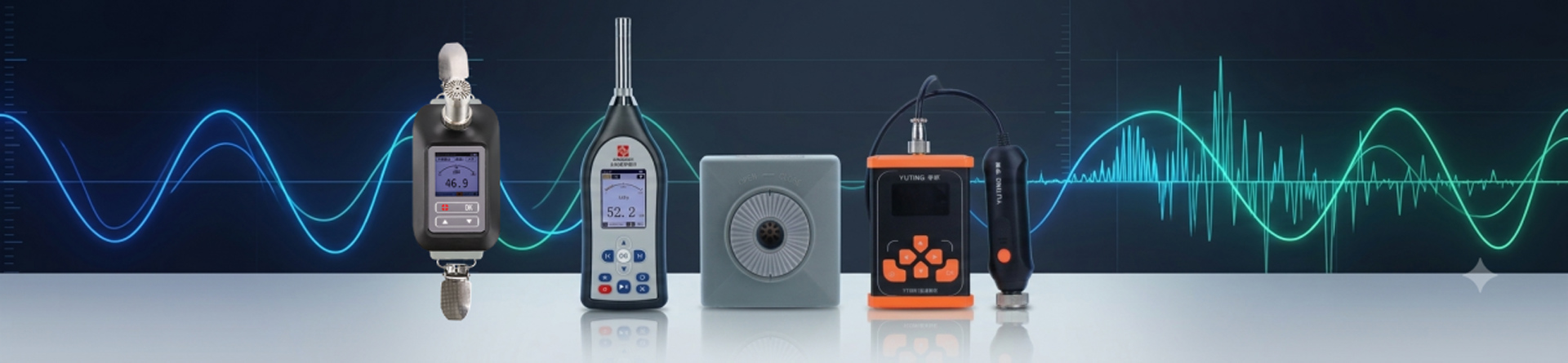
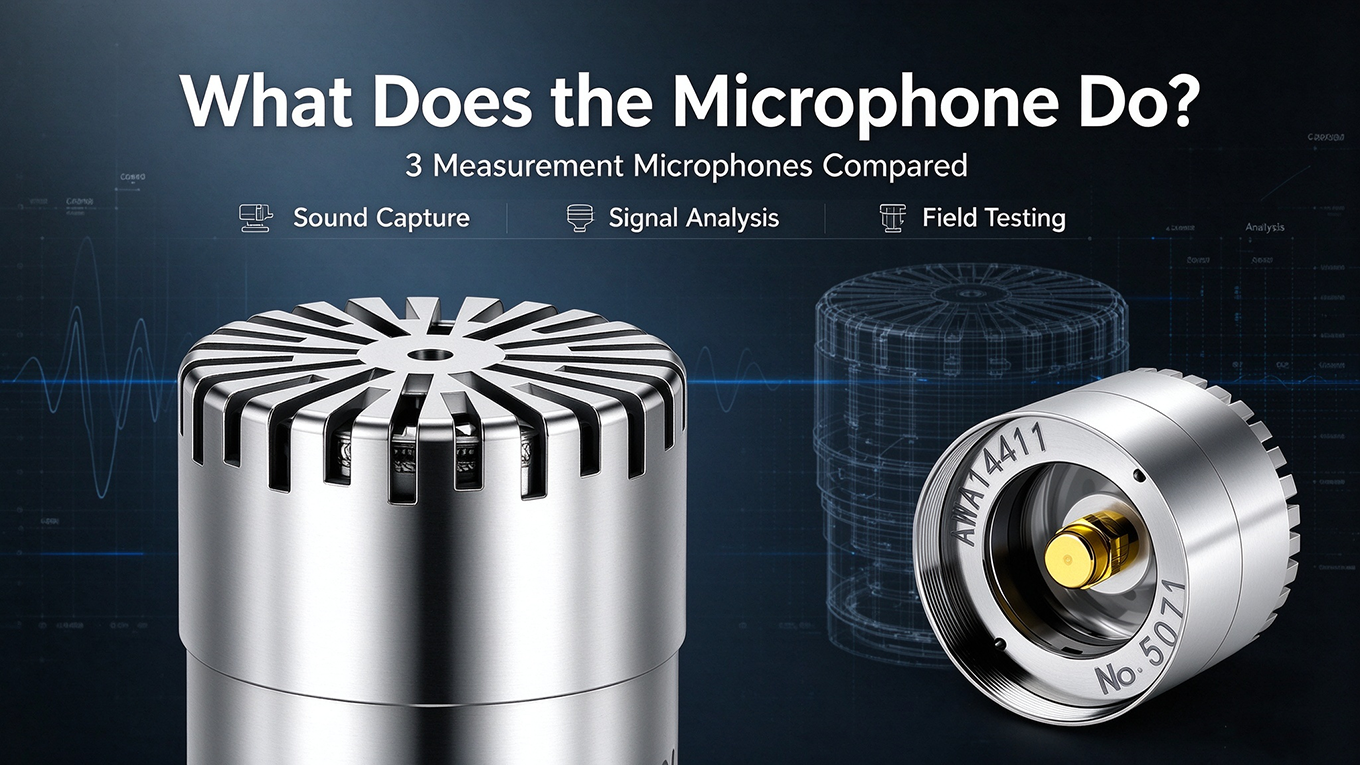
What Does the Microphone Do? 3 Measurement Microphones Compared
What does a microphone do beyond capturing voices and music? In professional acoustic testing, a microphone converts sound pressure into an electrical signal that can be measured and analyzed. Its performance directly affects the reliability of noise measurements, sound power testing and automotive NVH evaluations.
Choosing the right microphone requires more than checking its size or sensitivity. Frequency response, noise floor, dynamic range and microphone type all influence measurement results.
In this guide, we explain how microphones work, what specifications matter and how three Aihua measurement microphones suit different engineering applications.
What Does a Microphone Do?
A microphone is an acoustic-to-electric transducer. Sound waves move its diaphragm, generating an electrical signal that represents changes in sound pressure.
In everyday applications, microphones support phone calls, voice assistants, recording and broadcasting. In professional testing, a measurement microphone converts sound into data for quantitative analysis.
Typical applications include:
Environmental noise monitoring
Sound power measurement
Automotive noise, vibration and harshness (NVH) testing
Anechoic chamber measurements
Acoustic calibration and laboratory testing
Unlike a general-purpose recording microphone, a measurement microphone is designed to provide specified acoustic performance for reliable, repeatable measurements.
How Does a Microphone Work?
In a condenser microphone, sound pressure moves a thin diaphragm relative to a backplate, changing the capacitance and producing an electrical signal.
Several specifications determine how accurately the microphone captures sound.
Sensitivity: Expressed in mV/Pa, it indicates the output produced by a given sound pressure.
Frequency response: Defines the frequency range and response characteristics of the microphone.
Noise floor: Determines how quiet a sound can be measured before the microphone's own noise becomes significant.
Dynamic range: Describes the usable span between the lower and upper measurement limits.
A microphone with insufficient high-level capability may distort during loud measurements, while excessive self-noise can obscure weak acoustic signals.
Which Type of Measurement Microphone Do You Need?
Different microphone designs suit different measurement environments.
Free-field microphones are designed for measurements in sound fields where sound arrives primarily from a particular direction, such as open acoustic test spaces.
Pressure-field microphones are intended for applications where sound pressure is measured under pressure-field conditions, including certain couplers and calibration systems.
Prepolarized microphones contain a permanently charged electret element and do not require an external polarization voltage. This can simplify system integration.
Before purchasing, confirm the microphone's frequency range, measurement limits, sensitivity and compatibility with your preamplifier and analyzer. IEC 61094 specifications are also important when selecting laboratory standard and measurement microphones.
Three Aihua Measurement Microphones Compared
Aihua offers measurement microphones for calibration, high-sound-pressure testing and low-noise acoustic analysis. The following models address different measurement requirements.
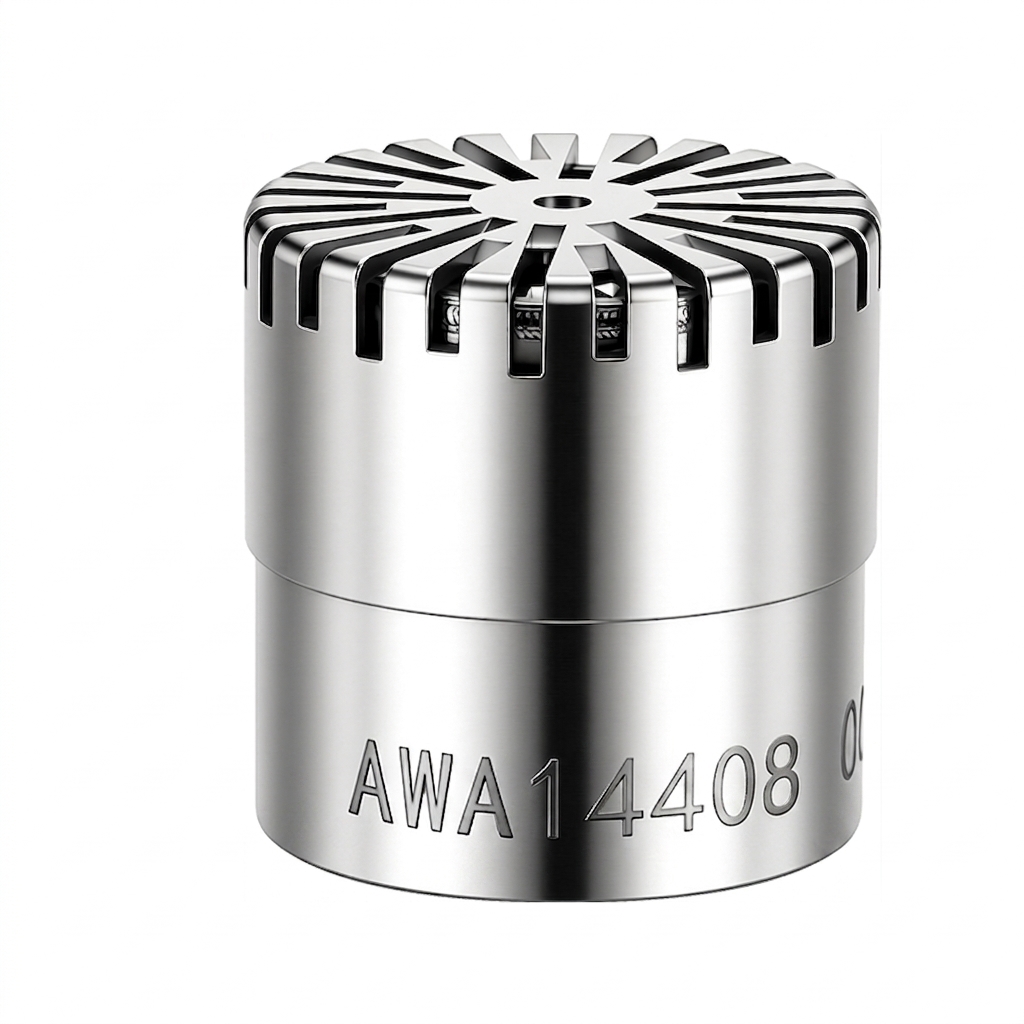
AWA14408: 1/2-Inch Pressure-Field Microphone
Best for calibration systems and stable acoustic measurements
The AWA14408 Pressure-Field Microphone is designed for applications requiring stable measurement performance.
Key specifications include:
Frequency range: 10 Hz–8 kHz
Dynamic range: 37–156 dB
Sensitivity: 3.3 mV/Pa
IEC 61094 WS2P dimensions
Operating temperature: -30°C to +80°C
Its pressure-field design makes it a candidate for compatible acoustic calibration systems and laboratory applications. Confirm the specific pressure-field requirements and system compatibility before selecting it.
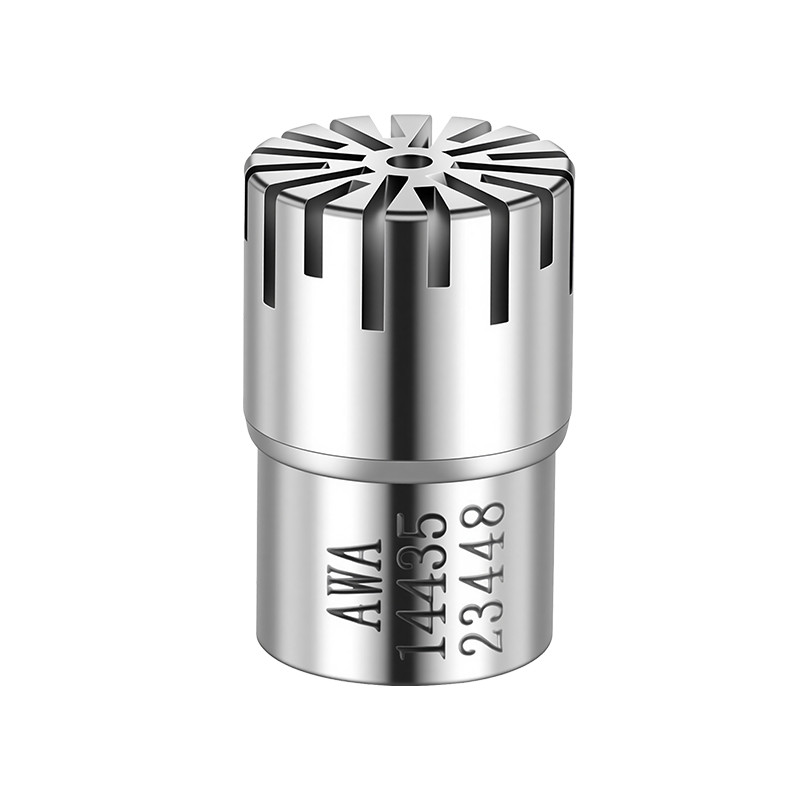
AWA14435: 1/4-Inch High-SPL Free-Field Microphone
Best for high-level noise measurements
The AWA14435 High-SPL Microphone is designed for applications where high sound pressure levels demand suitable measurement capability.
Key specifications include:
Frequency range: 5 Hz–20 kHz
Dynamic range: 40–167 dB
Sensitivity: 4.0 mV/Pa
Compact 1/4-inch design
It is suitable for evaluating applications such as engine noise, compressors and acoustic chamber testing, subject to the measurement setup and operating conditions.
The microphone can also be used in sound intensity probe configurations when supported by the appropriate phase-matching and filtering system.
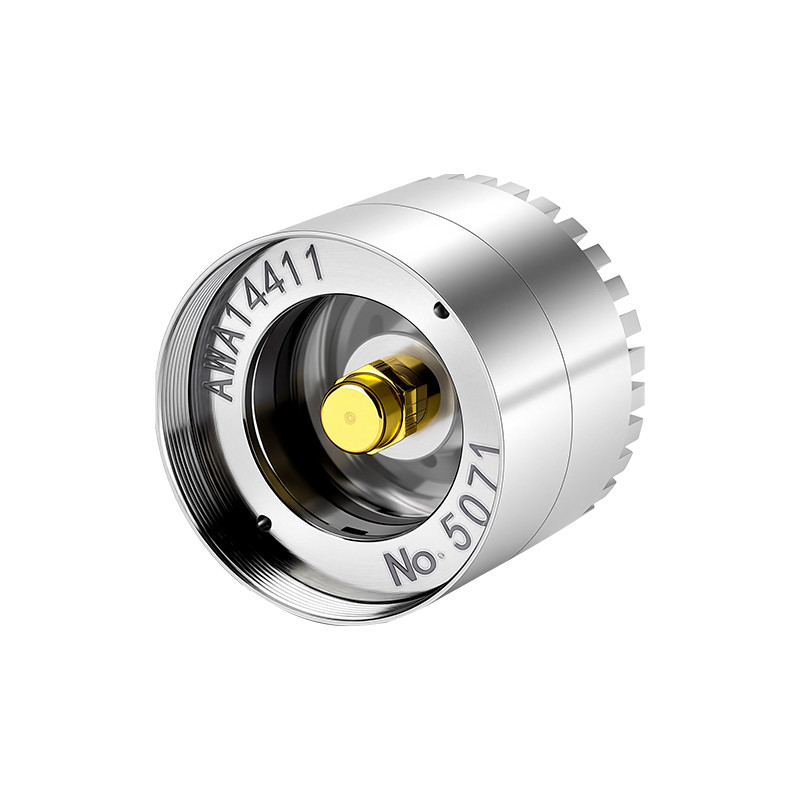
AWA14411: 1-Inch Prepolarized Low-Noise Microphone
Best for low-level acoustic measurements
The AWA14411 Low-Noise Microphone is designed for applications where weak acoustic signals must be distinguished from background noise.
Key specifications include:
Noise floor: 6.5 dBA
Sensitivity: 100 mV/Pa
Frequency range: 10 Hz–16 kHz
Maximum specified level: 137 dB
Prepolarized design
Its low-noise performance makes it worth considering for sound power testing, product noise evaluation and automotive NVH applications. Compatibility with the selected IEPE or conventional preamplifier should be confirmed before integration.
Frequently Asked Questions
Q: Can Aihua microphones replace another manufacturer's model?
A: Potentially, provided the replacement meets the required dimensions, sensitivity, frequency response, polarization and preamplifier compatibility. Confirm the specifications before ordering.
Q: How often should a measurement microphone be calibrated?
A: Follow the manufacturer's recommendations, laboratory quality procedures and applicable standards. Annual calibration may be appropriate in some applications, but the required interval depends on usage and measurement requirements.
Q: Can Aihua provide customized solutions?
A: Contact Aihua to discuss OEM/ODM requirements, technical specifications and compatibility with your existing acoustic measurement system.
Conclusion: Find the Right Measurement Microphone
Understanding what a microphone does is the first step toward choosing the right instrument for accurate acoustic testing.
The AWA14408 supports compatible pressure-field applications, the AWA14435 targets high-sound-pressure measurements, and the AWA14411 is designed for low-noise acoustic analysis.
Request a quote to find the right microphone for your acoustic measurement requirements.
Contact us
blog latest news

Any questions? We look forward to hearing from you.
 Tel: +8619012832378