


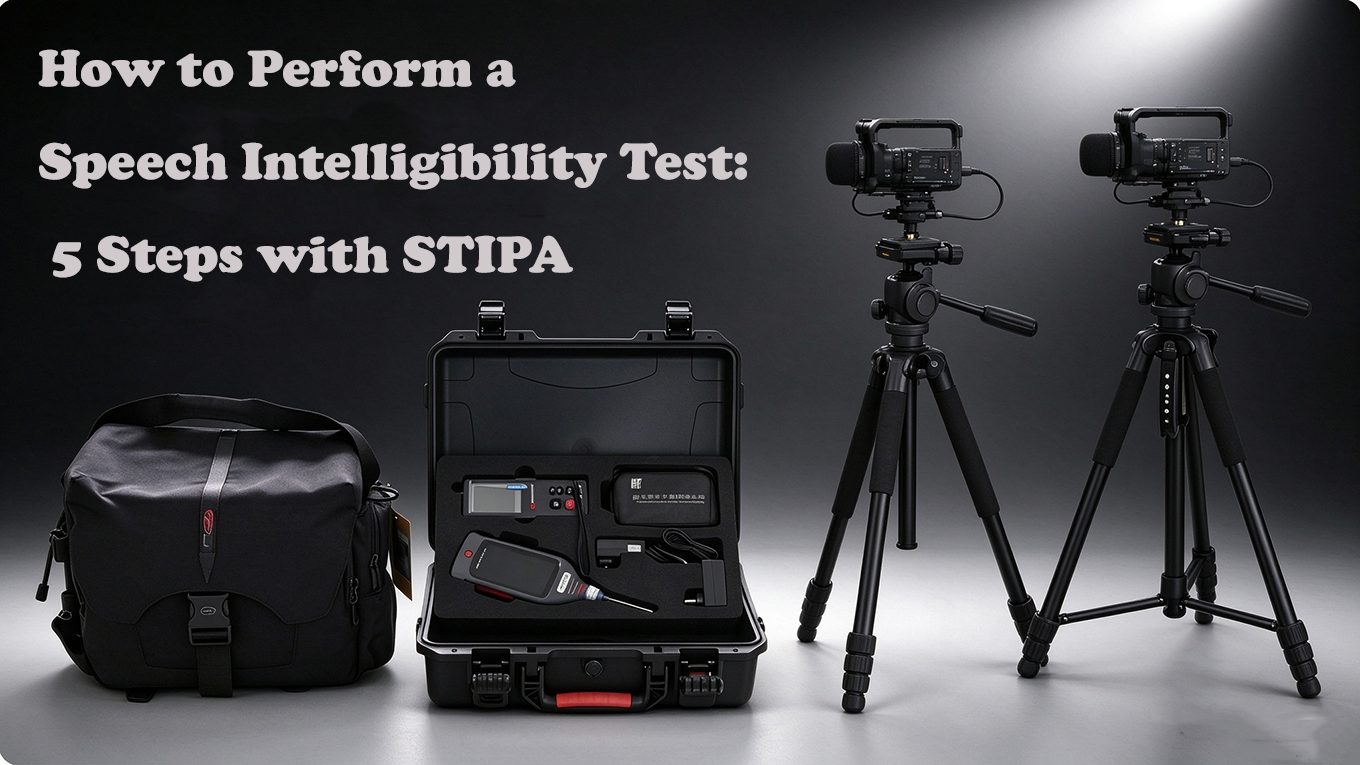
How to Perform a Speech Intelligibility Test: 5 Steps with STIPA
An announcement is only useful if people can understand it. In airports, railway stations, conference rooms and emergency broadcasting systems, poor speech clarity can lead to missed information and even safety risks.
A speech intelligibility test helps determine whether a public address (PA) system delivers clear and understandable messages throughout a listening area. This guide explains how to perform a speech intelligibility test using the STIPA method, how to interpret the results and how the AWA4959 Speech Intelligibility Measurement System simplifies on-site testing.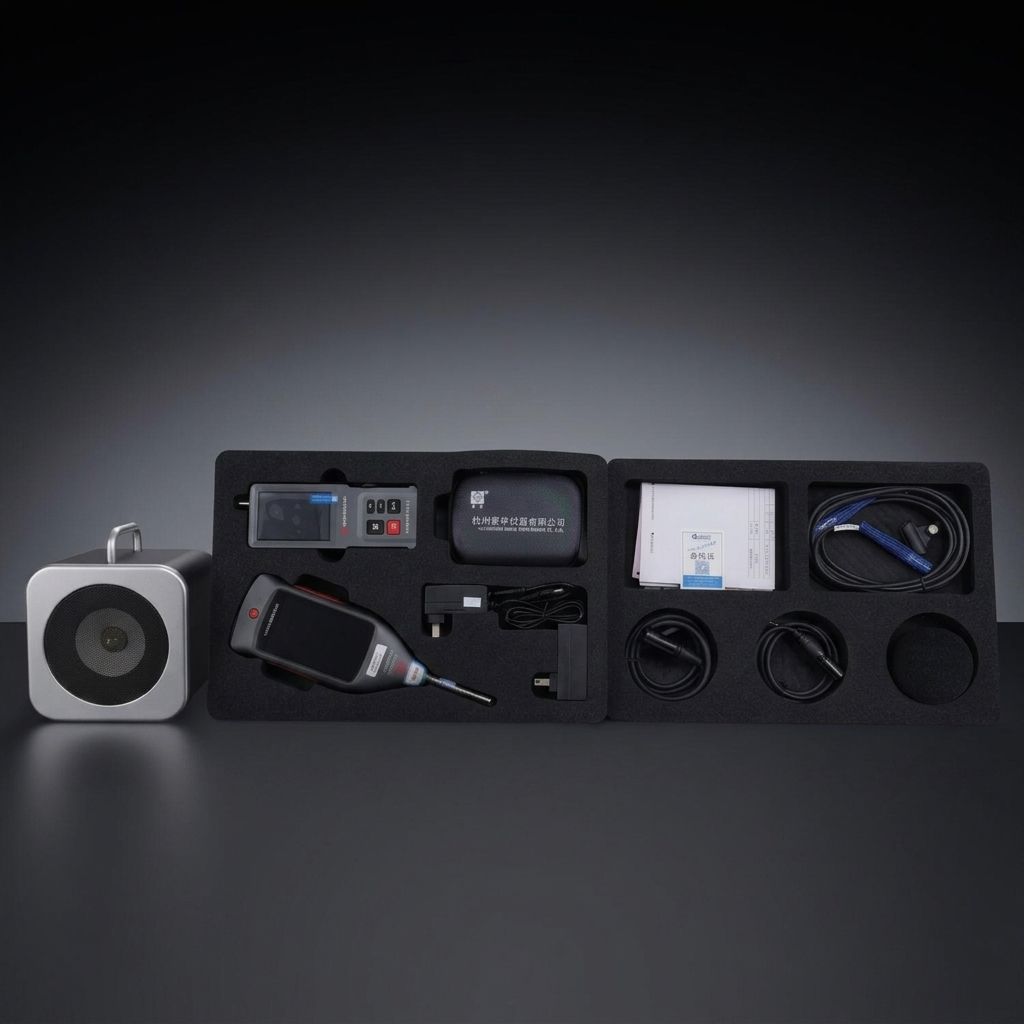
What Is a Speech Intelligibility Test? STI vs. STIPA
A speech intelligibility test evaluates how clearly speech is transmitted through an acoustic environment. The main measurement indicator is the Speech Transmission Index (STI), which ranges from 0 to 1. A higher value indicates better speech intelligibility.
The measurement method is defined in IEC 60268-16:2020.
Full STI measurement analyzes seven octave bands across multiple modulation frequencies. STIPA (Speech Transmission Index for Public Address Systems) uses a simplified test signal and measurement procedure, making it a practical choice for field testing of public address and voice alarm systems.
Why Is Speech Intelligibility Testing Important?
Reverberation, background noise, speaker positioning and uneven sound coverage can all reduce speech clarity. Testing helps identify these problems before system acceptance and operation.
|
Application |
Common Challenge |
|
Airports and railway stations |
Background noise and reverberation affect announcements |
|
Emergency voice alarm systems |
Evacuation messages must remain understandable |
|
Conference rooms and auditoriums |
Uneven sound coverage reduces listening quality |
|
Public buildings |
Different acoustic conditions affect speech clarity |
Many projects use an STI value above 0.60 as a performance target. However, acceptance criteria depend on the applicable regulations, building type and project specifications.
How to Perform a Speech Intelligibility Test: 5 STIPA Steps
Follow these five steps to conduct a consistent STIPA measurement in accordance with the applicable IEC requirements.
Step 1: Prepare the PA System
Check the loudspeakers, amplifiers, mixing console and signal connections before testing. Operate the system under stable conditions using the gain settings specified for the project.
Connect the STIPA signal source to the line input of the mixing console. The playback source should meet the required frequency accuracy, typically within ±200 ppm, to avoid affecting measurement reliability.
Step 2: Select Appropriate Measurement Points
Measurements should cover the actual listening area rather than focusing only on locations with good sound coverage.
Consider the following practical positioning guidelines:
Microphone height: approximately 1.2–1.5 m above the floor.
Distance from reflective surfaces: preferably at least 1.5 m.
Measurement density: typically at least one point per 50 m².
Minimum measurement points: at least three, distributed across the listening area.
Always follow the project specification and applicable measurement requirements when determining the final sampling layout.
Step 3: Measure Background Noise
Background noise can significantly reduce speech intelligibility. Before playing the STIPA signal, measure and record the ambient noise level at representative positions.
Maintain suitable signal-to-noise conditions. A background signal-to-noise ratio of 12 dB or better is a useful testing target, subject to the applicable procedure.
Record unusual noise sources, such as ventilation equipment, traffic and nearby machinery, to help explain variations in the results.
Step 4: Calibrate and Perform STIPA Measurements
Before testing, check the sound level meter using a suitable acoustic calibrator. Then play the standardized STIPA test signal through the PA system.
Position the measurement microphone at each selected point and use an STI analyzer to measure the signal transmission characteristics.
Record the STI value and relevant measurement information for every location.
Step 5: Repeat Measurements and Analyze Results
Repeat measurements under consistent conditions to improve reliability. Where required by the test procedure, calculate the arithmetic mean of repeated readings.
Your test report should include measurement locations, STI values, background noise levels, test time and PA system settings.
If certain locations show low STI values, investigate speaker coverage, reverberation and background noise before making adjustments and testing again.
AWA4959: An Integrated Speech Intelligibility Measurement System
A reliable STIPA test requires a suitable signal source, measurement instrument and calibration equipment. The AWA4959 Speech Intelligibility Measurement System from Aihua Instruments combines the essential equipment for on-site speech intelligibility assessment.
|
Component |
Function |
|
AWA5512 Intelligent Sound Source |
Generates standardized STI/STIPA test signals |
|
AWA6292 Class 1 Sound Level Meter |
Performs acoustic measurement and STI analysis |
|
AWA6021A/L Acoustic Calibrator (Optional) |
Supports pre-test sound level calibration |
|
AWA1653 Signal Generator (Optional) |
Provides additional signal generation capabilities |
Key advantages include:
Efficient on-site testing: Obtain STI measurement results directly without complicated signal setup.
Detailed analysis: Modulation Transfer Function (MTF) analysis helps identify frequency-related factors affecting speech clarity.
Wide application range: Suitable for PA systems, emergency broadcasting, airports, railway stations, conference rooms and auditoriums.
The system is designed for speech intelligibility testing in accordance with IEC 60268-16:2020.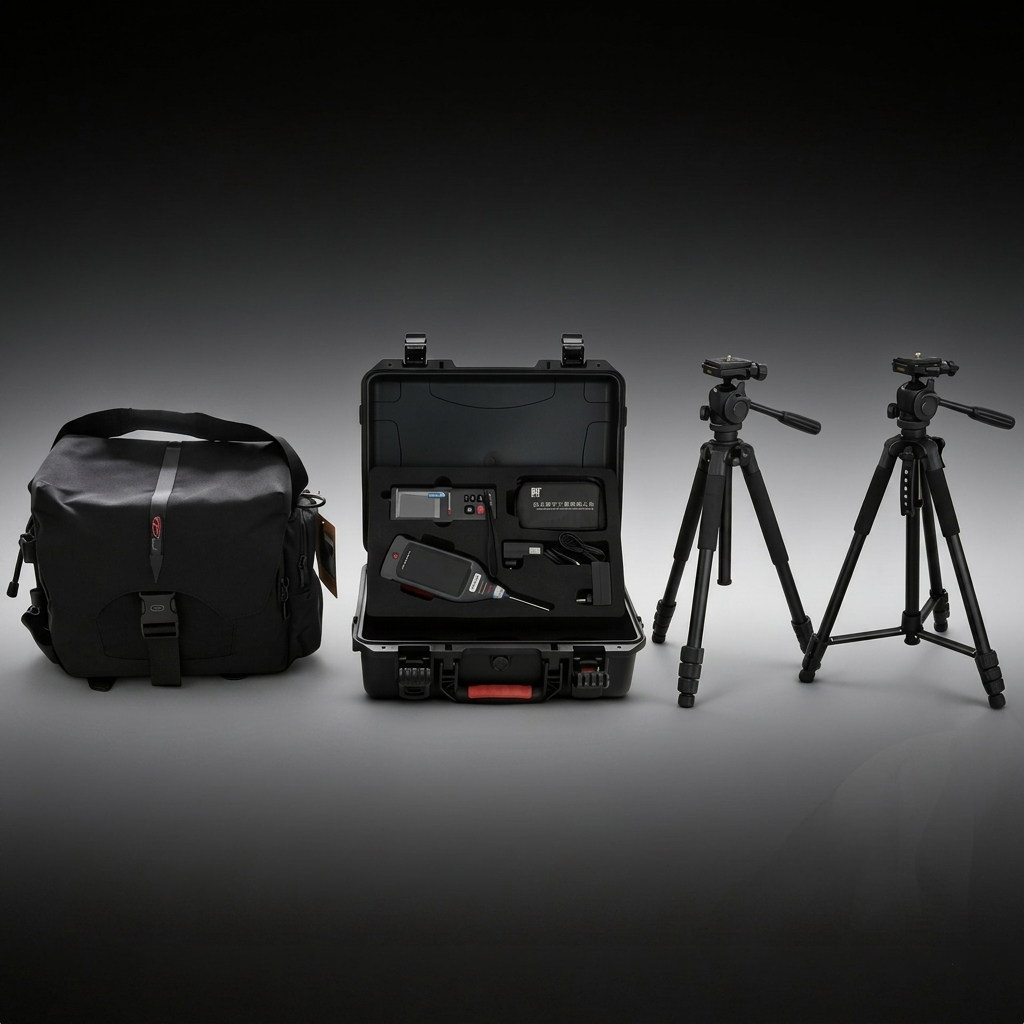
Speech Intelligibility Test: Frequently Asked Questions
- What is the difference between STI and STIPA?
STI is the overall speech transmission index, while STIPA is a simplified measurement method designed primarily for public address and voice alarm systems.
- Which standard applies to speech intelligibility testing?
IEC 60268-16:2020 specifies the methods and requirements for objective assessment of speech intelligibility.
- How many measurement points are required?
The number depends on the room size and project requirements. A practical guideline is at least one point per 50 m², with no fewer than three points.
- Is an acoustic calibrator necessary?
Pre-test calibration is recommended to ensure reliable sound level measurements. The AWA4959 system supports the optional AWA6021A/L Class 1 acoustic calibrator.
Get Reliable STIPA Measurements with Aihua Instruments
A reliable speech intelligibility test involves proper system preparation, representative measurement points, background noise assessment and accurate STIPA analysis.
Explore our Speech Intelligibility (STIPA) Measurement application to learn more about STIPA testing solutions and their applications in public address and emergency broadcasting systems.
Looking for a professional STIPA testing solution? Contact Aihua Instruments for product specifications, configuration recommendations and technical support.
Contact us
blog latest news

Any questions? We look forward to hearing from you.
 Tel/ Whatsapp: +86-19012832378