


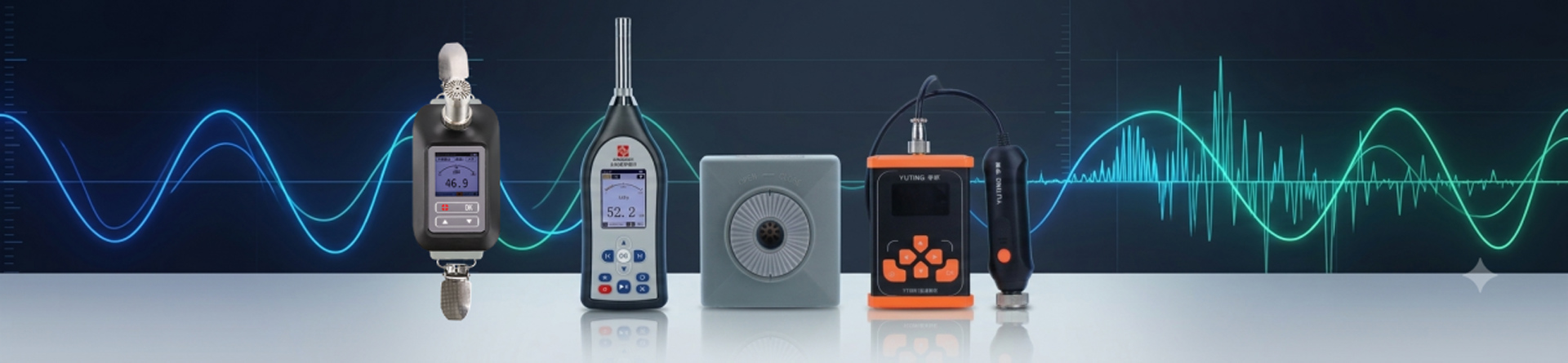
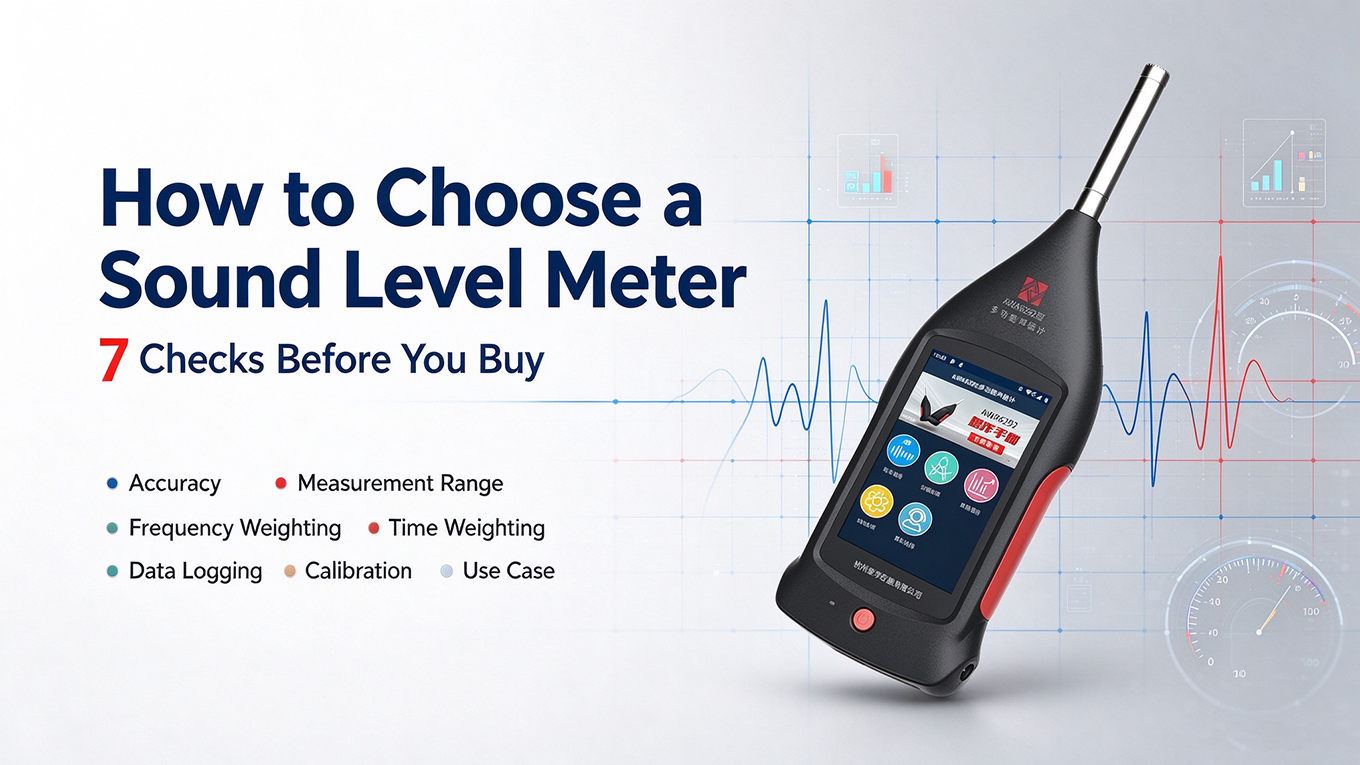
How to Choose a Sound Level Meter: 7 Checks Before You Buy
Knowing how to choose a sound level meter saves you from rejected reports, repeated site visits and wasted budget. This guide gives you 7 practical checks, real use cases, and a review of two Class 1 meters from Aihua that answer the most common buyer problems.
Why Does Choosing the Right Sound Level Meter Matter?
A sound level meter (also called a noise level meter or decibel meter) is the evidence behind every noise report. If the meter is the wrong class, lacks the needed analysis, or cannot prove its data is untouched, you risk failed compliance checks, disputed results and measurements you must redo.
How to Choose a Sound Level Meter: 7 Key Factors
- Class 1 vs Class 2 Sound Level Meter: Which Accuracy Do You Need?
Under IEC 61672, a Class 1 sound level meter is the more precise grade and is the usual choice for environmental, building acoustics and engineering work. Class 2 can suit general workplace surveys. If your reports go to regulators or clients, choose Class 1 once instead of upgrading later.
- What Measurement Range and Weighting Do You Need?
Look for A, C and Z frequency weighting and F, S and I time weighting. A wide linear range matters most: you avoid manual range switching and the risk of overloading mid-measurement.
- Do You Need Octave Band or FFT Analysis?
A single dB number cannot show where noise comes from. Octave band analysis (1/1 and 1/3) and FFT let you find tonal problems and plan noise control. Choose a modular meter so you pay only for what you use.
- How Much Data Logging and Storage Do You Need?
Long surveys and 24-hour monitoring generate large files. Check built-in memory, card expansion and recording quality for later analysis.
- Does It Connect and Protect Your Data?
4G, WiFi, Bluetooth and USB cut manual data handling. If you work in an accredited lab, look for LIMS connection and tamper-proof records.
- Is It Built for Field Conditions?
Check the IP rating, operating temperature, battery life and touchscreen readability outdoors.
- How Will You Handle Sound Level Meter Calibration?
Plan for a field calibrator and periodic lab verification, and keep your calibration certificates organized.
Which Sound Level Meter Fits Your Application?
|
Use case |
What you need |
Suggested focus |
|
Traffic and urban zone noise |
Long logging, 24-hour measurement |
Storage, battery, IP65 |
|
Industrial boundary and construction sites |
Weatherproof, statistical analysis |
Class 1, remote data transfer |
|
Testing labs and compliance work |
Audit-ready records |
Tamper-proof data, LIMS |
|
Halls and room acoustics |
Reverberation and speech clarity |
STI, reverberation modules |
Product Review: Two Class 1 Sound Level Meters From Aihua
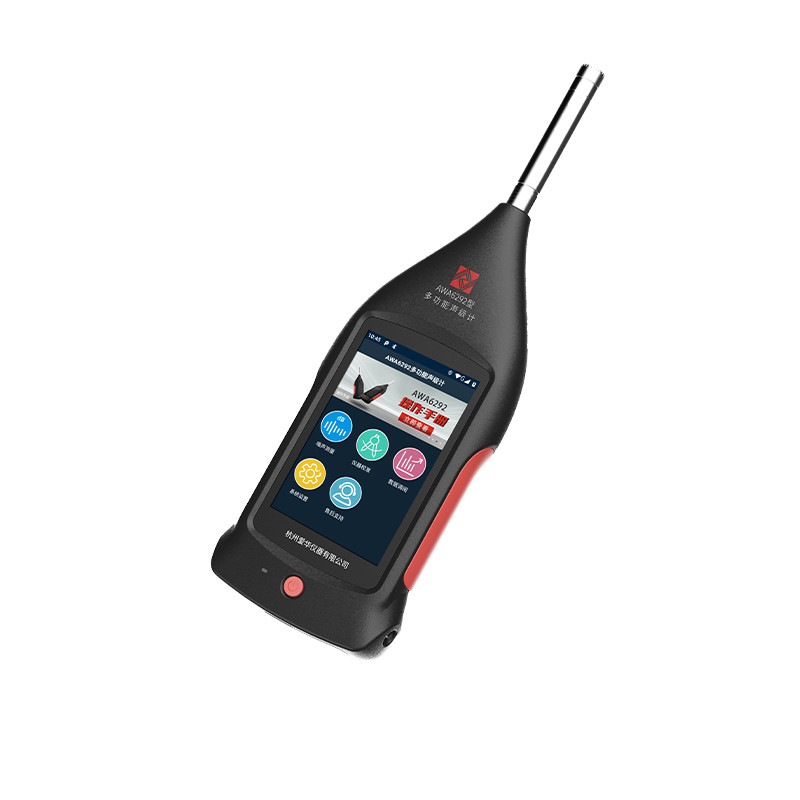
AWA6292: One Meter for Noise, Spectrum and Room Acoustics
If you test both noise and room acoustics, you don’t need to carry several instruments. The AWA6292 measures 20 to 143 dB(A) and adds optional reverberation and STI modules for halls. It stores up to 80 GB, has IP65 protection, and charges quickly: 2 hours of charging supports a 24-hour measurement. 4G, WiFi and Bluetooth plus LIMS connection keep your data flowing without manual copying.
AWA6228A: Built for Compliance and Simple Operation
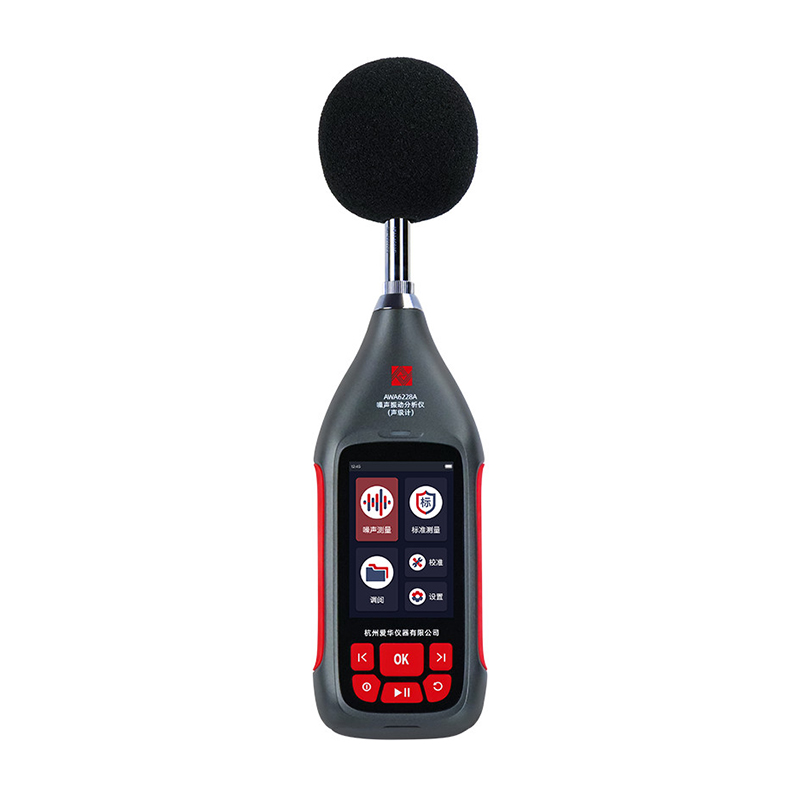
If you must hand over defensible data, the AWA6228A has tamper-proof data, anti-counterfeit printing and log recording. Its 126 dB range needs no range switching, and the touchscreen plus 6 physical buttons let operators work with gloves or on screen. Preset scenarios for common noise standards speed up setup, and 48k recording supports later analysis.
AWA6292 vs AWA6228A: Which Should You Buy?
|
Feature |
AWA6292 |
AWA6228A |
|
Standard |
IEC 61672-1 Class 1 |
IEC 61672-1 Class 1 |
|
Range |
20–143 dB(A) |
126 dB dynamic range |
|
Screen |
4.3-inch touch |
3.5-inch touch plus 6 buttons |
|
Storage |
16 GB plus 64 GB card |
64 GB plus 64 GB card |
|
Best for |
Acoustics, STI, reverberation |
Compliance and field testing |
FAQ
Q: Is a Class 2 meter good enough for workplace noise?
A: Often yes for general surveys, but choose Class 1 if regulators or clients require it.
Q: WHow often should I calibrate a sound level meter?
A: Check with a field calibrator regularly, and follow your local rules for lab verification.
Q: Can a phone app replace a professional noise level meter?
A: Apps suit casual checks, but they typically don’t meet IEC 61672 for official reports.
Conclusion
To choose the right meter, check accuracy class, range, analysis, storage, connectivity, durability and calibration. For acoustics work, the AWA6292 fits. For compliance-driven testing, the AWA6228A fits. Contact Aihua for a quote or OEM/ODM customization at marketing@hzaihua.com or WhatsApp +86 190 1283 2378.
blog latest news

Any questions? We look forward to hearing from you.
 Tel: +86-19012832378