



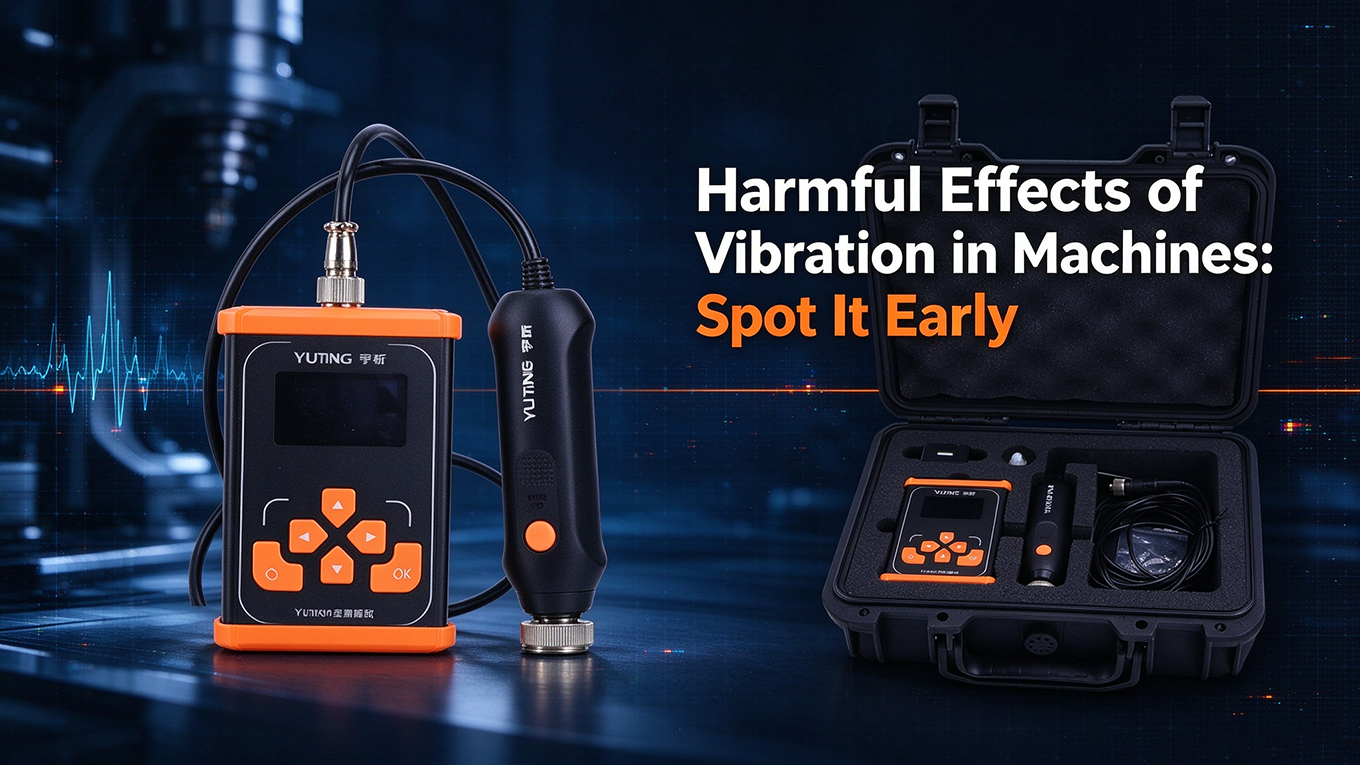
Harmful Effects of Vibration in Machines: Spot It Early
All machines produce some vibration during operation. However, excessive vibration can indicate imbalance, misalignment, loose components, or internal wear. If left unchecked, it can shorten equipment life, reduce product quality, increase maintenance costs, and cause unexpected downtime.
Regular vibration monitoring helps maintenance teams identify abnormal changes early and plan repairs before minor problems become major failures.
Harmful Effects of Vibration in Machines: 7 Common Problems
|
Effect |
Potential consequence |
|
Fatigue failure |
Repeated stress causes cracks in shafts, welds, and structural components |
|
Bearing damage |
Increased wear and lubricant degradation shorten bearing life |
|
Loose fasteners |
Bolts and couplings loosen, potentially damaging nearby components |
|
Resonance |
Vibration amplification damages machine frames and supporting structures |
|
Reduced precision |
Machine tools and workpieces move, affecting product quality |
|
Unplanned downtime |
Equipment failure interrupts production and increases repair costs |
|
Operator exposure |
Hand-arm or whole-body vibration may create occupational health risks |
The severity depends on vibration magnitude, frequency, exposure duration, and operating conditions. Workplace vibration exposure should be evaluated against the applicable occupational health requirements.
What Causes Excessive Vibration in Machines?
Three common causes are unbalance, misalignment, and mechanical looseness. Other possible causes include worn bearings, damaged gears, and resonance when operating frequencies approach a structure's natural frequency.
Identifying the underlying cause is essential. Simply reducing the measured vibration without correcting the mechanical problem may only provide temporary improvement.
Warning Signs: Is Your Machine Vibration Too High?
Unusual noise, rising temperatures, visible shaking, and repeated component failures can indicate vibration problems. However, these symptoms may appear after damage has already started.
A handheld vibration meter provides measurable data for comparison over time. By recording readings at consistent measurement points, maintenance teams can establish a baseline, identify rising trends, and make better-informed maintenance decisions.
YT3001A vs. YT3001B: Which Handheld Vibration Meter Should You Choose?
The Aihua YT3001A and YT3001B measure acceleration, velocity, and displacement, helping technicians assess machine condition during routine inspections.
YT3001A: Practical for Routine Maintenance
The YT3001A vibration meter is designed for everyday equipment checks. One-key switching between acceleration, velocity, and displacement makes it convenient for inspecting motors, pumps, fans, and gearboxes. Its compact design supports regular maintenance rounds and trend recording.
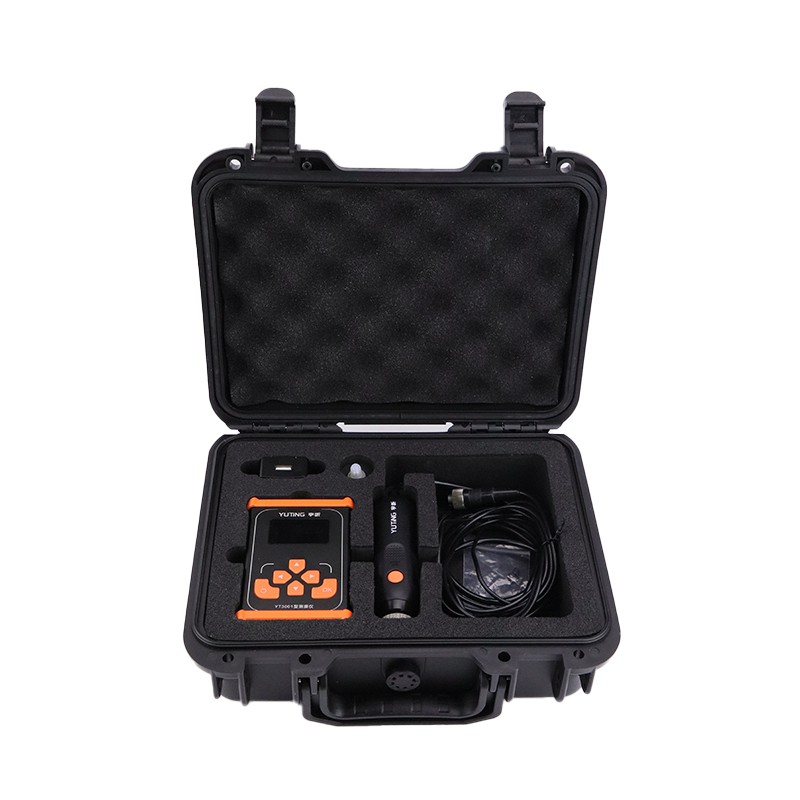
YT3001B: Higher Sensitivity and Wider Measurement Ranges
The YT3001B vibration meter offers a sensor sensitivity of 2.8 pC/(m·s²), compared with 1 pC/(m·s²) for the YT3001A. Its wider velocity and displacement ranges make it worth considering for applications requiring higher sensitivity or measurements across a broader range of vibration levels.
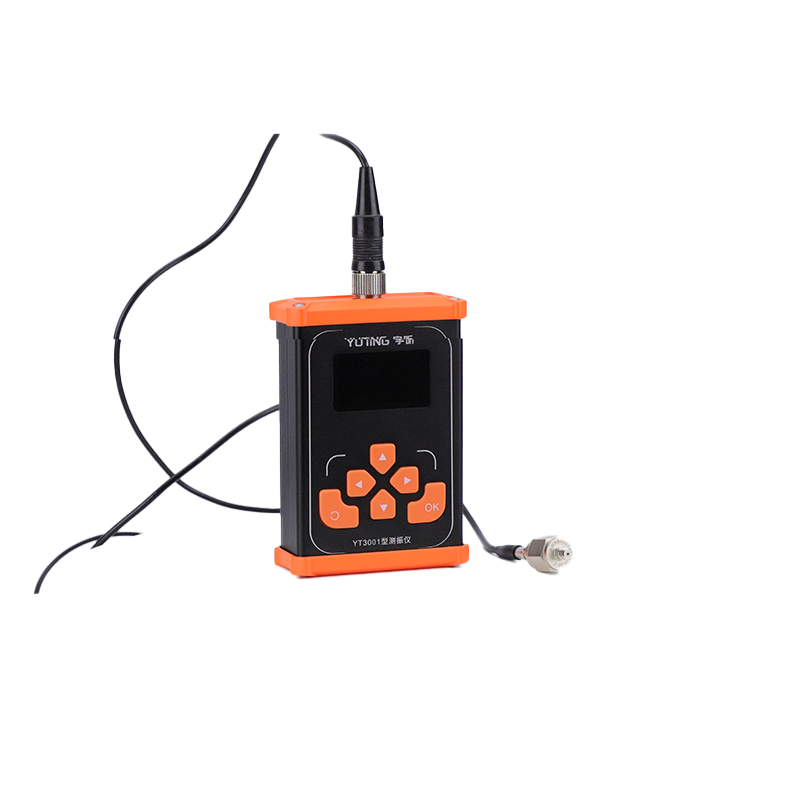
Both models support RMS, peak, and peak-to-peak measurements and comply with JJG 676-2019, according to their product specifications.
|
Specification |
YT3001A |
YT3001B |
|
Sensitivity |
1 pC/(m·s²) |
2.8 pC/(m·s²) |
|
Velocity range |
0.05–2,000 mm/s |
0.1–20,000 mm/s |
|
Displacement range |
0.005–20 mm |
0.005–200 mm |
|
Acceleration frequency range |
10 Hz–15 kHz |
10 Hz–8 kHz |
|
Weight |
300 g |
270 g |
|
Best suited for |
Routine maintenance |
Higher sensitivity and wider measurement ranges |
Application Example: Detecting a Potential Bearing Problem Early
Consider a cooling-water pump that develops unusual noise and warmth around its motor. Instead of relying on operator impressions alone, a maintenance engineer can use the YT3001A to establish baseline readings and monitor the same measurement points weekly.
If RMS or peak values increase consistently, the team can investigate bearing condition, alignment, and other possible causes. After corrective maintenance, repeat measurements help verify whether vibration levels have returned closer to baseline.
This is an illustrative workflow rather than a documented customer case. Actual fault diagnosis requires consideration of operating conditions and additional evidence.
Contact us
How to Reduce Harmful Vibration Before Damage Occurs
Balance rotating components and correct shaft misalignment.
Inspect bearings, gears, fasteners, and couplings regularly.
Check machine foundations and investigate possible resonance.
Establish consistent measurement points and monitoring intervals.
Record readings before and after maintenance to evaluate results.
A structured predictive maintenance program helps turn vibration data into practical decisions about inspection, repair, and equipment replacement.
FAQs: Harmful Effects of Vibration in Machines
Q: Can vibration damage a machine?
A: Yes. Excessive vibration can accelerate wear, cause fatigue cracks, reduce accuracy, and contribute to equipment failure.
Q: What is an acceptable machine vibration level?
A: It depends on the machine type, operating conditions, measurement method, and applicable evaluation criteria. Compare readings with manufacturer recommendations and relevant standards.
Q: How often should machine vibration be measured?
A: Use a consistent schedule based on equipment criticality, operating conditions, and maintenance requirements. Trending repeated measurements is generally more useful than relying on one reading.
Q: Which vibration meter should I choose?
A: Choose the YT3001A for routine multi-parameter checks. Consider the YT3001B when higher sensor sensitivity or wider velocity and displacement ranges are important.
Conclusion: Stop the Harmful Effects of Vibration in Machines
The harmful effects of vibration in machines range from bearing wear and reduced precision to costly downtime. Regular measurement helps maintenance teams recognize changes early and investigate potential faults before they become more serious.
Explore the YT3001A Handheld Vibration Meter and YT3001B High-Sensitivity Vibration Meter to find the right solution for your maintenance needs.
Read more
blog latest news

Any questions? We look forward to hearing from you.
 Tel: +86-19012832378