


FFT vs Octave Band Analysis: Which Do You Need?
Ask two engineers whether to run an FFT analysis or an octave band analysis, and you'll often get two confident, different answers. Both can be right — it depends on what you're trying to find. The wrong choice doesn't just give you a less useful graph; it can quietly invalidate the whole test.
What Is FFT Analysis?
FFT (Fast Fourier Transform) analysis converts a raw signal into a frequency spectrum, showing how much energy sits at each frequency, spaced evenly on a linear scale. Every bin is the same width in Hz — constant-bandwidth analysis.
The One-Sentence Definition Engineers Actually Use
If octave bands ask "how loud is this region," FFT asks "exactly which frequency is that peak at" — fine resolution that's ideal for isolating one faint tone in a noisy signal.
What Is Octave Band Analysis?
Octave band analysis groups a spectrum into bands that widen as frequency increases — 1/1 or 1/3-octave, per IEC 61260. Fewer, standardized bands make results far easier to report and compare against a limit.
Why Your Ear — and Regulators — Think in Octaves
Human hearing works on a roughly logarithmic scale, which octave bands mimic. That's why noise regulations are written in octave or 1/3 octave band terms, not raw FFT lines.
FFT vs Octave Band Analysis: The Core Difference
The real distinction is constant bandwidth vs. constant percentage bandwidth. FFT bins stay a fixed width in Hz across the spectrum, so resolution at 100 Hz equals resolution at 10,000 Hz. Octave bands do the opposite: each band's width is a fixed percentage of its center frequency — narrow at low frequencies, wide at high ones — mirroring how we actually perceive pitch.
That design choice decides everything downstream. FFT-based frequency spectrum analysis gives you the resolution to separate two closely spaced tones; octave bands trade that resolution for a result that's standardized and directly comparable to a published limit.
When Should You Use FFT Analysis?
Catching a Bearing Fault Before It Becomes a Breakdown
In vibration FFT analysis, each fault type — imbalance, misalignment, bearing wear, gear mesh issues — vibrates at a predictable frequency. Only FFT's fine resolution separates these closely spaced signatures, which is why predictive maintenance FFT programs depend on it.
Pinpointing a Narrowband Noise Source
A whining gearbox sits at one specific frequency. FFT shows it as a sharp spike; an octave band would blend it into the surrounding band and hide it.
When Should You Use Octave Band Analysis?
Compliance Reporting Regulators Will Actually Accept
Environmental, occupational, and product noise standards are written in octave band terms. Submitting raw FFT data instead is unconventional, and many auditors won't accept it.
Rating Human-Perceived Loudness and Comfort
Because octave bands track how the ear groups frequencies, they're the right tool for judging whether a space will be perceived as comfortable — not just technically quiet.
Do You Need One Instrument, or Two?
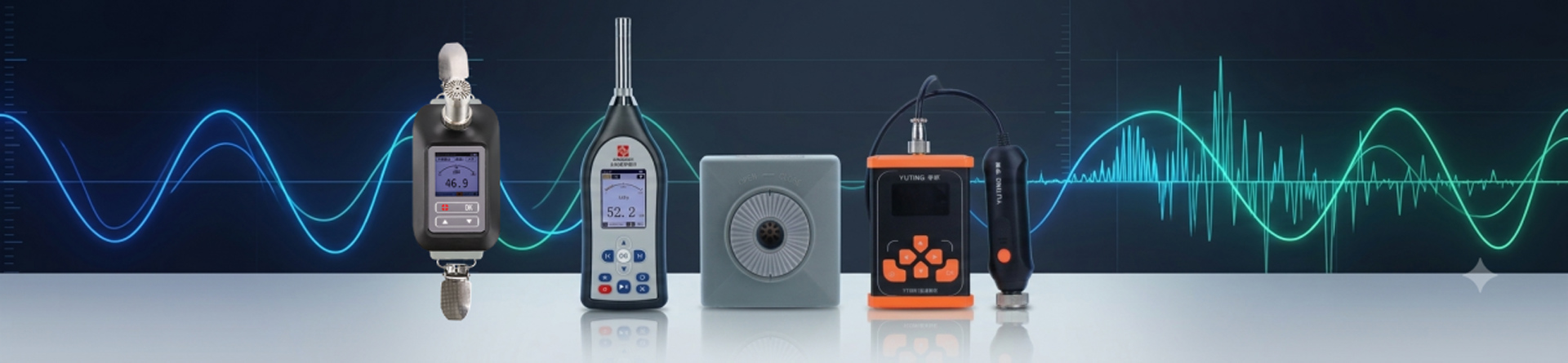
In practice you rarely have to choose — most modern analyzers run both from one captured signal. The real question is which instrument tier fits how your team works.
Just getting started, with no dedicated hardware budget?
The iSV1611/1610 USB measurement microphone turns a laptop you already own into a Class 1 FFT and octave analysis system — IEC 61672 & 61260 Class 1, sampling up to 192 kHz across 2 channels, with a max input SPL over 140 dB — the lowest-cost way to start standards-compliant frequency work.
Moving between routine checks and deeper diagnosis?
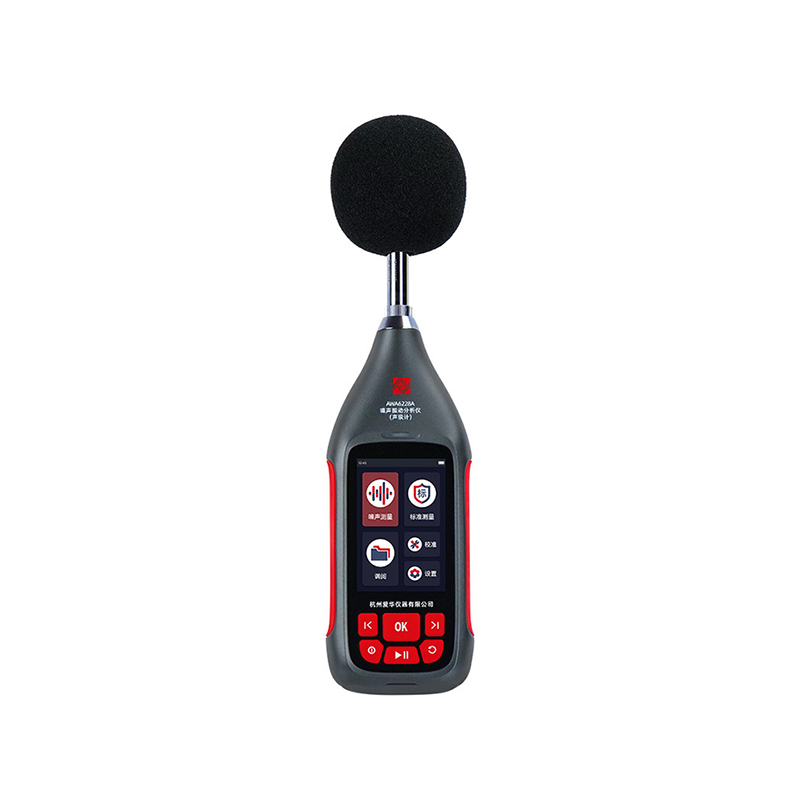
The AWA6228ANoise and Vibration Analyzer combines both in one handheld unit — a 126 dB dynamic range, FFT plus 1/1 & 1/3 octave analysis, 24-hour monitoring, and 64 GB of onboard storage — so you're never caught without the right tool mid-walkthrough.
Working across acoustics, rooms, and machinery checks?
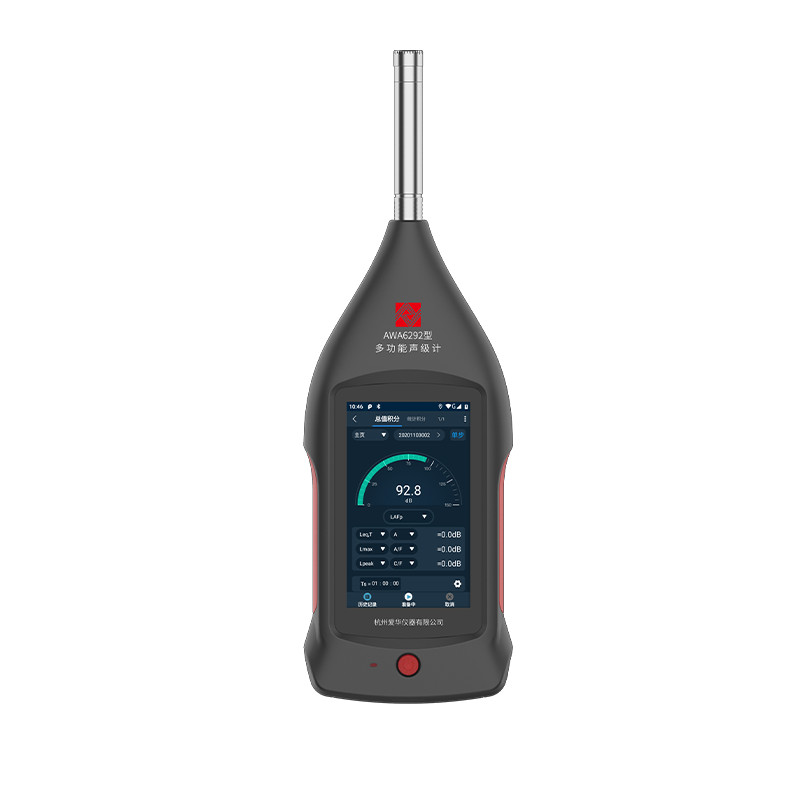
The AWA6292 Multifunctional Sound Level Meter is modular — FFT, octave, STI, and reverberation are separate add-ons on a 4.3" touchscreen with IP65 protection and 4G/WiFi/Bluetooth connectivity — so you pay only for what your projects need.
Read more
FAQ: FFT vs Octave Band Analysis
Can One Instrument Do Both?
Yes — most Aihua analyzers capture one signal and compute both in parallel, so you choose at the reporting stage, not the measurement stage.
Do I Need Class 1 Accuracy for FFT Work?
For fault diagnosis alone, Class 2 is often adequate. For results feeding a compliance report, Class 1 is the standard expectation.
Is FFT More "Accurate" Than Octave Band Analysis?
Neither is more accurate — they answer different questions. FFT has finer resolution; octave bands are the standardized format regulations require.
Summary: Choosing the Right Analysis Method
Reach for FFT analysis when isolating a specific frequency — fault diagnosis, tone-hunting, narrowband source identification. Reach for octave band analysis for standardized, comparable results — compliance and acceptance testing. Most teams need both, which is why it's worth choosing one instrument that runs them from a single measurement.
blog latest news

Any questions? We look forward to hearing from you.
 Tel: +86 190 1283 2378