- Home
- About Us
- Products
- Application
- Resource
- News
- Contact Us
Leave Your Message
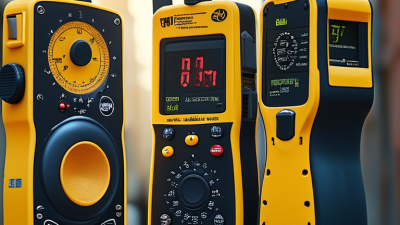
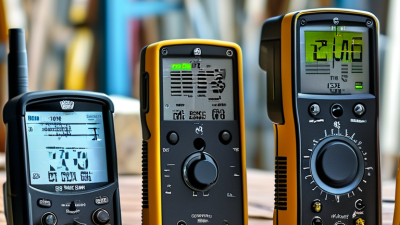
Sound might be invisible, but you can't ignore its effects—like that rattling window, the hum of a fan gradually picking up, or a sudden loud burst from machinery. These little cues are easy to notice in everyday life. And if you really want to get a handle on what's going on, you can use Sound Measuring Devices. They turn those messy, real-world sounds into handy readings you can compare and analyze. For example, a sound level meter can track how noise levels change in a room, while a noise dosimeter is great for monitoring exposure over longer periods. Basically, the right tool depends on what questions you're trying to answer.
Lord Rayleigh, one of the early pioneers in acoustics, once said, “The theory of sound is the theory of vibrations.” That pretty much sums it up—sound starts with physical motion, but its effects depend on things like how long it lasts, its frequency, and the environment around it. Don’t just look at the numbers on a meter and think you’ve got the whole story, though. Small settings like frequency weighting and response time can change what a reading actually means. And calibration? Super important. An instrument that's been checked with an acoustic calibrator is way more reliable than just turning it on and trusting it blindly.
Details matter quite a bit. For instance, a microphone placed near a reflective wall might pick up louder or different sounds than one placed in an open space. Sometimes a quick peak will show up on a reading, but then disappear when you average things out. So, to get useful measurements, you really need a clear plan—know exactly how you're taking readings, what equipment you're using, and keep track of where and when you're measuring. It’s good practical advice, not a promise of perfect results every time. Instruments have their limits, and humans can misread them too, so it’s worth keeping that in mind. When used thoughtfully, Sound Measuring Devices can really help engineers, facilities teams, and researchers spot patterns, compare different conditions, and make smarter decisions.”
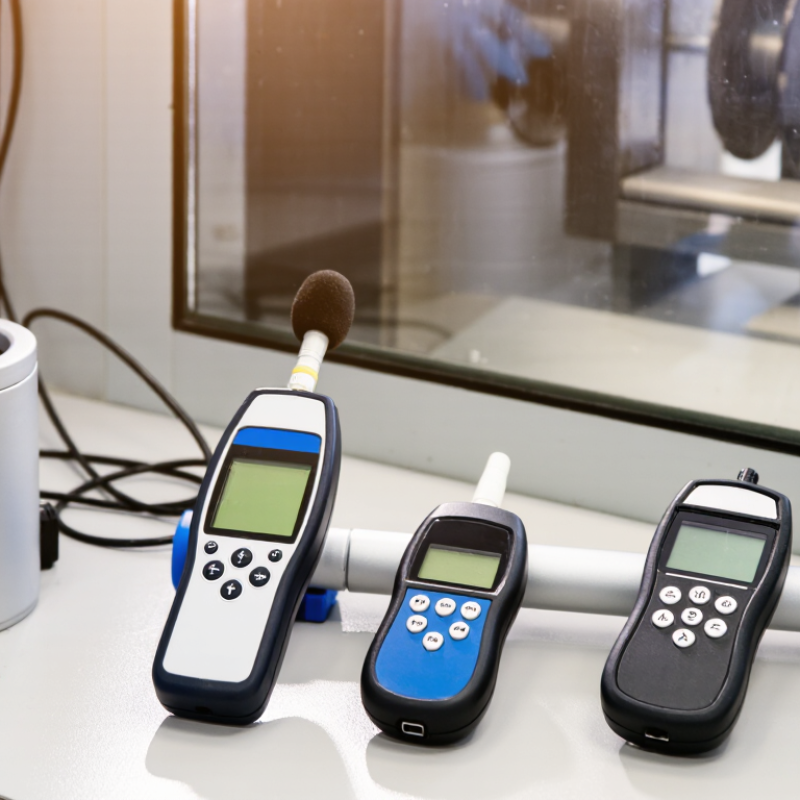
A sound-measuring device turns tiny air-pressure changes into a readable level. Its microphone diaphragm moves as sound waves pass, and an internal circuit converts that movement into an electrical signal. The meter compares the signal’s sound pressure with a reference pressure of 20 micropascals in air. It then expresses the result in decibels, or dB SPL. The scale is logarithmic, so a small numerical change can represent a substantial change in sound energy. That matters.
Meters can apply different frequency weightings. A-weighting reduces the influence of very low and very high frequencies, roughly reflecting human hearing at moderate levels. C-weighting retains more low-frequency energy and can help when bass or machinery dominates. A meter may also offer Fast or Slow response, which controls how quickly its display follows changing sound. For fluctuating noise, an equivalent level, often written as Leq, summarizes sound pressure over a selected period. A steady reading is not always the whole story.
For a useful measurement, check calibration and hold the microphone near the listening area, away from walls when possible. A refrigerator hum measured beside a tiled wall may read differently from the same hum in the center of a room. Wind, handling noise, microphone direction, and reflections can also affect results. A clean number can still mislead if the setup is poor. I sometimes find that the hardest part is choosing what interval represents the real environment. A brief peak and a long-term average answer different questions.
Sound-level meters measure sound pressure and express it logarithmically in decibels. The reference pressure for sound pressure level (SPL) in air is 20 micropascals (µPa).
| Sound Pressure Level (dB SPL) | Approximate RMS Sound Pressure | Illustrative Sound Example | Why Measurement Is Useful |
|---|---|---|---|
| 0 dB | 20 µPa | Reference pressure; near the threshold of hearing for a young, healthy listener under ideal conditions | Provides the baseline used to calculate sound pressure level. It does not mean that sound is absent. |
| 30 dB | About 0.00063 Pa | Quiet room or soft whisper at a distance | Helps assess quiet environments and identify low-level background noise. |
| 60 dB | 0.02 Pa | Typical conversation at roughly 1 metre, depending on the speakers and surroundings | Offers a useful reference for everyday indoor sound levels. |
| 85 dB | About 0.36 Pa | Busy traffic or loud workplace equipment; actual levels vary by location | Supports exposure checks. The US NIOSH recommended exposure limit is 85 dBA over 8 hours, with allowable duration halved for each 3 dB increase. |
| 100 dB | 2 Pa | Very loud sound, such as some powered tools at close range | Can reveal potentially hazardous exposure that may require prompt reduction or hearing protection. |
| 120 dB | 20 Pa | Extremely loud sound; discomfort or pain may occur, but individual responses vary | Indicates a level that warrants immediate attention and distance from the sound source. |
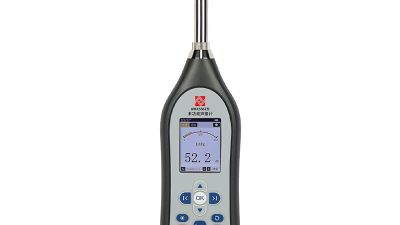
Occupational noise assessments require reliable measurements across changing conditions, from steady machinery hum to intermittent production peaks. The AWA5662 multifunctional sound level meter is designed for industrial machinery, factory environments, and workplace surveys. Its 115 dB linear measurement range reduces the need for manual range changes, while a 2.4-inch color display presents multiple readings in real time. Depending on the selected configuration, the meter supports Leq, Lmax, sound exposure level, TWA, LEX,8h, dose, and statistical analysis—indicators useful for documenting worker noise exposure and identifying areas for further evaluation.
Available in Basic, Integral Measurement, Sound Exposure (Dose), and Statistical types, the instrument can be matched to different survey needs. It complies with applicable Class 1 sound-level and octave-band standards, and with IEC 61252:2025 for relevant configurations. Optional 1/1- and 1/3-octave analysis provides more detailed frequency information. Recording and onboard storage, with optional WAV or MP3 files, allow results to be exported for PC review. Multiple microphone options support measurements from low to high sound levels, and its approximately 340 g portable design can run on battery power or an external 5V supply.
Class 1 meters have tighter tolerances for demanding measurements. Class 2 meters allow wider tolerances and often suit routine surveys.
It may suit precise measurements or detailed frequency analysis, such as checking steady noise near a ventilation unit.
No. Wind, reflections, and microphone placement can affect results. Setup still matters.
Check it with a suitable acoustic calibrator before and after measurements. Periodic testing can also help confirm performance.
Each 3 dB increase halves the recommended exposure time. At 88 dBA, that is four hours; at 91 dBA, two.
It is a recommended occupational exposure limit, not a guarantee of equal risk for every person.
It tracks sound near a worker across a shift. A meter usually checks noise in a specific area.
Note where, when, and how each reading was taken. Repeat assessments if tasks, equipment, or room conditions change. I might still miss something.
Sound Measuring Devices quantify sound pressure and express it in decibels, providing consistent readings that help people understand how loud an environment is. Sound level meters are categorized under IEC 61672 as Class 1 or Class 2, which indicates their measurement performance and suitability for different applications. Reliable results depend on choosing an appropriate meter and ensuring it is calibrated.
In workplaces, noise measurements can help identify potentially harmful exposure and determine when hearing conservation or other protective measures may be needed. OSHA uses 85 dBA over an eight-hour workday as an action level, while NIOSH recommends the same eight-hour level with a 3 dB exchange rate, meaning allowable exposure time decreases as sound levels rise. Calibrated noise data also supports decisions about engineering controls, work practices, and environmental noise management. By turning sound into measurable information, these devices help guide practical steps to reduce risk and evaluate whether controls are effective.