Leave Your Message
0%

Choosing a reliable Sound Testing Meter supplier requires more than comparing prices, screen sizes, or delivery promises. Global buyers need instruments that perform consistently in factories, construction sites, laboratories, and busy urban streets. A small microphone error can distort an entire noise report. That mistake may remain invisible until a client questions the result.

Malcolm J. Crocker, a respected noise-control engineer, put it plainly: “Reliable noise control begins with reliable measurement.” His observation remains practical today. Leading suppliers such as Brüel & Kjær, Cirrus Research, Svantek, NTi Audio, Larson Davis, and RION offer meters for professional sound surveys, occupational monitoring, and environmental assessment. Buyers should check IEC 61672 compliance, calibration options, frequency weighting, data storage, software support, and microphone protection. Field details matter. Wind, rain, reflective walls, battery limits, and handling noise can change readings within minutes.

No supplier is perfect. Product documentation may be clear, while regional support feels slow. A lower-cost meter may appear attractive, but replacement parts can become difficult to source. This guide compares established manufacturers through a practical lens, including measurement accuracy, durability, certification, training, warranty service, and total ownership cost. It also considers how suppliers support buyers after shipment, when a confusing reading appears at 7 a.m. on a construction site. That situation is common. The best choice is not always the most expensive model. It is the supplier that explains limitations honestly, supports calibration properly, and helps users collect defensible data.
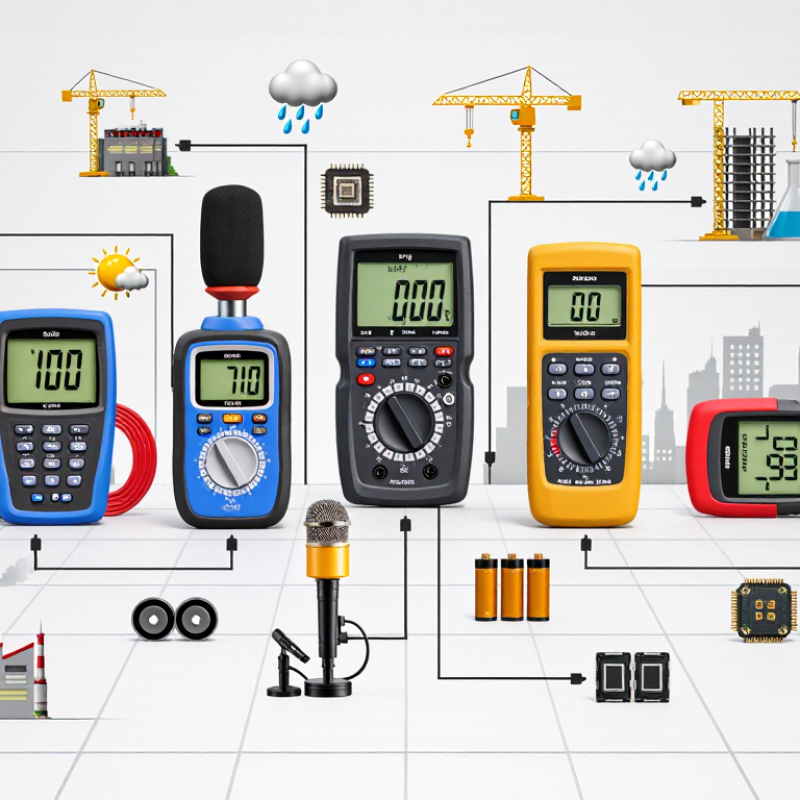
Top Sound Testing Meter Suppliers for Global Buyers?

What Sound Testing Meters Measure and Why Global Buyers Need Them

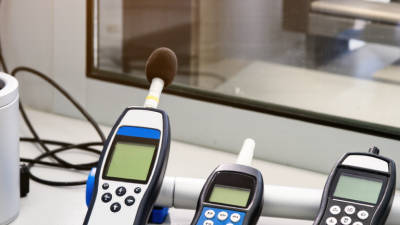
Sound Level Testing meters quantify acoustic energy, not simply whether a room feels loud. They record sound pressure levels in decibels, often using A-weighting to approximate human hearing. C-weighting captures stronger low-frequency energy, such as machinery vibration or bass. Time settings also matter. Fast response shows sudden peaks, while slow response displays steadier levels. Some instruments measure octave bands, helping technicians identify traffic rumble, ventilation noise, or speech-frequency problems.

The World Health Organization’s Environmental Noise Guidelines for the European Region (2018) recommend reducing road-traffic exposure below 53 dB Lden and night exposure below 45 dB Lnight. These values explain why global buyers need meters with dependable logging and calibrated microphones. A reading at a factory entrance can differ sharply from one beside a worker’s ear. NIOSH’s Criteria for a Recommended Standard, Occupational Noise Exposure, uses 85 dBA over eight hours and a 3 dB exchange rate. Small measurement errors can therefore change an exposure decision.

Look for calibration checks, weather protection, data export, and traceable accuracy. A meter should survive a cold loading dock, humid workshop, or crowded construction site. Yet specifications can mislead. “High precision” does not guarantee correct placement or trained operation. Buyers should verify applicable standards, calibration intervals, and local reporting requirements before comparing suppliers. A rushed reading may look professional while missing the real acoustic risk.

Key Types of Sound Testing Meters and Their Typical Applications

Choosing a sound testing meter depends on the question being asked. A basic integrating sound level meter measures overall noise in dB(A), useful for classrooms, factories, and building inspections. For changing environments, an averaging meter records Leq over a selected period. This reveals whether a quiet office becomes stressful during machinery cycles.

Personal noise dosimeters serve workers who move between rooms. They calculate daily exposure rather than one fixed location. The NIOSH Criteria for a Recommended Standard: Occupational Noise Exposure recommends an 85 dBA, eight-hour exposure limit, using a 3 dB exchange rate.

Octave-band analyzers add frequency detail, helping technicians trace low-frequency ventilation rumble or high-frequency tool noise. Acoustic Sound Testing becomes more practical when these readings are paired with calibrated microphones and documented measurement positions.

Environmental surveys may require sound level meters with statistical functions. These can capture LA10, LA50, and LA90 values near roads, construction zones, or residential boundaries. The World Health Organization’s 2011 environmental noise report estimated over one million healthy life-years were lost annually in Western Europe from traffic-related noise. That figure gives measurements real public-health weight. It also demands care.

In my field experience, a stable tripod position often matters more than an expensive feature. Wind, reflective walls, and hurried setup can distort results. I still recheck calibration before and after testing. A single reading can look convincing, yet remain incomplete.

How to Evaluate Sound Meter Accuracy, Standards, and Technical Features

Global buyers should evaluate a sound meter against documented standards, not only its screen resolution. IEC 61672-1 separates meters into Class 1 and Class 2 performance, with Class 1 suited to tighter field measurements. Ask for a current calibration certificate linked to an ISO/IEC 17025 laboratory. Check the calibration date, reference level, frequency range, and uncertainty.

NIOSH’s Criteria for a Recommended Standard: Occupational Noise Exposure uses 85 dBA for an eight-hour exposure and a 3 dB exchange rate. Therefore, a suitable meter should provide A-weighting, C-weighting, time weighting, and reliable dose calculations. Fast and slow response modes matter near machinery, where readings can jump sharply. The World Health Organization’s Environmental Noise Guidelines also show why night-time and community measurements need stable logging, not a single displayed value.

Look for overload warnings, data export, weather-resistant housing, and an acoustic calibrator. A Vibration Testing Meter is different; it measures acceleration or velocity and should not replace a sound level meter. In field checks, a windscreen, microphone position, and operator handling can change results by several decibels. A neat display can still mislead. Some suppliers advertise impressive accuracy without explaining uncertainty or test conditions. That deserves scrutiny. Even a properly certified instrument may need recalibration after drops, extreme humidity, or frequent industrial use. I would also test a sample unit before bulk purchasing, because specifications sometimes read better than real measurements.

Top Sound Testing Meter Suppliers for Global Buyers? – How to Evaluate Sound Meter Accuracy, Standards, and Technical Features

Evaluation Dimension Relevant Standard or Reference Verified Technical Requirement What Global Buyers Should Check with Suppliers Buyer Priority
Sound Level Meter Classification IEC 61672-1
Electroacoustics — Sound Level Meters
Class 1 instruments provide tighter performance tolerances and are generally intended for precision measurements. Class 2 instruments have wider tolerances and are commonly used for general-purpose surveys. Request the exact class declaration, the applicable edition of IEC 61672-1, and an independent or accredited test report covering the complete instrument model. Essential
Measurement Accuracy IEC 61672-1 performance limits are frequency- and level-dependent. There is no single accuracy value that applies to every frequency, sound level, or operating condition. Accuracy should be stated together with frequency range, weighting, level range, and environmental conditions. Avoid claims such as “±1 dB overall” unless the test conditions are clearly stated. Review the manufacturer’s uncertainty data, type-test results, and calibration certificate. Essential
Frequency Weighting IEC 61672-1 A-weighting approximates the response of human hearing at moderate levels. C-weighting is useful for higher sound levels and low-frequency content. Z-weighting is intended to provide an approximately flat response over the specified frequency range. Confirm that the meter provides the weighting networks required for the intended application and that each weighting function is covered by the compliance documentation. Essential
Time Weighting IEC 61672-1 Fast time weighting uses a nominal 125 ms time constant. Slow time weighting uses a nominal 1 s time constant. Impulse response is a separate function where supported and required. Check whether Fast, Slow, and Impulse modes are available, correctly named, and included in the compliance or validation documentation. High
Frequency Range IEC 61672-1 test frequency requirements and application needs The usable frequency range depends on the microphone, preamplifier, meter electronics, and selected class. A wide nominal frequency range does not automatically mean equal accuracy across the entire range. Request frequency-response plots or tabulated tolerances rather than relying only on a headline range. Confirm performance for low-frequency, occupational, environmental, or building-acoustic applications. High
Measurement Range and Overload IEC 61672-1 and the supplier’s technical specification The lower limit is affected by microphone self-noise and electrical noise. The upper limit is affected by microphone distortion and overload. A single “30–130 dB” claim should not be accepted without frequency and crest-factor conditions. Check linear operating range, peak or overload indication, microphone maximum sound-pressure level, and the effect of accessories such as windscreens or extension cables. Essential
Octave and One-Third-Octave Analysis IEC 61260-1 Optional frequency-band filters should meet the stated filter class and center-frequency requirements. Common measurement bands include octave and one-third-octave bands. Confirm whether the filters are built in, optional, or software-enabled. Request filter compliance evidence and verify the available band range. High
Noise Dose and Occupational Functions ISO 9612 and applicable national occupational-noise rules Occupational applications may require time-weighted average level, dose calculation, exchange-rate settings, criterion level, threshold level, and threshold controls. These settings vary by jurisdiction. Confirm that the software supports the regulations used in the destination market and that all exchange-rate and criterion settings are configurable and clearly documented. High
Acoustic Calibration IEC 60942
Electroacoustics — Sound Calibrators
A field calibrator should have a declared IEC 60942 class. The calibrator’s output level and frequency must be compatible with the meter and microphone combination. Check calibrator class, nominal output level, operating frequency, microphone adaptor compatibility, traceable calibration certificate, and the recommended pre- and post-measurement calibration procedure. Essential
Calibration Traceability ISO/IEC 17025 calibration practices A calibration certificate should identify the instrument, serial number, measurement standards, test conditions, results, measurement uncertainty, and laboratory authorization or accreditation details where applicable. Request a sample certificate before purchase. Confirm whether calibration is performed by an ISO/IEC 17025-accredited laboratory and whether the certificate is accepted in the destination country. Essential
Data Logging and Integration Application-specific; verify data integrity and export format Useful functions include time-history logging, LAeq, LAFmax, LCpeak, statistical levels, event markers, internal memory, timestamping, and export formats such as CSV. Confirm logging interval, maximum recording duration, memory capacity, clock accuracy, data overwrite behavior, export compatibility, and whether raw data remain available after software processing. High
Microphone and Accessories IEC 61672-1 microphone and system requirements Microphone sensitivity, nominal diameter, prepolarization voltage, extension cable, windscreen, environmental protection, and orientation can influence measurement results. Confirm the complete measurement chain, microphone replacement procedure, correction data, cable length limits, supplied windscreen, and compatibility with the field calibrator. High
Environmental Operating Conditions IEC 61672-1 declared operating conditions and supplier specification Temperature, humidity, static pressure, vibration, electromagnetic fields, and wind can affect sound-level measurements. The permitted operating range is model-specific. Request the specified temperature and humidity range, storage conditions, altitude or static-pressure limitations, electromagnetic compatibility information, and windscreen performance data. High
Ingress Protection and Field Durability IEC 60529 for IP ratings, when claimed An IP rating applies only to the tested configuration and conditions. It does not by itself prove acoustic accuracy, chemical resistance, drop resistance, or suitability for outdoor exposure. Verify the exact IP code, test scope, connector protection, screen sealing, battery-compartment design, and whether the rating applies with accessories installed. Medium
Display and User Interface Application and accessibility requirements A practical interface should provide clear level units, weighting, time weighting, overload status, battery status, measurement mode, and readable values in bright and low-light conditions. Request a live demonstration or interface screenshots. Check language options, backlight behavior, screen visibility, keypad usability with gloves, and lock or tamper-prevention functions. Medium
Power, Battery, and Charging Supplier specification and destination-market electrical requirements Battery life depends on display brightness, logging, wireless communication, temperature, and battery type. Charging equipment must match the destination market’s electrical and connector requirements. Confirm battery type, typical runtime under logging conditions, charging time, replaceability, low-battery behavior, power-bank compatibility, and included regional accessories. Medium
Software, Firmware, and Cybersecurity Supplier documentation and buyer IT requirements Software should preserve measurement metadata, support controlled firmware updates, maintain data integrity, and document compatibility with supported operating systems. Check license terms, offline operation, update policy, user permissions, audit trails, encryption options, data ownership, cloud dependence, and long-term software support. High
Documentation and Training Technical file, user manual, calibration procedure, and conformity documents Complete documentation should explain measurement settings, limitations, calibration, environmental conditions, uncertainty, maintenance, and data export. Request English documentation before purchase and confirm availability of manuals, quick-start guides, compliance declarations, troubleshooting instructions, and application training. High
After-Sales Service and Recalibration Risk-based quality-management practice There is no universal calibration interval for every application. The appropriate interval depends on regulatory requirements, use frequency, transport, environmental exposure, drift history, and quality procedures. Compare service locations, turnaround time, spare microphone availability, repair support, recalibration pricing, warranty terms, service escalation, and instrument replacement options. High
International Procurement and Compliance Destination-country import, electrical, radio, and environmental requirements Wireless-enabled instruments may require regional radio approvals. Chargers and power supplies may require local conformity markings. Import documentation and product classification can vary by country. Confirm shipping terms, customs documents, regional certifications, language requirements, wireless approvals, warranty coverage, tax handling, and availability of replacement parts in the target market. High
Evaluation note: A credible supplier should provide model-specific compliance evidence, traceable calibration documentation, complete technical specifications, and transparent limitations. Standard references should be checked against the latest edition applicable to the buyer’s industry and destination market.

Leading Supplier Categories in the Global Sound Testing Meter Market

Global sound testing meter buyers increasingly compare suppliers by category, not only by price. The main groups include precision instrument manufacturers, authorized distributors, calibration laboratories, and integrated environmental monitoring providers. Each serves a different purchasing need.

Precision manufacturers usually supply Class 1 and Class 2 sound level meters under IEC 61672 requirements. These instruments support workplace surveys, building inspections, and industrial compliance checks. Calibration laboratories add traceability through accredited testing and adjustment services. This matters because a meter can drift after repeated field use. Distributors often provide faster local delivery, training, spare microphones, and technical support. Integrated providers combine meters with noise stations, cloud dashboards, and reporting software. However, software quality varies widely. Buyers should test data export before signing a large contract.

Demand is supported by measurable public-health concerns. The European Environment Agency reported that more than 113 million Europeans faced harmful road-traffic noise exposure in its 2020 assessment. The World Health Organization has also estimated over one million healthy life-years are lost annually from environmental noise in Western Europe. These figures strengthen demand for reliable monitoring equipment. Still, supplier claims deserve careful review. A low-cost meter may pass a basic site check but lack stable calibration records. I have seen procurement teams focus on screen size while overlooking microphone protection and humidity limits. That is an expensive mistake. A practical evaluation should compare uncertainty, calibration intervals, battery behavior, and service coverage across regions.

How to Compare Supplier Quality, Pricing, Certifications, and Support

Top Sound Testing Meter Suppliers for Global Buyers

Supplier quality should start with measurement integrity, not a polished product page. Check whether each meter follows IEC 61672-1 requirements for sound level meters. Ask for a current calibration certificate and traceability to an ISO/IEC 17025 accredited laboratory. The European Environment Agency reported that 113 million people faced harmful road-traffic noise exposure above 55 dB Lden in Europe. Reliable Noise Level Testing therefore requires stable microphones, clear weighting functions, and repeatable field results. I would request sample readings from quiet offices, workshops, and busy roads. Small inconsistencies can become expensive disputes.

Pricing deserves a wider comparison than unit cost. Compare included calibrators, windshield covers, batteries, software, calibration fees, shipping, and warranty length. A low quotation may exclude annual verification or replacement microphones. Ask suppliers to explain measurement uncertainty and data-export formats.

ISO 1996-2 supports environmental noise assessment, but compliance claims still need evidence. The World Health Organization’s Environmental Noise Guidelines link excessive exposure with serious health impacts, making documentation more than paperwork. Still, certificates alone do not guarantee practical support. I have seen technically strong equipment become difficult to use after a software update.

Tips: Request three itemized quotations. Compare the same accuracy class and accessories. Test one sample before a bulk order. Confirm response times for repairs, calibration, and technical questions. Also check regional service coverage, because returning a meter across borders can delay inspections. Be cautious with impressive specifications. Field conditions are rarely perfect.

Essential Steps for Selecting and Purchasing the Right Sound Meter Supplier

Top Sound Testing Meter Suppliers for Global Buyers

Selecting a sound testing meter supplier starts with the measurement task, not the catalog. Define whether you need workplace noise checks, product development, building acoustics, or environmental monitoring. List the required frequency range, measurement levels, accuracy class, weighting options, data storage, and calibration interval. A supplier should explain these specifications in practical terms. Vague claims deserve careful questions.

Ask for calibration certificates, traceability records, user manuals, and a clear warranty process. Reliable suppliers can describe how each meter is tested before shipment. Request sample reports from similar applications, with sensitive customer details removed. Check whether technical support responds with measured answers, not sales language. I have found that response time matters when a meter fails before a scheduled inspection. It is easy to overlook this.

Compare total ownership cost, including accessories, software, training, recalibration, shipping, and replacement sensors. A low purchase price may hide expensive service requirements. Confirm delivery terms, packaging quality, return conditions, and after-sales coverage for your region. If possible, test a demonstration unit beside a trusted reference meter. Record readings in quiet rooms and near steady machinery. Small differences may reveal setup errors, operator habits, or unstable equipment. Do not choose solely from a polished specification sheet. Real-world handling can be less impressive.

Essential Steps for Selecting and Purchasing the Right Sound Meter Supplier

Choose a supplier that offers meters covering the sound levels and measurement environments relevant to your application. The reference levels below illustrate common acoustic conditions and help buyers compare measurement range, accuracy class, calibration services, and compliance with IEC 61672.

Purchasing guidance: For workplace and environmental monitoring, look for an IEC 61672-compliant Class 1 or Class 2 sound level meter, suitable frequency weightings, a documented calibration certificate, data logging, and after-sales technical support.

FAQS

What types of suppliers serve the global sound testing meter market?

Main categories include precision manufacturers, authorized distributors, calibration laboratories, and integrated monitoring providers. Each serves a different purchasing need.

Which standards should a sound testing meter meet?

Check compliance with IEC 61672-1 requirements. Class 1 meters suit higher-precision work. Class 2 meters support many routine surveys.

Why is calibration important?

Meters can drift after repeated field use. Request current certificates with traceability to an accredited laboratory.Small errors matter.

What should buyers compare besides the meter price?

Compare calibrators, batteries, windshield covers, software, shipping, warranty length, and future calibration fees. A low quotation may exclude essential accessories.

How can buyers test measurement quality before ordering?

Request sample readings from quiet offices, workshops, and busy roads. Compare repeatability, weighting functions, microphone stability, and measurement uncertainty.A polished webpage is not enough.

What support can local distributors provide?

Distributors may offer faster delivery, user training, spare microphones, repairs, and technical assistance. Regional coverage can reduce cross-border return delays.

Are integrated monitoring systems always better?

Not necessarily. They may combine meters, noise stations, dashboards, and reports. Test data export before signing a large contract.Software quality varies.

What environmental limits should buyers consider?

Check microphone protection, humidity limits, battery behavior, and operating temperature. Field conditions are rarely perfect.This detail is easy to miss.

How should companies compare supplier quotations?

Request three itemized quotations using the same accuracy class and accessories. Test one sample before placing a bulk order.The cheapest option may not remain cheapest.

Why is reliable noise monitoring increasingly important?

Public-health concerns are increasing demand for dependable equipment. One European assessment found over 113 million people faced harmful road-traffic noise exposure.That makes documentation meaningful.

Conclusion

A Sound Testing Meter is an essential instrument for measuring sound pressure levels, noise exposure, frequency characteristics, and acoustic changes in workplaces, communities, industrial sites, and building projects. Global buyers should understand the differences between basic sound level meters, integrating meters, personal noise dosimeters, and specialized acoustic analyzers, as each type serves different applications. Choosing the right device depends on measurement range, frequency weighting, time weighting, data logging, connectivity, battery life, and environmental durability.

When evaluating suppliers, buyers should carefully review measurement accuracy, calibration procedures, relevant international standards, product documentation, certification, warranty coverage, and technical support. It is also important to compare total purchasing costs, including accessories, calibration services, software, training, shipping, and after-sales assistance. A reliable purchasing process should define the intended use, confirm required specifications, request test reports or sample data, assess supplier communication, and verify long-term support. This structured approach helps global buyers select a dependable supplier and obtain accurate, practical, and cost-effective sound measurement solutions.
Sophie

Sophie

Sophie is a dedicated marketing professional with a deep expertise in acoustic measurement solutions, effectively bridging the gap between technology and customer needs. With an extensive understanding of the diverse product range offered by the company, which includes sound level meters, noise......
Previous 2026 Top Types of Accelerometers for Global Buyers