Picking the right accelerometer in 2026 isn’t just about flipping through a catalog anymore. Honestly, engineers need to think about their measurement needs and how things actually perform in real-world conditions. I mean, whether you're dealing with a drone, a smartwatch, an industrial robot, or a car’s suspension, each one has totally different sensing priorities.
Professor Khalil Najafi from the University of Michigan, who's a big deal in MEMS tech, likes to remind us of this simple but super important idea: "The best sensor is the one that fits your specific application." That still holds true. For example, a cheap accelerometer might work great inside a fitness tracker, but slap it near a vibrating motor or hot engine, and it could totally fail. Things like range, sensitivity, bandwidth, noise, bias stability, shock resistance, power consumption, and interface design all play a role.
Start by figuring out what exactly you need to measure. If you want to capture tiny hand tremors, a ±2 g sensor might do the trick. But if you’re monitoring a big machine, you might need ±50 g or even more. And don’t just glance at the datasheet—check the details! Sometimes, temperature drift can mess with what those noise figures are telling you. Also, don’t forget about mounting; a loose screw can make it look like there’s a mechanical fault when really it’s just the sensor wobbling.
This guide walks you through the main types of accelerometers—like capacitive MEMS, piezoelectric, and piezoresistive kinds—and dives into digital interfaces, calibration methods, environmental safeguards, lifespan support, and how trustworthy the suppliers are. But, honestly, nothing beats real-world testing. Relying only on lab data can be pretty misleading sometimes.
And here’s the thing: there’s no one-size-fits-all answer. Sometimes teams go overboard, choosing high-performance sensors that end up wasting power, money, and space on the board. Other times, they play it too safe, only to find problems pop up later on. The best approach is honestly balancing solid evidence with a bit of uncertainty — being smart but also realistic about what’s possible.
Choosing the right accelerometer starts with understanding how it measures motion. Inside the sensor, a tiny mass moves against a spring. That movement changes capacitance or generates electrical charge. The output represents acceleration, usually in g or metres per second squared.
Measurement quality depends on more than sensitivity. Check the required range, bandwidth, noise density, bias stability, cross-axis response, and operating temperature. A sensor with excessive range may lose useful resolution. A narrow bandwidth can hide short impacts. ISO 20816-1:2016 provides practical guidance for evaluating machine vibration, but real installations still need careful mounting and calibration. In my experience, a loose screw can distort results more than an expensive sensor can correct. That detail is easy to underestimate.
Tips: Match the sensor’s range to the strongest expected event, not an unrealistic worst case. Sample at least twice the highest frequency, then allow filtering margin. For rotating equipment, compare readings with shaft speed and mounting direction. The International Energy Agency’s Global EV Outlook 2024 reported more than 14 million electric car sales in 2023, showing why compact vibration sensing matters in motors, batteries, and safety systems. Yet vehicle environments remain harsh: temperature shifts, electrical noise, and repeated shocks can challenge laboratory assumptions. Review the full signal chain, including cabling, power, grounding, and software. I would also repeat the test. One clean measurement is not proof.
Start with the motion, not the catalog. Will the sensor monitor a slow tilt, a machine fault, or a sudden impact? Each task needs a different measurement range, bandwidth, and mounting method. A wearable device may face gentle movement, while a motor housing can produce sharp, continuous Accelerometer Vibration. Write down the axis, expected frequency, temperature, shock, and available space. Do not guess. A brief field recording often reveals peaks that a design spreadsheet misses.
Accuracy is not a single number. Check noise density, bias stability, cross-axis sensitivity, and temperature drift. For tilt, low-frequency noise and bias may matter more than a wide range. For impact testing, bandwidth, clipping resistance, and sample rate become critical. A sensor that clips at 16 g cannot describe a 20 g event accurately. Yet choosing an unnecessarily large range can reduce useful resolution. This trade-off is easy to overlook.
Mounting deserves equal attention. A loose bracket can create false peaks, even with a precise sensor. Use a rigid fixture, consistent cable routing, and a known reference test. Compare readings across repeated runs, temperatures, and orientations. I have seen promising measurements change after one small mounting adjustment. That result is inconvenient, but it deserves investigation rather than dismissal. Review the complete signal chain, including filtering and software settings, before accepting the final accuracy claim.
When choosing an accelerometer in 2026, start with the motion, not the product label. An Industrial Accelerometer may face shock, vibration, heat, dust, and long cable runs. MEMS devices suit compact equipment and high-volume monitoring. Piezoelectric sensors remain strong for higher-frequency vibration and impact testing. Variable-capacitance designs favor low-frequency movement and tilt. According to MarketsandMarkets’ Accelerometers Market report, the market could reach approximately US$4.5 billion by 2028. This growth reflects wider use in machines, vehicles, and connected infrastructure.
Axis count matters. Single-axis units reduce cost, but installation direction becomes critical. Two-axis sensing helps measure planar movement. Three-axis sensing captures structural motion when loads rotate or mounting is imperfect. That extra channel can expose a loose bracket before serious damage occurs. Compare noise density, bandwidth, measuring range, bias stability, and cross-axis sensitivity. IEC 60068 environmental test methods help standardize shock and vibration comparisons. Laboratory compliance is useful. Field reality disagrees.
Deloitte’s 2024 Smart Manufacturing and Operations Survey found that 86% of respondents considered smart manufacturing vital to competitiveness. McKinsey estimates predictive maintenance can reduce machine downtime by 30–50%. These figures support better sensing, but they do not guarantee better decisions. Engineers sometimes over-specify range and lose weak vibration signals. A 4–20 mA output can simplify a 30-metre cable run, while digital interfaces preserve configuration data. Mounting changes everything. Check resonance, cable strain, grounding, and calibration drift on the actual machine. I would still question every headline specification, especially when temperature swings from a cool morning to a hot production cycle.
How to Choose the Right Accelerometer in 2026?
Match Key Specifications to Real-World Operating Conditions
Choosing an accelerometer begins with the machine, not the product table. Define the expected vibration range, shock level, frequency band, and ambient temperature. A sensor rated for ±2 g may saturate during a sudden impact. A ±50 g model may hide small bearing vibrations. Range matters.
Bandwidth should reflect the event you need to capture. Slow structural movement needs different performance from a high-speed rotating shaft. Check noise density, sensitivity, bias stability, and cross-axis sensitivity. These specifications affect whether a measured signal represents the machine or the sensor itself. Sampling frequency must also exceed the highest useful frequency.
Mounting conditions can change the result. A loose screw, uneven surface, or long cable may introduce false peaks. Field engineers should verify connector durability, power requirements, ingress protection, and temperature drift. Calibration records improve confidence, especially during repeated inspections. Do not trust one test.
A laboratory specification may look impressive, yet fail beside dust, heat, or electrical interference. I have seen selection decisions focus too heavily on sensitivity while ignoring installation space. That is an easy mistake to repeat. Test the sensor on the actual equipment when possible, using realistic loads and operating speeds. Leave room for uncertainty. Real machines rarely behave as neatly as spreadsheets suggest.
Match key specifications to real-world operating conditions. The chart compares representative accelerometer classes using typical measurement range, usable bandwidth, and noise density values.
Choose a low-noise device for condition monitoring and precision motion measurement, a general-purpose device for embedded systems, or a high-g device for impact and shock events. Lower noise density improves resolution, while higher range and bandwidth support more severe and faster motion.
Selecting an accelerometer starts with the interface, not the enclosure. Voltage-output sensors suit short, simple wiring. IEPE devices support stable signal quality over longer industrial cables. Digital interfaces reduce analog noise but require compatible firmware and data processing. A 2024 MarketsandMarkets report projects the condition monitoring market to grow from about 3.1 billion dollars in 2024 to 5.6 billion dollars by 2029. That expansion increases sensor choice, but also increases selection mistakes.
Power limits often decide the practical design. Battery-powered nodes need low-current MEMS devices, sleep modes, and carefully timed sampling. Wired systems can support higher bandwidth and continuous measurement. Check the complete power budget, including wireless transmission. Small details matter. A sensor drawing 10 milliamps may behave differently from one drawing 2 milliamps during a year of remote operation. For rotating equipment, compare noise density, frequency range, shock rating, and temperature stability. Do not choose sensitivity from a catalog table alone.
Calibration should match the measurement risk and maintenance schedule. ISO 16063-21 provides a recognized framework for vibration calibration by comparison. Installation needs equal attention: mounting stiffness, surface flatness, cable strain, and axis alignment can distort readings. A loose stud can imitate machine damage. Adhesive mounting is convenient, but it may reduce high-frequency response. The Vibrometer And Accelerometer relationship also deserves scrutiny; velocity measurements often depend on integrating acceleration, which can amplify low-frequency errors. I still see teams overlooking installation torque. That is not a minor flaw.
Selecting an Accelerometer Vibration Sensor should begin with evidence, not a catalog headline. The U.S. Department of Energy reports that predictive maintenance can reduce maintenance costs by 25–30% and downtime by 35–45%. Those figures depend on usable data. Check noise density, frequency range, sensitivity drift, shock tolerance, and calibration intervals before approving a design.
Cost needs a wider lens. A low purchase price may hide extra cabling, software licenses, recalibration, or replacement stock. The 2024 MarketsandMarkets vibration sensor outlook indicates high-single-digit annual market growth, increasing technical choice and comparison pressure. Request five-year ownership estimates. Include installation labor and failed-data investigations. The cheapest unit is not always economical.
Compliance must match the installation environment. Review IEC 61000-6-2 for industrial electromagnetic immunity and ISO 20816 for machine vibration evaluation. Confirm the sensor’s temperature, ingress, hazardous-area, and material documentation. Ask for traceable calibration records. Ask again when the certificate expires.
Long-term support is less visible. It matters more than a polished brochure. Require firmware notices, spare-part availability, interface documentation, and a written obsolescence policy. Field experience shows that connector changes can disrupt an otherwise stable system. I have seen specifications pass review while maintenance teams lacked basic configuration files. That gap is easy to miss. It deserves uncomfortable questions before procurement.
Vibration monitoring is becoming increasingly important as infrastructure operators seek earlier warning of structural fatigue, construction disturbance, and environmental vibration. Recent industry forecasts, including analyses from MarketsandMarkets, estimate that the global vibration monitoring market could grow from approximately USD 1.5 billion in 2023 to more than USD 2 billion by 2028, reflecting annual growth of around 7%. This expansion is being supported by demand for continuous, high-resolution measurement in buildings, bridges, transport networks, and industrial facilities.
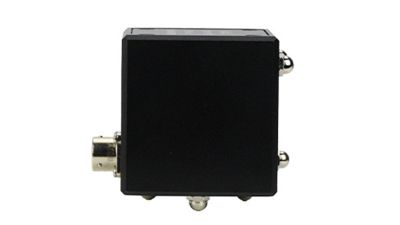
Designed for environmental vibration monitoring, the AWA14415 wide-dynamic-range accelerometer captures signals from 0.0003 m/s² to 10 m/s², equivalent to approximately 50–140 dB. This range enables engineers to track both barely perceptible ambient motion and stronger vibration events without changing sensors. Its vertical or horizontal mounting flexibility supports measurement of different vibration components, while transverse sensitivity of no more than 10% helps reduce cross-axis interference. The piezoelectric design produces a stable voltage output proportional to acceleration, simplifying signal acquisition and processing. With a solid 740 g construction, the sensor is suited to long-term field deployment where dependable performance and consistent data quality are essential.
: A tiny internal mass moves against a spring. This movement changes capacitance or creates an electrical charge. The output represents acceleration in g or metres per second squared.
Match the range to the strongest realistic event. A ±2 g sensor may saturate during an impact. A ±50 g sensor may hide small bearing vibrations. More range is not always better.
Bandwidth determines which vibration frequencies the sensor can capture. Slow structural movement needs limited bandwidth. Fast rotating equipment needs wider bandwidth. A narrow range can hide short impacts.
Sample at more than twice the highest useful frequency. Leave extra filtering margin. This reduces missed vibration details. The exact margin still depends on the signal.
Yes. A loose screw can create false peaks. Uneven surfaces may reduce contact stiffness. Incorrect axis alignment can distort vibration readings. A perfect sensor cannot repair poor mounting.
Check voltage, current, cable length, grounding, and connector strength. Battery systems need low-current operation and sleep modes. Wireless transmission can consume substantial energy. Small power differences matter over one year.
Calibration improves confidence during repeated inspections. Use a method suitable for the measurement risk. Keep calibration records and compare results over time. One clean test is not proof.
Heat changes, dust, electrical noise, and repeated shocks can alter readings. Laboratory results may fail inside a working machine. Test under realistic loads and operating speeds. I would repeat the test.
Choosing the right Accelerometer in 2026 starts with understanding how it detects motion, vibration, tilt, and changes in speed. Begin by defining the application, expected motion range, frequency, environment, and required accuracy. These factors will guide your choice between different sensing technologies, measurement axes, and device types. A clear understanding of whether you need single-axis, dual-axis, or three-axis measurement can also prevent unnecessary cost and complexity.
Next, compare key specifications with real operating conditions, including sensitivity, bandwidth, noise, temperature range, shock resistance, and stability. Consider the required interface, power consumption, calibration process, mounting method, and available installation space. Finally, evaluate reliability, total cost, regulatory compliance, product availability, and long-term technical support. The best Accelerometer is not always the one with the highest specifications, but the one that consistently delivers accurate, stable, and practical performance throughout the entire service life of your system.