Leave Your Message
0%

Picking the right Vibration Testing Equipment isn't just about price tags or how much force a machine can crank out. You need a system that actually fits your product, your test profile, your lab space, and what you're trying to achieve quality-wise. A tiny electronic module might be fine with a compact electrodynamic shaker. But an automotive part? That could demand high force, longer travel, and environmental testing too. That gap matters—a lot.

So in practice, engineers should look at frequency range, displacement, acceleration, payload capacity, fixture design, and how the controller performs. Sensor accuracy matters just as much, by the way. If accelerometers are mounted poorly, they can skew results even when the shaker itself is running perfectly. And small errors? They tend to snowball.

Reliable gear should give you traceable calibration, repeatable data collection, emergency protection, and software controls that are clear—not a headache. Following relevant industry standards also helps back up your test credibility.

This guide compares the technical and practical stuff behind a purchase you can feel confident about. It walks through estimating test force, evaluating vibration profiles, and dodging common sizing mistakes. Service response, spare parts, operator training, and future expansion? Those deserve a look too. A cheap system can get expensive fast once downtime starts piling up. I've also watched teams overshoot their needs because impressive specs just felt reassuring. Honestly, no choice is perfect. The sweet spot is a balanced system that gives you trustworthy evidence without adding unnecessary complexity. And before you pick a supplier, ask to see real test samples, inspect the fixture setup, and request a demo with your actual payload. That step can expose limitations brochures conveniently leave fuzzy.
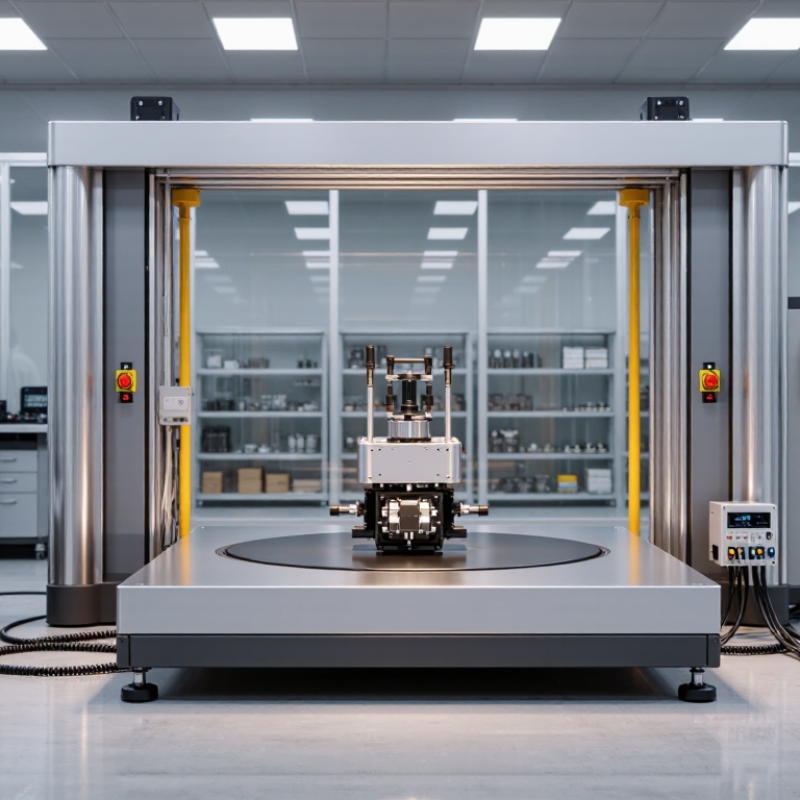
How to Choose the Best Vibration Testing Equipment?

Understanding the Purpose and Scope of Vibration Testing

Choosing vibration testing equipment begins with defining why the test matters. A machine may need screening, endurance validation, fault diagnosis, or compliance evidence. Each purpose requires a different test profile. For example, a small motor might face 10–500 Hz sweeps, while a transport package needs random vibration. The fixture, sensor range, payload, and control accuracy must match the real condition. Otherwise, impressive data may describe the test bench, not the product.

The testing scope should state what will be measured, where, and for how long. Record acceleration, displacement, frequency, temperature, and duration when relevant. Vibration Measuring Equipment should support traceable calibration and repeatable data collection. Experienced engineers also inspect mounting stiffness, cable movement, and resonance before running the full sequence. A loose bolt can create a false peak. That mistake is easy to miss.

Tips: Start with the failure mode, not the equipment catalogue. Define the payload and fixture geometry before comparing systems. Use a pilot sweep to locate resonances safely. Review sensor placement with a qualified technician. Leave room for judgment; field conditions rarely behave perfectly. I once treated a clean laboratory setup as “real enough,” and the result needed retesting. That uncomfortable lesson still influences every test plan.

Identifying the Main Types of Vibration Testing Equipment

How to Choose the Best Vibration Testing Equipment?

Identifying the Main Types of Vibration Testing Equipment

Vibration testing equipment falls into several practical categories. Electrodynamic shakers use electromagnetic force to create controlled vibration. They suit broad frequency ranges, electronics testing, and precise sine or random profiles. Mechanical shakers usually provide strong, repetitive motion at lower frequencies. They work well for transportation studies and rugged components.

Hydraulic shakers deliver high force and large displacement. They are useful for heavy structures, vehicle parts, and severe environmental simulations. Modal exciters, often smaller electrodynamic units, help identify natural frequencies and structural weaknesses. A vibration controller manages test profiles, limits, and recording. Without reliable sensors, even an expensive shaker can produce uncertain results.

Tips: Match the equipment to payload mass, frequency range, displacement, and required force. Check fixture stiffness before testing. A flexible fixture may distort the results. Inspect accelerometer mounting carefully; loose adhesive or poor cable routing can create false peaks. In practice, the neatest equipment category can still mislead. I have seen teams select a powerful system, then discover that its low-frequency displacement was insufficient. Review real test data, not only catalog specifications. Repeatability also matters. Run a short trial with the actual fixture, cables, and specimen before committing to a full test. Document unexpected resonance behavior. It may reveal a better test method.

Matching Equipment Specifications to Test Requirements

Choosing the right equipment starts with the test requirement, not the shaker size. Define frequency range, acceleration, displacement, force, payload, and control accuracy. Random vibration requires power spectral density control, measured in g²/Hz. A sine sweep requires stable frequency and acceleration control. Shock testing adds pulse shape, duration, and velocity change. IEC 60068-2-6 covers sinusoidal vibration, while IEC 60068-2-64 addresses broadband random vibration. Small details matter.

Match the Vibration Measurement Equipment to the product’s weakest points. Accelerometers should cover the expected frequency range without overload. The fixture must remain stiff, or resonance can distort the test. A 100-kilogram payload also needs enough force margin for acceleration and fixture mass. The U.S. Department of Energy’s Operations & Maintenance Best Practices Guide reports that predictive maintenance can reduce maintenance costs by 25–30% and downtime by 35–45%. Reliable measurements support those gains.

Do not choose the widest specification automatically. It may increase cost and reduce control sensitivity. Review the required spectrum, sensor noise floor, sampling rate, and calibration traceability. ISO 17025-accredited calibration improves confidence in recorded data. My caution is simple: laboratory specifications can look impressive but fail practical tests. Check cable movement, fixture heating, operator access, and emergency stops. A short trial run often reveals more than a brochure.

How to Choose the Best Vibration Testing Equipment? - Matching Equipment Specifications to Test Requirements

Test Requirement Key Data to Define Recommended Equipment Specification Typical Selection Range or Example Why It Matters
Test Motion Sinusoidal, random, shock, or combined vibration Select a controller and shaker that support the required test mode Sinusoidal sweep for resonance searches; random vibration for transport or operational simulation; shock testing for short-duration high-acceleration events Different test methods require different control algorithms, sensors, fixtures, and amplifier capabilities.
Frequency Range Minimum and maximum test frequency Usable frequency range should exceed the test limits Common electrodynamic shaker ranges may cover approximately 5–2,000 Hz, depending on system configuration The shaker, fixture, accelerometer, and controller must all operate reliably across the complete frequency range.
Displacement Peak or peak-to-peak stroke requirement Choose a shaker with sufficient continuous and maximum stroke Typical electrodynamic systems may provide approximately 25–76 mm peak-to-peak displacement, depending on force rating Low-frequency tests often require more displacement than high-frequency tests. Insufficient stroke can cause waveform clipping.
Acceleration Required peak acceleration or RMS acceleration Rated acceleration should exceed the test level with operating margin Approximate relationship for sinusoidal motion: peak acceleration = (2πf)2 × displacement Acceleration capability is frequency-dependent. A system cannot achieve maximum displacement and maximum acceleration at the same frequency.
Force Capacity Payload mass, fixture mass, acceleration, and dynamic force Select force using F = m × a, then add a practical margin For a 20 kg moving mass at 10 g: approximately 1.96 kN ideal dynamic force, before considering fixture resonance and control margin Force must cover the specimen, fixture, slip table, cables, and any additional moving components.
Payload Mass, center of gravity, and mounting orientation Rated payload should be higher than the complete moving load Include the test article, fixture, adapter plate, cables, thermal enclosure, and instrumentation Payload affects achievable acceleration, armature motion, cooling demand, and fixture stability.
Test Axis Vertical, horizontal, or multi-axis vibration Use a vertical shaker, horizontal slip table, or multi-axis system as required Single-axis testing for isolated directions; three-axis testing when simultaneous directional interaction is important The selected configuration must provide adequate rigidity, guidance, and load distribution in every required direction.
Random Vibration Profile Frequency bands, PSD levels, overall RMS acceleration, and test duration Controller must support PSD input, closed-loop control, notching, and limit monitoring Define PSD in units such as g2/Hz and overall level in grms; specify the profile for each test axis Random vibration is defined by energy distribution over frequency, not by a single acceleration value.
Shock Requirement Pulse shape, peak acceleration, duration, and velocity change Use a shock-capable shaker or a dedicated shock machine Common pulse shapes include half-sine, sawtooth, and trapezoidal; specify duration in milliseconds Pulse shape and duration influence the frequency content and damage potential of the shock event.
Control Accuracy Allowed tolerance, control points, and abort limits Use closed-loop control with calibrated control accelerometers and real-time limit monitoring Define tolerance bands by test standard or project requirement; use multiple control channels for large or flexible specimens Closed-loop control compensates for changes in fixture response, specimen dynamics, and system loading.
Fixture Performance Mass, stiffness, resonance frequency, and mounting pattern Fixture resonances should be outside critical test bands or properly characterized Use lightweight, rigid fixtures with adequate bolted joints and documented frequency-response measurements A poorly designed fixture can amplify or attenuate vibration and produce invalid test results.
Measurement System Acceleration, force, strain, displacement, temperature, or other response data Use calibrated sensors with suitable frequency range, sensitivity, and measurement limits Piezoelectric accelerometers for broad frequency coverage; IEPE sensors where constant-current signal conditioning is available Sensor mass, mounting method, cable routing, and signal conditioning can affect measured vibration response.
Environmental Conditions Temperature, humidity, altitude, vacuum, or thermal cycling Add a compatible environmental chamber or thermal enclosure Confirm chamber temperature range, airflow, cable feedthroughs, fixture compatibility, and shaker operating limits Environmental equipment can reduce available stroke, payload, cooling capacity, or frequency performance.
Cooling and Duty Cycle Test duration, repeated profiles, and continuous operating time Verify shaker cooling capacity and amplifier duty-cycle rating Air-cooled systems may suit moderate duty; water-cooled systems are often selected for high-force or long-duration testing Continuous high-level vibration generates heat in the armature and amplifier, which can limit test duration.
Compliance and Data Quality Applicable standard, calibration interval, and reporting requirements Choose equipment that supports documented calibration, traceability, and automated reporting Common references include IEC, ISO, ASTM, MIL-STD, RTCA, and transportation-specific standards, depending on the product The equipment must support the required procedure, tolerances, data records, and audit trail.

Selection values are general engineering references. Final equipment sizing should be confirmed using the complete payload mass, fixture dynamics, required profile, test duration, environmental conditions, and applicable test standard.

Evaluating Control Systems, Sensors, and Measurement Accuracy

How to Choose the Best Vibration Testing Equipment?

A reliable vibration system starts with its control loop. Closed-loop control should monitor acceleration continuously, then correct the shaker’s output. Look for stable frequency tracking, low signal delay, and clear alarm handling. Sampling rates must exceed the test bandwidth, with anti-aliasing filters enabled. Otherwise, a clean graph may hide false frequencies. IEC 60068-2-6 provides a recognized framework for sinusoidal vibration testing, but it does not guarantee accurate measurements by itself.

Sensor selection needs equal attention. IEPE accelerometers suit many laboratory tests, while charge-output sensors tolerate higher temperatures. MEMS sensors can reduce cost, but their noise floor and frequency response require careful checking. Cable movement, mounting torque, and fixture resonance can alter results. NIST Technical Note 1297 explains that expanded uncertainty commonly uses a coverage factor of k=2, representing about 95% coverage under normal assumptions. That number is useful, not magical. ISO/IEC 17025 also stresses traceable calibration and technically valid methods.

Tips: Request the sensor’s calibration uncertainty, phase response, and usable frequency range. Check the controller’s actual sampling rate, not only its advertised maximum. Run a low-level trial before full testing. Compare two sensors when results seem surprising. Small errors become expensive later. I have seen confident teams trust a sharp resonance that came from a loose fixture, not the product. That mistake is easy to repeat when setup records are incomplete.

Comparing Safety Features, Durability, and Operating Flexibility

Choosing vibration testing equipment requires more than comparing force ratings. Safety features should be visible, tested, and easy to use during stressful conditions. Look for emergency-stop controls, door interlocks, overload protection, and automatic shutdown settings. A clear warning light matters when a fixture begins moving unexpectedly. Proper grounding and secure cable routing also reduce daily risks.

Durability becomes clear through construction details. A rigid frame, protected bearings, and effective heat management support repeated testing. Ask whether the system maintains performance under long test cycles, not only during a short demonstration. Calibration records should be accessible, with traceable procedures and clear maintenance intervals. Sound Measuring Equipment can help verify unwanted noise, resonance, and changes in acoustic behavior around the test area.

Operating flexibility affects productivity. Choose equipment that handles different payloads, frequencies, waveforms, and fixture sizes without complicated rebuilding. A practical controller should save test profiles and display real-time displacement, acceleration, and force. However, flexibility can create confusion. Too many settings may invite operator errors. I would test the interface with a new user before purchasing. A perfect specification sheet can still hide awkward setup work. That detail deserves attention.

Assessing Installation Needs, Maintenance, and Total Ownership Cost

Choosing vibration testing equipment starts with the installation environment, not the catalog price. Measure available floor space, foundation strength, power quality, and ambient temperature. A shaker system may require reinforced flooring and dedicated electrical circuits. Sensor cables also need protection from heat, oil, and mechanical movement. For rotating machinery, mounting repeatability matters. A loose magnetic base can create misleading readings. ISO 20816 provides guidance for evaluating machine vibration, but site conditions still require engineering judgment.

Maintenance affects total ownership cost more than many buyers expect. The U.S. Department of Energy’s Operations & Maintenance Best Practices Guide reports that predictive maintenance can reduce maintenance costs by 25–30% and lower downtime by 35–45%. Choose equipment with accessible sensors, simple calibration procedures, and documented service intervals. Confirm the availability of spare cables, accelerometers, fixtures, and software support. Sound Measurement Equipment may share data platforms, but vibration and acoustic sensors need different calibration controls. Small compatibility issues become expensive later.

Calculate labor, calibration, training, energy, software, and disposal costs over five to ten years. The DOE guide also reports potential predictive-maintenance returns near 10:1, but actual results vary by site. That number deserves scrutiny. A cheaper system may need frequent manual checks or specialist repairs. A higher initial investment can be sensible when installation is stable and measurements remain traceable. However, over-specification wastes capital. Test one representative machine first, record setup time, and review the data quality before expanding.

FAQS

Why is closed-loop control important in vibration testing?

It continuously monitors acceleration and corrects shaker output. Stable frequency tracking and low signal delay improve accuracy. Alarms should be clear. Otherwise, the system may follow the wrong vibration level.

What sampling features should a vibration controller provide?

The sampling rate should exceed the test bandwidth. Anti-aliasing filters should also be enabled. Check the actual sampling rate, not just the advertised maximum. Numbers can mislead.

Which sensor type suits laboratory vibration tests?

IEPE accelerometers suit many laboratory conditions. Charge-output sensors handle higher temperatures. MEMS sensors may reduce cost, but noise and frequency response need careful checking. Cheap is not always simple.

What can cause inaccurate vibration measurements?

Cable movement, incorrect mounting torque, and fixture resonance can change results. A loose fixture may create a sharp resonance. Compare two sensors when results seem surprising.

How should measurement uncertainty be evaluated?

Request calibration uncertainty, phase response, and usable frequency range. A coverage factor of two often represents about 95% coverage. This estimate is useful, but not magical.

What safety features should vibration equipment include?

Look for emergency stops, door interlocks, overload protection, and automatic shutdown settings. Warning lights should be visible during unexpected movement. Secure grounding and cable routing also matter.

How can equipment durability be checked before purchase?

Inspect the frame, bearings, and heat-management design. Ask whether performance remains stable during long test cycles. A short demonstration proves very little. Maintenance records should be accessible.

How can operators avoid errors with flexible systems?

Choose equipment supporting different payloads, frequencies, waveforms, and fixture sizes. The controller should save profiles and show live displacement, acceleration, and force. Test the interface with a new user. Too many settings can confuse people.

Conclusion

Choosing the right Vibration Testing Equipment begins with clearly defining the purpose, product type, and testing environment. Determine whether the test requires vibration simulation, durability evaluation, transportation testing, or resonance analysis, then select equipment that matches the required frequency range, force capacity, displacement, payload, and test motion. Common options may include electrodynamic or mechanical systems, depending on the test demands and available workspace.

A reliable system should also provide accurate sensors, responsive control software, and stable data collection to ensure repeatable results. Safety features, structural durability, operating flexibility, and ease of adjustment are equally important for efficient daily use. Before making a final decision, evaluate installation requirements, electrical and floor-load needs, calibration procedures, maintenance support, and expected service life. Considering the total cost of ownership—including energy use, repairs, training, and upgrades—will help organizations choose equipment that delivers dependable performance and long-term value.
Liam

Liam

Liam is a dedicated marketing professional specializing in the acoustic measurement industry. With extensive knowledge of our product range, which includes sound level meters, noise dosimeters, calibrators, audiometric calibration systems, microphones and accessories, software products, and......
Previous Why Use an Industrial Vibration Meter?