Leave Your Message
0%

Picking the right Vibration Measuring Device in China isn’t just about comparing prices. It’s more like making a smart choice for your machines’ safety, the accuracy of your data, and how much it’s going to cost to maintain things in the long run. Think about it—factory floors are full of pumps, motors, gearboxes, compressors—you name it—each giving off different vibration patterns. Your device needs to pick up on those differences clearly, without missing a beat.

Robert Bond Randall, a well-known expert in vibration analysis, once said, “Good vibration analysis begins with good measurement.” And honestly, that advice still rings true today. The right Vibration Measuring Device should cover the necessary frequency range, have stable sensors, give accurate amplitude readings, and come with reliable software. And don’t forget—calibration records are important, as is proper operator training.

Take a good look at your working environment, too. Dust, heat, oil, even electromagnetic interference can throw off your measurements. For routine checks, a handheld analyzer might do the trick, but if you’re trying to reliably keep tabs on critical equipment, a permanent monitoring system could be a better bet. Big brands like Fluke, SKF, and Brüel & Kjær each have their own strengths, but remember—brand reputation alone doesn’t guarantee you’re making the right choice. Don’t fall into that trap.

When shopping around, don’t be shy—ask for test data, calibration certificates, warranty details, and info on technical support. It’s also worth comparing things like sensor sensitivity, sampling rate, battery life, and how easy it is to export your data. Sure, a cheap Vibration Measuring Device might look appealing, but if it gives you unreliable readings, you could end up making costly maintenance mistakes. Sometimes, going the cheapest route isn’t the smartest move.

There’s no one-size-fits-all answer here. The best model depends on what kind of equipment you’re measuring, what your specific goals are, the conditions at your site, and your team’s expertise. Even experienced folks can overlook installation nuances or testing at inconsistent points. So, take your time—do some field testing, evaluate carefully, and honestly consider the device’s limitations. That way, you’re more likely to make a choice you won’t regret down the line.
How to Choose China Best Vibration Measuring Device?

Define the Measurement Goals and Vibration Parameters

Choosing China’s best vibration measuring device starts with a clear measurement goal. Are you checking machine health, balancing rotating parts, or validating a new assembly? Each task needs different evidence. On a factory floor, I first note the machine speed, bearing type, load, and mounting position. A handheld reading can expose a problem, but it cannot explain every cause. Define pass or fail limits before collecting data. Otherwise, normal variation may look like a fault.

Select parameters that match the failure you want to detect. Acceleration helps identify high-frequency bearing and gear activity. Velocity often supports overall machine condition assessment. Displacement can reveal large, slow movement on low-speed equipment. Record RMS, peak, crest factor, and frequency range when appropriate. Do not collect every available value blindly. More data can create less clarity. For example, a pump running at 1,480 rpm should be checked near its running frequency and harmonics. Log temperature and operating load beside each reading.

Sensor mounting matters as much as sensor accuracy. A loose magnet, painted surface, or angled probe can distort results. Use a repeatable location, stable contact, and consistent direction. Compare readings with a trusted baseline from the same machine. I would also verify the device against a reference source before critical inspections. Field conditions rarely stay constant. That limitation deserves honest notes, not polished assumptions. A capable device should store time, location, parameter settings, and operator comments for later review.

Compare Vibration Measuring Device Types and Technologies

Choosing China’s best vibration measuring device starts with the machine, not the screen. For rotating equipment, a piezoelectric accelerometer captures high-frequency bearing faults. Velocity sensors suit general machinery severity checks. Displacement probes remain useful for slow shafts and shaft-orbit analysis. A tri-axial sensor reveals direction changes that a single-axis meter can miss. Keep this distinction clear. A Sound Level Measuring Device measures airborne pressure, not structural vibration.

Technology changes the result. Time-waveform recording shows impacts; FFT analysis separates harmonics, imbalance, misalignment, and looseness. Wireless nodes help inspect pumps behind guards, but radio drops and battery limits need attention. Laser Doppler systems measure without contact, although bright surfaces and line-of-sight can complicate field work. ISO 20816-1:2016 requires evaluation methods matched to machine type, speed, and mounting conditions. That matters more than a crowded display.

For Chinese procurement, request traceable calibration, Chinese- and ISO-compatible reporting, IP protection, operating-temperature specifications, and CSV export. European Commission guidance based on Directive 2002/44/EC sets the hand-arm vibration action value at 2.5 m/s² A(8) and the limit value at 5 m/s² A(8). These figures concern worker exposure, not machine health. Mixing them creates unsafe decisions. I would test the meter against a known reference source before acceptance. The cheapest meter can be the wrong bargain. Even experienced teams sometimes trust clean graphs too quickly.

Evaluate Accuracy, Frequency Range, and Measurement Resolution

When choosing China’s best vibration measuring device, begin with the measurement task, not the product photograph. In field inspections, I compare readings against a calibrated reference sensor. Accuracy should be stated clearly, such as ±2% of reading or better. Ask whether that figure covers the full frequency range, temperature, and mounting method. A device may look precise while installation changes the result. Small details matter.

Frequency range must match the machine’s vibration. Rotating equipment often needs coverage from low frequencies to several kilohertz. A broad range is useful, but unused bandwidth can increase cost and data complexity. Check the sensor’s response curve, not only the headline specification.

Measurement resolution shows the smallest vibration change the instrument can display. Higher resolution helps identify gradual wear, loose bearings, or imbalance. It cannot correct poor sensor contact.

My early mistake was trusting decimal places too quickly. A screen showing many digits does not guarantee reliable accuracy. Review sampling rate, signal processing, calibration intervals, and export formats. For workshop use, I prefer clear menus and repeatable mounting accessories. For site work, shock resistance and battery life also matter. Request test records from the supplier, and verify whether calibration follows a recognized laboratory process. Leave room for doubt. Test the device on your own equipment before making a large purchase.

Check Sensor Compatibility, Data Output, and Software Functions

Choosing China’s Best Vibration Measuring Device

Sensor compatibility should guide the purchase. In field inspections, an accelerometer may use IEPE power, voltage output, or a simple MEMS interface. These systems are not interchangeable. Check sensitivity, frequency range, connector type, and mounting method before comparing prices. A magnetic base works well on a steel motor housing, but it can distort high-frequency readings. Threaded mounting is more stable.

Data output matters just as much. A useful Noise Level Measuring Device should export waveform, FFT spectrum, overall RMS velocity, and peak acceleration. CSV files support deeper analysis, while Modbus, Ethernet, or wireless outputs help connect equipment with maintenance software. MarketsandMarkets’ 2024 vibration monitoring report estimates the global market could grow from about USD 1.8 billion in 2023 to more than USD 2.8 billion by 2028. That growth reflects stronger demand for connected measurement.

Software functions often reveal the real difference. Look for trend charts, alarm thresholds, route-based inspections, and automatic report generation. ISO 20816 guidance can help users judge machine vibration levels, but software should not replace engineering judgment. Test whether the program identifies a loose bearing using a sample recording. Small detail.

I have seen dashboards with attractive colors but weak export options. That was a costly oversight. Ask for raw data access, user permissions, calibration records, and offline operation. According to the U.S. Department of Energy’s maintenance guidance, predictive maintenance can reduce maintenance costs by roughly 25% to 30%. The figure varies. So should your evaluation.

How to Choose China’s Best Vibration Measuring Device

Check sensor compatibility, data output, usable frequency range, and software functions before purchase.

The chart shows typical usable frequency ranges for common vibration measurement device categories. IEPE accelerometers generally support wide frequency coverage but require constant-current signal conditioning. MEMS USB sensors are convenient for direct digital data output, while handheld analyzers typically combine sensing, display, reporting, and basic analysis functions in one instrument. Actual specifications vary, so verify sensor interface, sampling rate, connector type, output format, and analysis software compatibility before selection.

Assess Build Quality, Safety Standards, and Environmental Resistance

Choosing China’s best Vibration Detection Device requires more than checking sensitivity or screen size. In field inspections, I examine the housing, sensor mount, cable strain relief, and connector seal. A metal enclosure should resist repeated drops and workshop dust. Loose mounting can create false peaks. That mistake is common.

Safety evidence matters. IEC 61010-1 addresses electrical measurement equipment, while IEC 61326-1 covers electromagnetic compatibility. Ask for test reports, calibration records, and traceable reference instruments. ISO 20816 provides guidance for evaluating machine vibration, but it does not replace application-specific limits. For workers, EU Directive 2002/44/EC sets a whole-body vibration action value of 0.5 m/s² A(8) and a limit value of 1.15 m/s². These figures show why a device needs reliable measurement, not attractive software alone.

Environmental resistance should match the actual site. IEC 60529 IP65 means protection against dust and water jets, but not immersion. Check operating temperature, humidity range, shock tolerance, and battery performance. A 2024 industrial condition-monitoring survey reported that unplanned equipment failures remain a major maintenance cost, reinforcing the value of dependable vibration data. Still, one report cannot predict every factory. I would test the device beside a known reference unit, in a dusty and warm area, then repeat the measurement after transport. Small details matter. Calibration may drift.

Compare Chinese Manufacturers, Certifications, Pricing, and Support

Choosing China’s best Vibration Measuring Tool requires more than comparing online prices. In practical sourcing, I examine sensor accuracy, frequency range, housing strength, and software stability. A factory should explain its testing process clearly, not only display polished product photos. Ask for sample reports, calibration records, and performance data under heat, dust, and continuous operation.

Certifications help separate reliable manufacturers from weak suppliers. ISO 9001 shows controlled production, while CE documentation supports access to many international markets. For high-precision work, request calibration traceability linked to an ISO/IEC 17025 laboratory. Check whether certificates cover the exact model. Some suppliers present general documents, which can create confusion. I once focused too heavily on certificates and overlooked poor data-export software. That was a costly mistake.

Pricing usually reflects sensor quality, battery capacity, communication functions, and calibration service. Low-cost tools may suit occasional inspections, but industrial teams often need stronger probes and stable readings. Compare the complete quotation, including accessories, software licenses, spare sensors, shipping, and taxes. Support also matters. Test the supplier’s response before ordering by asking technical questions about abnormal readings and firmware updates. A dependable manufacturer should provide manuals, remote guidance, repair procedures, and realistic delivery times. Local language support is useful, but fast and precise answers matter more. Think carefully. The cheapest option may not be the most economical.

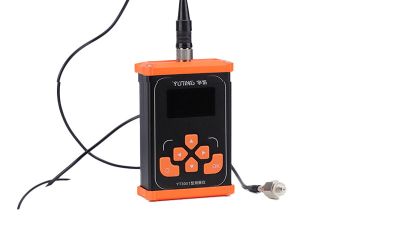
YT3001B: Precision Vibration Monitoring for Smarter Equipment Maintenance and Reliable Performance

YT3001B delivers precision vibration monitoring for smarter equipment maintenance and more reliable performance. Designed to help maintenance teams identify developing mechanical issues early, it measures acceleration from 0.001 to 2000 m/s², velocity from 0.1 to 20,000 mm/s, and displacement from 0.005 to 200 mm. This broad measurement capability supports condition monitoring across rotating machinery, motors, pumps, fans, compressors, and other industrial equipment.

For a clearer understanding of machine behavior, YT3001B provides simultaneous RMS, peak, and peak-to-peak vibration analysis. Its high-sensitivity sensor offers an output sensitivity of 2.8 pC/(m·s²), helping capture subtle vibration changes that may indicate imbalance, misalignment, looseness, or bearing wear. With a frequency response extending up to 8 kHz, the instrument supports detailed vibration analysis across a wide range of operating conditions. By providing consistent, actionable measurements, it enables maintenance personnel to make better-informed decisions, reduce unnecessary inspections, and improve equipment availability through timely, condition-based maintenance.

FAQS

Which vibration sensor suits rotating machinery?

Piezoelectric accelerometers capture high-frequency bearing faults. Velocity sensors suit general machinery severity checks. Displacement probes suit slow shafts and orbit analysis. Choose by machine behavior, not screen appearance.

Why choose a tri-axial sensor?

It records vibration across three directions. This can reveal changes a single-axis meter misses. It helps near pumps, motors, and changing loads. More channels mean more data.

What technologies improve fault diagnosis?

Time-waveform recording shows impacts. FFT analysis separates harmonics linked with imbalance, misalignment, or looseness. Wireless nodes reach guarded equipment, but radio gaps and battery limits remain. Contactless laser measurement avoids mounting, yet bright surfaces can interfere.

How should accuracy and frequency range be checked?

Ask for accuracy across frequency, temperature, and mounting conditions. Review the response curve, sampling rate, and resolution. A display with many decimals may still mislead. Test against a calibrated reference.

How does mounting affect readings?

A magnetic base is convenient on steel housings. It may weaken high-frequency accuracy. Threaded mounting is usually more stable. Poor contact can defeat an excellent sensor.

Are sensor interfaces interchangeable?

No. Some accelerometers need constant-current power. Others use voltage or MEMS interfaces. Check sensitivity, connectors, frequency range, and mounting. Not interchangeable.

Which data outputs and software features matter?

Prefer waveform, FFT spectrum, RMS velocity, and peak acceleration exports. CSV supports independent analysis. Trend charts, alarms, route inspections, raw data access, and offline use are practical. Colorful dashboards are not enough.

What should a procurement check include?

Request traceable calibration records, protection ratings, operating-temperature limits, connector details, and export formats. Confirm compatibility with existing software. Test sample recordings on your own machinery before a large order. I would not trust a brochure alone.

Is machine vibration guidance the same as worker exposure guidance?

No. Machine-health limits and hand-arm exposure values answer different questions. Mixing them can produce unsafe maintenance decisions. Keep separate records. The distinction is easy to miss.

How can a buyer avoid choosing the cheapest wrong meter?

Compare the sensor, frequency range, accuracy, mounting, battery, software, and support. Consider the inspection environment. A low-priced meter may lack raw data or calibration evidence. I once trusted clean graphs too quickly. That judgment needed more doubt.

Conclusion

Choosing the right Vibration Measuring Device starts with clearly defining your measurement goals, such as detecting imbalance, misalignment, looseness, or general machine condition. Identify the key vibration parameters, including acceleration, velocity, displacement, amplitude, and frequency. Then compare different device types and technologies, such as handheld meters, portable analyzers, and permanently installed monitoring systems. Pay close attention to measurement accuracy, frequency range, resolution, sampling performance, and the device’s ability to capture reliable data under real operating conditions.

Sensor compatibility, data output options, storage capacity, connectivity, and software functions should also match your maintenance workflow. In addition, evaluate build quality, user safety, protective ratings, and resistance to dust, moisture, temperature changes, and industrial environments. When comparing Chinese manufacturers, review product certifications, quality control, pricing, warranty terms, technical support, calibration services, and spare-part availability. A balanced decision should consider long-term reliability, usability, and total ownership cost rather than focusing only on the initial purchase price.
Liam

Liam

Liam is a dedicated marketing professional specializing in the acoustic measurement industry. With extensive knowledge of our product range, which includes sound level meters, noise dosimeters, calibrators, audiometric calibration systems, microphones and accessories, software products, and......
Previous China Top Vibration Calibrator Manufacturers and Suppliers