Leave Your Message
0%

So, picking the right accelerometer? It can change how accurate your measurements are, how long the product lasts, and what it ends up costing you overall. These days, global buyers aren’t just comparing sensitivity and price anymore. They’re digging into bandwidth, noise density, shock resistance, temperature stability, calibration support, and whether supply will stay steady. And a tiny sensor tucked inside a wearable? It behaves nothing like one monitoring a turbine, a railway axle, or an industrial robot.

Dr. Patrick L. Walter, a vibration-measurement specialist, once put it simply: “An accelerometer measures acceleration, not velocity or displacement.” That distinction really matters. Piezoelectric accelerometers are great for high-frequency vibration and rough industrial settings. Capacitive MEMS devices bring compact size, low power use, and lots of integration potential. Piezoresistive models can take severe shock, while force-balance designs give exceptional precision for navigation and structural monitoring. Every option solves a different problem.

This guide, “2026 Top Types of Accelerometers for Global Buyers,” looks at these technologies through practical buying criteria. It covers products from companies like Analog Devices, Bosch Sensortec, Honeywell, Kistler, PCB Piezotronics, and TE Connectivity. Their specs can look great on paper. Out in the field, though? Results may not match.

And that’s the hard part.

Installation quality, cable routing, mounting stiffness, and calibration often matter more than buyers expect. A sensor mounted loosely on a steel housing can give you misleading vibration peaks. Humidity, electromagnetic interference, and long-term drift are worth watching too. No single Accelerometer Sensor is perfect for every application. Buyers should balance technical performance with documentation quality, regional support, replacement availability, and realistic operating conditions. A careful selection process might feel slower, sure—but it can save you from expensive redesigns later.
2026 Top Types of Accelerometers for Global Buyers

What Is an Accelerometer and How Does It Measure Motion?

An accelerometer measures motion by sensing a tiny internal mass. When a device moves, inertia shifts this proof mass. The sensor detects that shift through changing capacitance, voltage, or resistance. A controller converts the signal into acceleration, usually in meters per second squared or g-force.

Most modern units use MEMS structures with one, two, or three sensing axes. A phone may detect screen rotation. An industrial monitor may record bearing impact, imbalance, or Accelerometer Vibration. Sampling rate matters. A slow sensor can miss a sharp mechanical shock. Excessive filtering can hide early damage. That is an easy mistake.

MarketsandMarkets estimated the global accelerometer market at approximately USD 2.4 billion in 2024, with automotive, consumer electronics, and industrial systems among major applications. Its analysis also points to rising demand for compact, low-power motion sensing. However, market forecasts are not physical laws. They depend on shipment assumptions, regional adoption, and changing designs.

In field testing, mounting is just as important as sensor selection. A loose adhesive pad can create false peaks. Temperature can also shift calibration. Engineers should compare readings against a known reference and document axis direction, bandwidth, and sampling frequency. I have found that clean laboratory data often becomes less convincing near motors, cables, and uneven surfaces. Real motion is rarely polite.

How Accelerometers Are Classified by Sensing Principle

2026 Top Types of Accelerometers for Global Buyers

How Accelerometers Are Classified by Sensing Principle

Accelerometers are classified by how they detect motion, not by appearance. Piezoelectric models convert mechanical stress into charge. They suit vibration testing, rotating machinery, and high-frequency impact measurement. However, they usually cannot measure true static acceleration. Piezoresistive sensors change electrical resistance under strain. They handle shocks well, but temperature drift demands careful compensation.

Capacitive MEMS accelerometers sense changes in capacitance between tiny movable structures. They support low-frequency and static measurements, making them common in industrial monitoring, robotics, and vehicle systems. An Industrial Accelerometer using MEMS technology may provide lower power consumption and compact installation. Servo or force-balance sensors use feedback to keep a proof mass centered. They offer excellent accuracy, but their electronics and calibration requirements can increase cost. Optical accelerometers provide strong immunity to electromagnetic interference, though integration may be less convenient.

Reports offer useful market context. The MarketsandMarkets 2024 Accelerometer Market report projects continued global growth through 2029, driven by industrial automation, vehicles, and consumer electronics. Fortune Business Insights also identifies rising demand for MEMS sensing in connected equipment. The numbers look promising, but report boundaries differ. Buyers should compare definitions, not only forecasts.

Tips: Match the sensing principle with frequency range, shock level, temperature, and static measurement needs. Check calibration traceability and mounting torque. A sensor can be accurate on paper, yet perform poorly on a loose metal surface. Field testing remains necessary.

Accelerometers are commonly classified by their sensing principle. The chart highlights whether each principle can fundamentally measure static or DC acceleration, as well as dynamic vibration. Piezoelectric accelerometers are highly suitable for dynamic measurements but cannot measure static acceleration because their generated charge gradually dissipates. Capacitive MEMS, piezoresistive, optical, and force-balance designs can support DC measurement, although actual bandwidth, noise, range, and accuracy depend on the specific design.

Main Types of Accelerometers for Industrial and Consumer Use

Main Types of Accelerometers for Industrial and Consumer Use

Accelerometers measure movement, vibration, shock, or tilt across many devices. MEMS capacitive accelerometers dominate consumer electronics because they are small, inexpensive, and energy efficient. A smartwatch can detect a wrist turn with a sensor smaller than a fingernail. IDC’s 2024 wearable device report projected more than 530 million wearable shipments worldwide, reinforcing demand for compact motion sensing.

Industrial equipment needs different strengths. Piezoelectric accelerometers capture high-frequency vibration from motors, pumps, and gearboxes. They perform well in predictive maintenance, especially when a bearing produces a faint, repeating signal. IEPE designs add stable signal transmission over long cables. Piezoresistive accelerometers suit shock testing, crash measurement, and harsh transient events. No sensor fits every machine.

MarketsandMarkets reported that the global MEMS market could grow from about 14.5 billion dollars in 2023 to 22.2 billion dollars by 2028. That growth supports wider sensor adoption, but market size alone cannot guide selection. Engineers should check bandwidth, sensitivity, temperature range, noise, mounting method, and calibration stability. A low-cost MEMS unit may fail beside a hot rotating shaft. A piezoelectric model may be excessive for simple tilt detection. This distinction is often underestimated.

Key Performance Factors for Comparing Accelerometer Types

Choosing among accelerometer types requires more than comparing price or marketing claims. According to Fortune Business Insights’ 2024 market report, the global accelerometer market was valued at about USD 2.1 billion in 2023. Growth is linked to industrial monitoring, vehicles, and connected equipment. These applications demand different performance balances.

Piezoelectric accelerometers suit machinery with strong vibration and wide frequency ranges. They offer excellent high-frequency response but cannot measure steady acceleration well. MEMS capacitive devices consume less power and support compact, wireless systems. Their lower cost is useful for large sensor networks. However, noise, bias drift, and temperature sensitivity require careful validation. Piezoresistive types can measure shock events and static acceleration, yet their output may change noticeably with temperature.

Look at the numbers.

Compare sensitivity, noise density, bandwidth, measurement range, and cross-axis error. A 2024 report from MarketsandMarkets identifies industrial condition monitoring as a major accelerometer application area, where frequency response can matter more than minimum size. In a factory trial, a sensor mounted near a motor bearing may face heat, oil mist, and cable movement. Mounting stiffness can distort results. Calibration matters too. ISO 16063 guidance supports traceable vibration calibration, but field conditions remain imperfect. Vibrometer And Accelerometer systems may reveal different vibration patterns because displacement and acceleration emphasize different frequency regions. No sensor wins every test. A low-power MEMS unit may miss a short shock, while a piezoelectric sensor may complicate long-term, battery-powered monitoring.

2026 Top Types of Accelerometers for Global Buyers - Key Performance Factors for Comparing Accelerometer Types

Accelerometer Type Operating Principle Typical Measurement Range Frequency Response DC / Static Acceleration Typical Noise Performance Shock and Vibration Capability Power Requirement Common Applications Main Buying Consideration
Piezoelectric A piezoelectric crystal or ceramic generates an electrical charge when mechanically stressed. Approximately ±1 to ±100,000 g, depending on design Typically 0.5 Hz to 20 kHz or higher; resonant designs can extend beyond this range No; charge gradually decays and does not provide reliable static acceleration measurement Low noise, commonly suitable for dynamic vibration and shock measurements Very good; high-frequency shock and vibration capability Passive sensing element; charge-output versions require a charge amplifier, while IEPE versions require constant-current excitation Machine condition monitoring, modal testing, impact testing, aerospace vibration, engine and structural analysis Best choice when wide bandwidth, high dynamic range, and excellent vibration fidelity are priorities
Capacitive MEMS Measures changes in capacitance caused by the movement of a micro-machined proof mass. Typically ±1 to ±200 g; specialized devices may exceed this range Typically DC to 100 Hz, 1 kHz, or several kHz, depending on bandwidth configuration Yes; suitable for tilt, orientation, motion, and low-frequency acceleration From micro-g to milli-g levels in precision devices; noise varies substantially by bandwidth and design Good for many embedded applications; high-shock versions are available, but package limits must be checked Low power; commonly designed for battery-powered systems, with analog or digital output options Consumer electronics, industrial IoT, robotics, vehicle systems, navigation, wearables, and condition monitoring Best general-purpose option when small size, low power, DC response, and cost efficiency are important
Piezoresistive Strain-sensitive resistors change electrical resistance as a proof mass or diaphragm deforms. Approximately ±1 to ±100,000 g, depending on construction DC to several kHz; bandwidth is determined by mechanical design and signal conditioning Yes; can measure static and slowly changing acceleration Moderate; bridge resistance, temperature, and electronic conditioning strongly affect noise Excellent overload and shock capability in rugged designs Requires bridge excitation; power consumption is generally higher than passive piezoelectric elements Crash testing, pyrotechnic testing, blast measurement, high-g testing, and rugged industrial instrumentation Strong option for high-g events and applications requiring DC response with robust mechanical construction
Force-Balance Servo A closed-loop electromagnetic force returns the proof mass to a null position and the feedback signal represents acceleration. Typically ±1 to ±100 g; specialized units may cover higher ranges DC to approximately 100 Hz–1 kHz, depending on servo-loop design Yes; excellent response to static and very low-frequency acceleration Very low noise and strong bias stability in precision-grade configurations Good overload resistance, but maximum shock and recovery specifications must be verified Continuous electrical power required for the feedback loop and force actuator Inertial navigation, geophysics, structural monitoring, precision surveying, and aerospace guidance Preferred when bias stability, low noise, accuracy, and long-term measurement repeatability outweigh size and cost
Variable Reluctance Detects changes in magnetic reluctance or coil inductance as a ferromagnetic mass moves. Typically ±0.5 to ±100 g Usually several Hz to several hundred Hz; model-specific Generally no reliable DC response; most suitable for dynamic acceleration Moderate; affected by magnetic design, coil electronics, and environmental interference Good mechanical durability and useful overload tolerance Requires excitation and signal-conditioning electronics Industrial machinery, rotating equipment, legacy monitoring systems, and harsh-environment measurements Consider when ruggedness and established dynamic-monitoring designs are more important than miniaturization
Optical Uses changes in light intensity, phase, wavelength, or fiber interference to detect proof-mass movement. Commonly ±1 to ±100 g; range depends on the optical and mechanical architecture DC to several hundred Hz or several kHz in advanced designs Yes; capable of measuring static and low-frequency acceleration Potentially extremely low noise; performance depends on optical source, detector, and control electronics Good isolation from electromagnetic interference; mechanical shock limits remain design-specific Requires an optical source, detector, and signal-processing electronics Precision navigation, infrastructure monitoring, seismic sensing, aerospace, and high-electromagnetic-interference environments Best suited to precision applications demanding low noise and immunity to electromagnetic interference
Buyer’s note: The figures above are representative engineering ranges rather than universal specifications. Actual performance depends on sensor construction, measurement axis, signal conditioning, mounting, temperature, calibration, bandwidth settings, and overload limits. For final selection, compare bias stability, scale-factor error, cross-axis sensitivity, operating temperature, environmental sealing, output interface, calibration requirements, and applicable testing standards.

Choosing the Right Accelerometer for Different Applications

2026 Top Types of Accelerometers for Global Buyers

Choosing the Right Accelerometer for Different Applications

Accelerometer selection starts with motion, not price. MEMS accelerometers suit smartphones, wearables, drones, and condition-monitoring nodes. They are compact, low-power, and affordable for high-volume systems. Piezoelectric accelerometers handle harsh vibration, wide frequency ranges, and machinery testing. IEPE models provide stable industrial measurements but need compatible signal conditioning. According to MarketsandMarkets’ 2024 report, the global accelerometer market is projected to grow strongly through 2029, supported by automotive electronics, industrial automation, and connected devices. That growth does not make every sensor suitable.

For rotating equipment, check frequency response, sensitivity, shock limits, mounting method, and temperature drift. ISO 20816 vibration standards help engineers evaluate machine severity, but standards cannot replace application testing. A low-cost MEMS unit may miss high-frequency bearing faults. A piezoelectric sensor may waste power in a battery system. I have seen specifications look perfect until cable movement distorted the readings. Small details matter. Sensor noise, connector strain, and calibration intervals deserve equal attention.

Tips: Define the highest vibration frequency before selecting a sensing range. Test the sensor on the actual mounting surface. Compare noise density, not only sensitivity. Review calibration evidence from an accredited laboratory. A 2024 report from Fortune Business Insights also identifies industrial monitoring and automotive safety as major growth areas. However, market forecasts differ by methodology, so treat them as planning references, not guarantees. The best choice is sometimes less advanced, but more reliable in real conditions.

Global Buying Considerations for Accelerometer Selection

2026 Top Types of Accelerometers for Global Buyers

Choosing an accelerometer for global use requires more than comparing sensitivity and price. Buyers should match the sensor’s measurement range, frequency response, and noise level to the machine. An Accelerometer Vibration Sensor for a factory motor may need a different design than one used in transport equipment. Harsh locations demand careful attention to temperature, moisture, dust, and mechanical shock.

Interface compatibility also matters. Analog, digital, and wireless outputs can affect installation time, software integration, and maintenance skills. Confirm connector types, power requirements, calibration records, and technical documents before purchasing. Local service access is useful, but often overlooked. Regional delivery times and replacement availability can influence total operating cost. Compliance documentation should be checked for the destination market, not assumed from the supplier’s general statement.

Tips: Test one sample under real operating conditions. Check mounting stiffness, cable movement, and signal stability. Ask for uncertainty data, not only headline accuracy. A lower-cost sensor may become expensive after repeated recalibration or difficult installation. No selection is perfect. Even experienced teams can underestimate temperature drift or installation errors. Recheck the decision when machinery, software, or operating conditions change.

How AWA14415 Wide-Dynamic-Range Environmental Vibration Accelerometers Improve Monitoring Accuracy

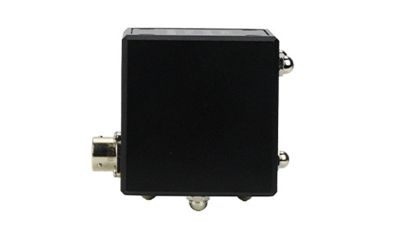
Environmental vibration monitoring often requires more than simply detecting strong movement. Subtle vibrations from traffic, construction, machinery, or structural activity can be difficult to measure consistently, especially when signal levels change over time. A purpose-built wide-dynamic-range environmental vibration accelerometer improves monitoring accuracy by capturing acceleration from 0.0003 m/s² to 10 m/s², covering a broad 50–140 dB range. This allows one sensor to track low-level ambient vibrations as well as sudden, more pronounced events without frequent equipment changes or loss of useful data.

Installation flexibility further supports reliable measurement in real-world conditions. The accelerometer can be mounted vertically or horizontally to monitor different vibration components, while its transverse sensitivity ratio of no more than 10% helps reduce cross-axis interference. Its piezoelectric design converts acceleration directly into a proportional voltage output, simplifying signal transmission and processing while maintaining stable performance. With a solid 740-gram construction, it is suitable for long-term field deployment in environmental surveys, infrastructure observation, and structural monitoring. Consistent orientation, low interference, and dependable voltage output help produce clearer measurements for comparing vibration levels across locations and over extended monitoring periods.

FAQS

How does an accelerometer measure motion?

It senses movement in a tiny internal mass. Motion shifts the mass through inertia. The sensor detects changing capacitance, voltage, or resistance. A controller converts that signal into acceleration. Units commonly include meters per second squared or g-force.

What are the main sensing axes?

Accelerometers may use one, two, or three axes. A three-axis unit can detect movement along multiple directions. It may also reveal screen rotation or machine imbalance. Axis direction must be documented carefully.

Why does sampling rate matter?

Sampling rate determines how quickly the sensor records changes. A slow sensor may miss a sharp mechanical shock. Excessive filtering can hide early damage. That mistake is easy.

How does mounting affect measurement accuracy?

Mounting stiffness strongly influences the reading. A loose adhesive pad can create false vibration peaks. Cable movement may also add unwanted signals. Secure the sensor near the measured component. Check the mounting surface.

What should buyers consider when selecting a sensor?

Match the measurement range, frequency response, and noise level to the machine. A factory motor may need a different sensor than transport equipment. Consider temperature, moisture, dust, and mechanical shock. Price alone is not enough.

Which output interface is suitable for installation?

Analog, digital, and wireless outputs require different installation skills. They also affect software integration and maintenance time. Confirm connectors, power needs, and communication requirements. Compatibility can save hours.

How can engineers verify sensor performance?

Test one sample under real operating conditions. Compare its readings with a known reference. Record axis direction, bandwidth, and sampling frequency. Request uncertainty data, not only headline accuracy. Clean laboratory data may change near motors and uneven surfaces.

What practical problems may appear after purchase?

Temperature can shift calibration over time. Replacement delays may increase operating costs. Difficult installation can make a cheap sensor expensive. Recheck the choice when machinery or software changes. No selection is perfect. We may still underestimate installation errors.

Conclusion

An Accelerometer is a sensor that detects changes in motion, vibration, tilt, and acceleration by measuring forces acting on a sensing element. This article explains how accelerometers work and compares their main sensing principles, including capacitive, piezoelectric, piezoresistive, and other designs. Each type offers different advantages in sensitivity, frequency response, stability, power consumption, durability, and cost, making it suitable for specific industrial or consumer applications.

The guide also examines key performance factors such as measurement range, noise, accuracy, bandwidth, shock resistance, operating temperature, size, and output format. It provides practical advice for selecting an accelerometer for machinery monitoring, structural analysis, transportation, wearable devices, electronics, and other motion-related systems. For global buyers, the selection process should also consider supply consistency, technical support, certification needs, integration requirements, environmental conditions, and long-term product reliability.
Sophie

Sophie

Sophie is a dedicated marketing professional with a deep expertise in acoustic measurement solutions, effectively bridging the gap between technology and customer needs. With an extensive understanding of the diverse product range offered by the company, which includes sound level meters, noise......
Previous How to Choose the Best Vibration Testing Equipment?