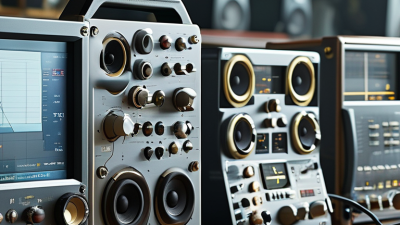
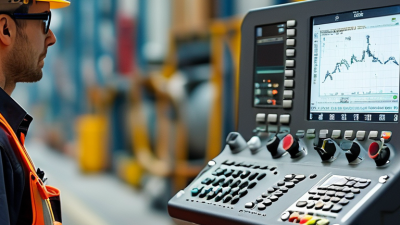
Looking ahead to 2026, you won't find a single microphone design that rules them all. Instead, buyers around the globe are now weighing different types—like condenser, dynamic, lavalier, shotgun, USB, wireless, and MEMS microphones—each one built for a specific recording challenge. It’s kind of a wild mix out there!
According to Fortune Business Insights, the worldwide microphone market was valued at about USD 2.47 billion in 2024, and they’re estimating it’ll grow to around USD 4.05 billion by 2032. Meanwhile, Grand View Research points out that booming interests in podcasting, streaming, video calls, and smart devices are really pushing the demand. Don’t just take these numbers at face value, though—markets are defined differently depending on who’s doing the measuring. Always dig into their methodology if you’re planning to rely on these forecasts.
John Eargle, a legendary microphone engineer and author, once said, “The microphone is the first link in the recording chain.” And honestly, that’s still as true in 2026 as it was back then. For example, a dynamic mic can really take a beating on stage and handle rough transport without fuss. On the flip side, a condenser mic might be perfect for capturing those tiny, nuanced sounds in a studio, but it can also pick up room noise that you might not want. If you’re recording dialogue outdoors, a shotgun mic might do the trick—though wind protection is still pretty important. Wireless systems are super convenient for mobility, but don’t forget—they need good batteries and stable signals, so testing is a must.
You might notice people searching for “microphone” over and over—sounds a bit repetitive, right? Well, that’s because specifications often seem similar across the board. Frequency response alone isn’t enough to tell if a mic will pick up clear speech or just noise. Things like room acoustics, connection standards, latency, local support, and how much it costs to replace parts also matter big time. Brands like Shure, Sennheiser, Audio-Technica, RØDE, and AKG all have solid options for professionals, but there’s no one-size-fits-all answer. This guide dives into the best microphone types for buyers around the world, backed up with real-life comparisons and practical tips. And hey, here’s the truth—there’s no such thing as perfect audio equipment. It’s all about finding what works best for you!
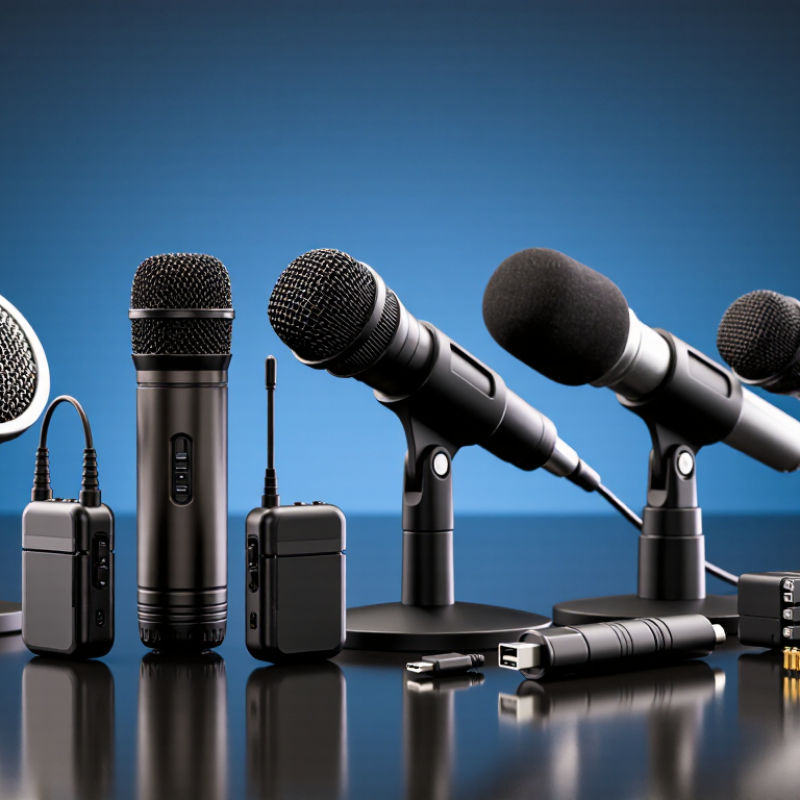
Microphone Classification by Transducer: Dynamic, Condenser, Ribbon, and MEMS
For global buyers, microphone selection starts with the transducer, not the connector. The transducer converts sound into an electrical signal. Each type behaves differently in a meeting room, studio, vehicle, or outdoor interview. Grand View Research estimates the global microphone market could expand at about 7% annually through 2030. That growth reflects wider use in communication devices, content production, vehicles, and smart equipment.
Dynamic microphones use a moving coil and tolerate high sound pressure. They suit loud stages, drums, and handheld reporting. They usually need less delicate handling, but quiet details may sound less open.
Condenser microphones use a charged diaphragm and capture finer changes. They work well for vocals, podcasts, and controlled rooms. They often require external power and reveal background noise quickly.
Ribbon microphones use a thin metal ribbon for a smooth, natural response. Their delicate construction demands careful transport and suitable preamplifier gain.
MEMS microphones integrate a miniature transducer with electronics on a chip. They support compact devices, consistent manufacturing, and digital signal processing. Yole Group’s MEMS industry analyses identify microphones as a major high-volume MEMS application.
This matters for global procurement, where repeatability can reduce calibration differences between production batches. However, MEMS performance still depends on housing design, acoustic ports, firmware, and wind protection. Small does not mean simple.
Buyers should compare sensitivity, self-noise, frequency response, maximum SPL, power needs, and environmental ratings. A condenser may outperform a dynamic microphone in a quiet booth, yet fail in a windy field test without protection. Specifications help, but real-room trials expose the compromises. Some compromises remain.
Dynamic Microphones: High SPL Handling Above 130 dB for Live Sound and Drums
Dynamic Microphones: High SPL Handling Above 130 dB for Live Sound and Drums
Dynamic microphones remain practical choices when stage volume becomes physically aggressive. Many professional models tolerate sound pressure levels above 130 dB, especially at close range on kick drums, snare drums, and loud guitar cabinets. However, 130 dB is not a universal limit. Diaphragm design, frequency, distance, and internal electronics all affect real performance. IEC 60268-4:2018 provides standardized methods for evaluating microphone characteristics, helping buyers compare specifications more reliably.
Live engineers should also consider hearing protection and exposure time. The NIOSH Criteria for a Recommended Standard: Occupational Noise Exposure identifies 85 dBA over eight hours as a recommended limit. Each additional 3 dB halves the advised exposure time. A microphone may survive extreme SPL, while the crew cannot safely remain near it for long periods. That distinction is easy to miss.
Tips: Check maximum SPL ratings at specific frequencies, not only headline numbers. For drums, position the microphone slightly off-axis to reduce harsh peaks. Use a short, strong cable run and inspect the grille after transport. I would leave extra headroom, even when the specification looks impressive. Real stages are rarely controlled laboratories. A supposedly perfect placement can still sound congested, especially in small venues.
Condenser Microphones: 20 Hz–20 kHz Response and 48 V Phantom Power Standards
For global buyers, condenser microphones remain a practical choice for vocals, speech, and acoustic instruments. Many models advertise a 20 Hz–20 kHz frequency response, covering the commonly recognized human hearing range. However, this figure does not guarantee identical detail across the spectrum. A microphone may sound bright, soft, or slightly colored within that range.
Experience matters at the setup stage. A studio condenser usually requires 48 V phantom power from an audio interface, mixer, or dedicated preamp. Check the specification carefully before connecting equipment. Balanced XLR cabling is generally expected, while damaged cables can create noise or unstable operation. Keep the microphone about 15–20 centimeters from a vocalist, then adjust the angle to reduce harsh consonants. Small changes are surprisingly audible.
A Spl Microphone should also be evaluated by its maximum SPL rating, self-noise, sensitivity, and polar pattern. High SPL handling is useful near drums or loud guitar cabinets. Low self-noise helps with quiet narration. I once focused too heavily on frequency response and underestimated room reflections. That was a mistake. A perfect-looking specification cannot remove traffic noise, desk vibration, or an untreated wall. Buyers should compare measured data, connector standards, power requirements, and return conditions before choosing a condenser microphone for international use.
Ribbon Microphones: Figure-8 Polar Patterns and Bidirectional Sound Capture
Ribbon microphones use a thin metal ribbon to capture sound from two opposite directions. Their figure-8 polar pattern hears the front and rear, while strongly rejecting sound from the sides. This bidirectional design suits vocal duets, room recording, and mid-side techniques.
An Acoustic Microphone with this pattern can create a focused, three-dimensional image. Place the performer in front, then use the rear side for a second voice or controlled room ambience. The side nulls can reduce a nearby monitor or noisy computer fan.
Placement matters. A small angle change may alter brightness and room balance noticeably.
Many passive ribbon microphones produce lower output than condenser designs. Use a clean preamp with sufficient gain, and check the microphone’s technical requirements before connecting equipment. Active ribbon models may need phantom power, but passive models require more caution. A faulty cable can cause expensive damage. I once moved a ribbon too close to a reflective wall and blamed the microphone for a harsh recording. The real problem was the room. A thick curtain behind the performer helped, though it did not solve everything. Global buyers should verify polar-pattern diagrams, output level, connector standards, warranty terms, and service access before choosing a model. Also, remember that figure-8 capture records unwanted rear sound just as faithfully as the desired source.
USB and XLR Microphones: 24-Bit/96 kHz Digital Audio Versus Analog Workflow
For global buyers, USB and XLR microphones serve different production habits. The Infinite Dial 2024 report found that 47% of U.S. adults consume podcasts monthly. Clear voice capture now matters for creators, educators, and remote teams. USB models combine a converter and Microphone Preamplifier inside one enclosure. They connect quickly and often support 24-bit/96 kHz recording. That is convenient, but resolution alone cannot repair a noisy room.
An XLR microphone follows a more flexible analog workflow. The signal travels through a cable into an external Microphone Preamplifier, interface, or mixer. Gain, impedance, compression, and monitoring remain adjustable. A 24-bit system offers about 144 dB of theoretical dynamic range, while 96 kHz sampling reaches frequencies up to 48 kHz. Real equipment performs below those limits. Still, the extra headroom helps during editing and demanding vocal sessions. Room first.
The Global Music Report 2024 recorded 10.2% growth in worldwide recorded-music revenue during 2023, reaching $28.6 billion. That expansion increases demand for dependable home and professional recording tools. In practical tests, USB setups reduce cable clutter beside a laptop. XLR setups feel stronger when multiple microphones, headphones, and hardware processors enter the chain. I have also seen users choose 96 kHz without checking storage capacity or computer load. That choice is not always wise. A quiet 24-bit recording at 48 kHz can outperform a poorly gained 96 kHz track. Test the room, the preamp, and the workflow before paying for specifications.
2026 Best Microphone Types for Global Buyers
USB and XLR Microphones: 24-Bit/96 kHz Digital Audio Versus Analog Workflow
USB Microphone
The microphone converts audio to digital PCM inside the device. A 24-bit depth and 96 kHz sampling rate provide a high-resolution recording workflow when the microphone and software support these settings.
XLR Microphone
XLR carries a balanced analog signal. Bit depth and sample rate do not apply until an external audio interface or mixer converts the signal to digital PCM.
Chart reference: a digital PCM configuration of 24-bit resolution and 96 kHz sampling rate. XLR is an analog connection standard and therefore has no native bit-depth or sampling-rate specification.
Polar Patterns Explained: Cardioid, Supercardioid, Omnidirectional, and Figure-8
2026 Best Microphone Types for Global Buyers
Polar Patterns Explained: Cardioid, Supercardioid, Omnidirectional, and Figure-8
Polar patterns show where a microphone hears sound most clearly. This choice affects vocals, interviews, instruments, and room noise. Cardioid captures sound mainly from the front and reduces noise behind the microphone. It suits untreated rooms, online meetings, and close vocal work. Keep the speaker facing the front. Small angles can change the recording noticeably.
Supercardioid creates a tighter pickup area than cardioid. It rejects more sound from the sides, but it hears a small amount behind the microphone. This pattern helps on busy stages or near loud instruments. Placement must be accurate. A careless turn can weaken the voice quickly. I have seen buyers focus on sensitivity while ignoring this simple detail.
Omnidirectional microphones collect sound from every direction. They often produce natural speech and balanced room ambience. However, they cannot hide a noisy fan or reflective wall. Figure-8 microphones capture the front and rear while rejecting both sides. This pattern works well for two-person recordings and controlled studio setups. Room quality matters greatly here. Pattern charts can look precise, yet real rooms remain imperfect. Test the microphone at the intended distance, then listen for reflections, breath noise, and unwanted movement.
2026 Best Microphone Types for Global Buyers - Polar Patterns Explained: Cardioid, Supercardioid, Omnidirectional, and Figure-8
| Polar Pattern |
Primary Pickup Area |
Approximate Front Acceptance |
Rear or Side Rejection |
Typical Null Position |
Proximity Effect |
Best Applications |
Placement Guidance |
Main Advantages |
Key Limitations |
| Cardioid |
Front-facing pickup with reduced sensitivity at the rear |
Approximately 120° to 130° usable front coverage |
Strongest rejection at the rear; moderate rejection from the sides |
Approximately 180° from the main sound source |
Moderate to strong when used close to the sound source |
Vocals, podcasting, presentations, home recording, stage speech, and general-purpose recording |
Point the front of the microphone toward the desired source and place unwanted noise behind the microphone |
Good balance of isolation, feedback control, and ease of use |
Can sound uneven when the source moves off-axis; close placement may increase bass response |
| Supercardioid |
Narrower front pickup than cardioid with a small rear pickup lobe |
Approximately 100° to 115° usable front coverage |
Stronger side rejection than cardioid, with limited sensitivity directly behind |
Approximately 125° to 135° off-axis on each side |
Moderate to strong |
Live vocals, loud stages, broadcast speech, focused instrument recording, and situations requiring additional side-noise control |
Aim the microphone carefully; keep monitors and major noise sources near the side nulls rather than directly behind it |
Higher isolation and better side-noise rejection than a standard cardioid pattern |
The rear lobe can pick up sound from behind; positioning errors may cause level and tone changes |
| Omnidirectional |
Sound pickup from all horizontal directions |
Approximately 360° horizontal coverage |
Minimal directional rejection |
No major horizontal null point |
Very low compared with directional patterns, especially in the low-frequency range |
Roundtable discussions, conference rooms, ambient recording, measurement work, choirs, and natural-sounding room capture |
Place it where balanced room sound is desired; keep it away from unwanted noise and reflective surfaces when possible |
Natural off-axis response, consistent tone around the microphone, and low sensitivity to handling direction |
Provides little protection against background noise, room reflections, or acoustic feedback |
| Figure-8 |
Front and rear pickup with strong rejection at the sides |
Approximately 90° on the front and 90° on the rear, with opposite polarity between lobes |
Very strong side rejection |
Approximately 90° and 270° from the main axis |
Strong |
Mid-side recording, stereo techniques, two-person interviews, room capture, and controlled studio recording |
Aim the front or rear lobe at the desired source and place unwanted sound at the sides |
Excellent side isolation and useful front-to-rear pickup for stereo and dual-source techniques |
Highly sensitive to room reflections from the front and rear; requires careful positioning and acoustic control |
Note: Polar-pattern angles are practical approximations. Actual pickup shape, frequency response, and rejection vary with microphone design, frequency, distance, room acoustics, and placement.
Global Buyer Selection Matrix: Application, SPL, Connectivity, and Compliance Data
A global microphone decision should begin with application, not price.
A studio vocal setup may need a condenser microphone with detailed high-frequency response. A stage drum setup often benefits from a dynamic model with strong rejection. For an
Acoustic Instrument Microphone,
test the actual instrument, room, and playing distance. A violin in a reflective hall can sound harsh, even when the frequency chart looks excellent. Field experience matters here.
SPL data deserves careful attention.
Check both maximum SPL and the test conditions behind that figure. A close-miked brass section can produce sharp peaks above normal rehearsal levels. Leave practical headroom instead of choosing a microphone at its limit. Sensitivity, self-noise, and equivalent noise also affect quiet guitar passages. Numbers alone can mislead.
Connectivity must match the buyer’s system.
Confirm XLR, USB, wireless, phantom-power, output impedance, and available adapters. Then review compliance data for the destination market. Request technical files, electromagnetic compatibility information, material declarations, and applicable safety documentation. Records related to restricted substances may be required for certain regions. Packaging and labeling can also affect customs clearance. The matrix is useful, but it is not flawless. A spreadsheet cannot predict every cable fault, humid venue, or operator mistake. Recheck critical samples under real working conditions. Small omissions become expensive.
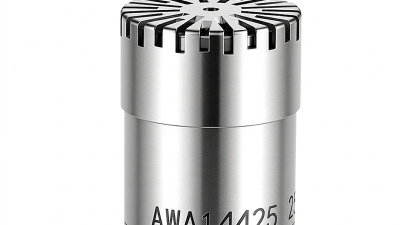
AWA14425 High-Sensitivity Free-Field Measuring Microphone: Precision Acoustic Testing for Reliable Sound Measurements
High-sensitivity free-field microphones are essential for dependable acoustic testing, from routine noise surveys to electroacoustic verification. The World Health Organization’s *Environmental Noise Guidelines for the European Region* identifies exposure thresholds for road, rail, aircraft, and leisure noise, underscoring the need for accurate and repeatable sound measurements. Designed for precision free-field applications, this microphone supports reliable capture of conventional sound signals across laboratory and field environments.
Its laser-welded diaphragm provides strong long-term stability and resistance to environmental variation, helping minimize measurement drift during extended testing. Compliance with SJ/T 10724 Class 1 engineering-microphone requirements supports standardized performance for professional acoustic analysis. The design is also compatible with both IEPE and conventional preamplifiers, allowing integration with a wide range of data-acquisition systems and measurement platforms.
Cleanroom assembly and calibration help maintain a low noise floor, stable sensitivity, and broad frequency response. These characteristics align with the measurement principles established in IEC 61672-1 for sound-level measurement systems, where controlled frequency response, sensitivity, and repeatability are fundamental to trustworthy results. Whether used for equipment evaluation, room acoustics, noise diagnostics, or production inspection, this high-sensitivity free-field microphone provides a practical foundation for precise acoustic testing.
FAQS
It covers the commonly recognized human hearing range. It does not guarantee equal detail at every frequency. A microphone may sound bright, soft, or slightly colored.
Many studio condenser microphones require 48 V phantom power. Power usually comes from an interface, mixer, or preamp. Check the specifications before connecting equipment.
A balanced XLR cable is generally expected. Inspect it for damage before recording. Faulty cables may cause noise or unstable operation.
Start around 15–20 centimeters away. Adjust the microphone angle to reduce harsh consonants. Small movements matter.
Check maximum SPL, self-noise, sensitivity, and polar pattern. High SPL handling suits drums or loud guitar cabinets. Low self-noise helps quiet narration. I once trusted frequency response too much.
It captures sound from the front and rear. It strongly rejects sound from the sides. This pattern suits duets, room recording, and mid-side techniques.
Aim the side null toward a monitor or computer fan. Place the performer at the front. The rear still captures room sound. That part is easy to underestimate.
Many passive ribbon microphones produce lower output than condensers. Use a clean preamp with sufficient gain. Active ribbon models may require phantom power. Confirm the model’s requirements first.
Conclusion
Choosing the right Microphone starts with understanding how its transducer, connection, and polar pattern fit the intended application. Dynamic models are well suited to loud stages and drums, with many handling sound pressure levels above 130 dB. Condenser microphones offer detailed, wide-range capture, commonly spanning 20 Hz to 20 kHz, and typically use 48 V phantom power. Ribbon designs capture sound bidirectionally with a figure-8 pattern, while MEMS microphones provide a compact option for integrated recording systems.
Connectivity shapes the workflow: USB microphones convert audio internally and may support 24-bit/96 kHz recording, whereas XLR models connect to analog equipment and external interfaces. Cardioid and supercardioid patterns help focus on sound in front of the microphone, omnidirectional patterns capture sound from all directions, and figure-8 patterns pick up sound from the front and rear. A practical buyer’s selection matrix should compare application, maximum SPL, connectivity, polar pattern, and relevant compliance requirements to identify a suitable microphone for each market and recording environment.